Door Trail
Easy
0.75 miflat~45 min
A boardwalk to an opening in the Wall, then free-roaming terrain marked by yellow poles. No permit.
 National
South Dakota · Park 31 / 64
Sixty-five million years of buried sediment, eroding away fast enough to reshape the landscape within a human lifetime.
The layered buttes and spires of the Badlands are made of sediment deposited over 65 million years, buried, compressed into rock, and now eroding away at one of the fastest rates on Earth, roughly an inch a year. That erosion is exposing one of the richest fossil beds in the world, including ancient rhinoceros, saber-toothed cats, and three-toed horses, some of which are visible right along the Fossil Exhibit Trail's boardwalk.
That same speed means the landscape you're looking at is measurably different from what visitors saw a generation ago, and will be different again for the next one. It's also part of why the park feels so raw: little softens the erosion here, and the pastel-striped layers of shale, sand, and volcanic ash are laid bare in a way few other landscapes allow.
Come for the otherworldly rock. Stay for the bison and prairie dog colonies out in Sage Creek. Read the story, trust the live data above for what is open today, and when you leave, mark it visited.

Looks like Hell with the fires burnt out.A description commonly attributed to early travelers encountering the Badlands landscape
Six ways to spend your time, from a boardwalk into eroded canyons to a free-roaming bison herd out on the prairie.
A boardwalk leads to a break in the Wall, then opens into free-roaming terrain among spires and canyons, marked by yellow poles.
The signature walkIncludes a log ladder and narrow ledges leading to a dramatic view of the White River Valley. Not for those uneasy with heights.
Adventurous · half dayA sweeping view of eroded formations, especially striking at sunset near the park's northwest entrance.
Everyone · 20 minAn unpaved road overlooking the Sage Creek Wilderness, the park's best odds of spotting free-roaming bison and prairie dog towns.
Casual · road-trippersA flat boardwalk loop with fossil replicas explaining the ancient rhinoceros, cats, and horses once found in these layers.
Families · 20 minOne of the darkest certified skies in the country, with occasional ranger-led astronomy programs in summer.
Stargazers · after darkAnswer a few questions right here. We'll map your day, stop by stop, with a route, timings, weather, and a packing checklist grounded in real park data. No account, no leaving this page.
⚡ In a hurry? Adventure Light 5 questions →Every trail rated honestly, with distance, climb, and a note on which ones leave the boardwalk behind entirely.
A boardwalk to an opening in the Wall, then free-roaming terrain marked by yellow poles. No permit.
A flat boardwalk loop with fossil replicas explaining the region's ancient wildlife. No permit.
A short boardwalk to a natural window overlooking an eroded canyon, one of the easiest big views in the park. No permit.
Includes a log ladder and exposed ledges leading to a dramatic overlook of the White River Valley. No permit.
A short, steep climb straight up the Wall's eroded face, connecting to the Castle Trail above. No permit.
No marked trails; hike cross-country among free-roaming bison and prairie dog towns. A free permit is required only for overnight backcountry camping.
No permit for day hikes · free backcountry permits for overnight camping in Sage Creek Wilderness · little shade anywhere, carry more water than seems necessary
Tap any animal to learn its story. Soon, the app will let you log what you spot and keep a life list for every park.
A free-roaming herd manages itself across the Sage Creek Wilderness, the closest thing to the vast bison herds that once covered the plains.
Reintroduced to the park after disappearing in the early 1900s, now working the eroded cliffs and buttes throughout the Badlands.
Lives in large, visible burrow towns across the Sage Creek area, a keystone species supporting much of the park's food web.
Reintroduced to the region after near-extinction from habitat loss and predator control programs, now a rare but recovering presence.
Hunts the open grasslands and prairie dog towns, occasionally visible riding thermals above the eroded buttes.
The fastest land animal in North America, grazing the mixed-grass prairie sections of the park.
Once thought extinct, reintroduced to the park's prairie dog colonies as part of one of the most significant endangered species recovery efforts in the country.
Dominates the park's prairie sections, one of the grasses that historically supported vast bison herds across the plains.
Adds yellow color to the mixed-grass prairie each summer, common along the park's grassland trails.
Grows directly out of the eroded rock formations in places, tough enough to survive in almost no soil.
Common on the drier slopes throughout the park, its tall flower stalks a distinctive early-summer sight.
Covers much of the Sage Creek Wilderness, giving the area its name and providing critical habitat for pronghorn and other prairie wildlife.
A tall, purple-spiked wildflower found in the park's prairie sections, blooming in late summer alongside the grasses.
The Badlands are eroding at roughly one inch per year, one of the fastest erosion rates on Earth.
The park's rock layers preserve one of the richest fossil beds in the world, including ancient rhinoceros, saber-toothed cats, and three-toed horses.
Badlands is home to a reintroduced population of the black-footed ferret, once thought extinct, as part of a major endangered species recovery effort.
The Sage Creek Wilderness Area supports one of the country's few free-roaming bison herds not managed within fenced boundaries.
The questions people actually ask, answered from the park’s own current guidance. Fees and permit rules change every year, so each answer links back to the National Park Service page it came from.
A 7-day vehicle pass costs $30, a motorcycle pass is $25, and a per-person pass for hikers or cyclists 16 and older is $15. If you'll be back within a year, the Badlands annual pass runs $55. Entrance stations only take credit or debit cards, so don't plan on paying cash. Source: NPS.gov
No. Badlands has no timed-entry system or advance reservation requirement, and the park is open 24 hours a day, every day of the year. You just need a valid entrance pass, bought online in advance or at one of the three entrance stations. Source: NPS.gov
No, Badlands stays open year-round and doesn't have a scheduled winter shutdown the way some mountain parks do. Roads can get icy or snow-packed during storms, so check road conditions before you drive out, but the Badlands Loop Road and entrance stations don't close for the season. Source: NPS.gov
Stay at least 100 feet away from bison at all times and never approach or provoke one. Bison look slow but can run over 30 mph and will charge with little warning, so treat every bison you see in the Badlands as a wild animal capable of causing serious injury. Source: NPS.gov
Stories, guides, and hard-won tips from the trail. The full Badlands deep dive lives on the blog.
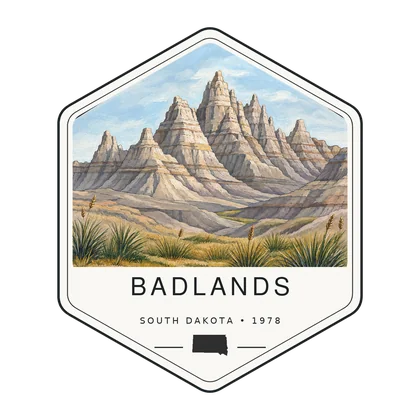
Log the visit, keep your story, and watch the map of all sixty-four fill in behind you. Every visit has a keepsake worth holding.
An hour southwest: from a landscape eroding in real time to a cave that breathes.
Open Park 35 → PlanTurn the Badlands into a road trip with a custom, day-by-day itinerary.
Start planning → Go deeperA ranch dog named Shep found the last wild ferrets in 1981. Now scientists have cloned one.
Read it → Explore moreFind your next park anywhere in the country.
Browse parks →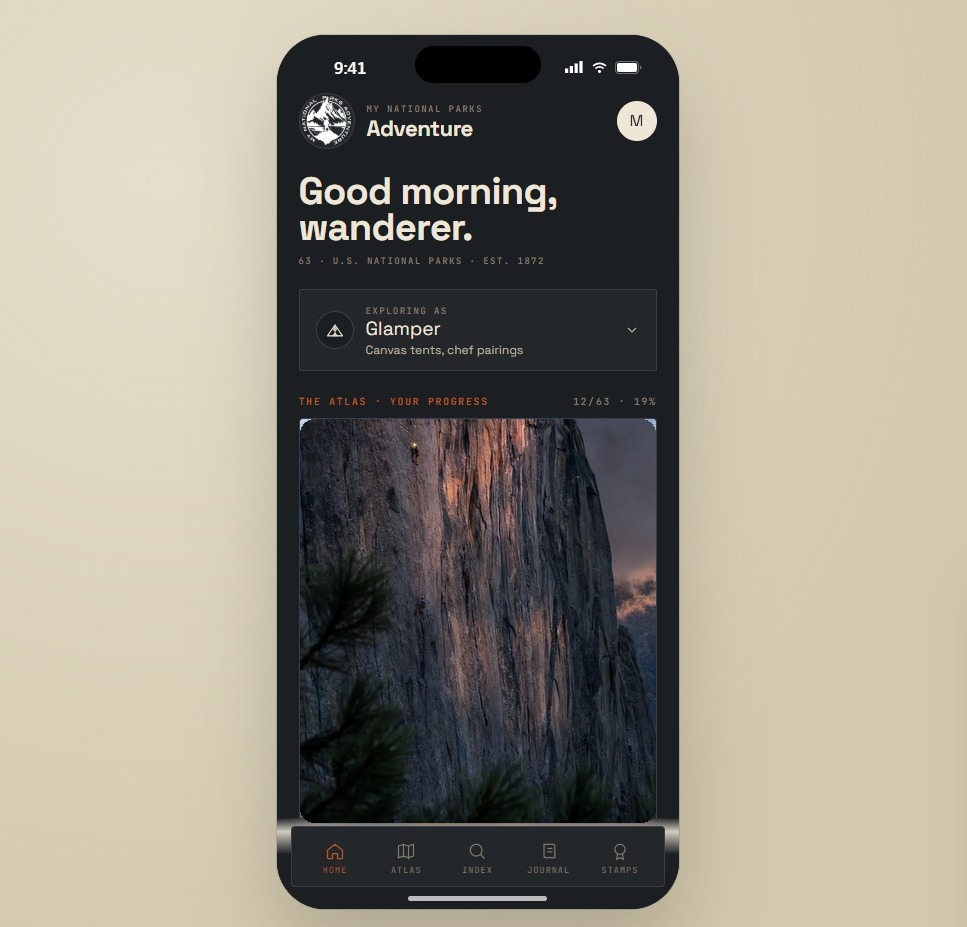
Offline maps, your passport, and every park in your pocket on the trail.
Join the waitlist →
The printed edition, part atlas, part journal, one story per park.
Notify me →Park-guide posters, enamel stamps, and the passport book to fill in.
Visit the shop →Field Notes
The parks do not perform for anyone. They stood here before the road, and they will stand here after it.