In 1981, a ranch dog in Meeteetse, Wyoming, killed an animal in the yard and dragged it home. The ranch owners took the carcass to a taxidermist, who didn't recognize it. It turned out to be a black-footed ferret, a species the world had already assumed extinct twice over. That single dead animal, and the wild colony it led biologists to, is the reason black-footed ferrets exist anywhere today, Badlands National Park included.
What's happened since is one of the stranger recovery stories in American conservation: a species pulled back from eighteen known individuals, reintroduced by the hundreds into prairie dog towns across the Great Plains, and, within the last few years, cloned from cells that had been sitting in a freezer since before most of today's park visitors were born.
Extinct, Twice, Until It Wasn't
Black-footed ferrets depend almost completely on prairie dogs, eating them, denning in their abandoned burrows, hunting them at night across the same colonies prairie dogs themselves excavate. As prairie dog towns were poisoned and plowed under across the twentieth century, ferret populations collapsed with them, to the point that biologists considered the species extinct by the 1970s. Then, on September 26, 1981, a ranch dog named Shep killed one near a ranch house outside Meeteetse, Wyoming. The discovery led researchers to a wild colony of roughly 130 animals nearby, the last one anyone knew of on Earth.
The relief didn't last. A canine distemper outbreak tore through the Meeteetse colony not long after, and by the mid-1980s wildlife officials made the call to capture the eighteen ferrets still alive and start over in captivity. Everything that exists now, every ferret at Badlands, every one bred at a dozen zoos and conservation centers since, traces back to those eighteen animals.
A Rare Kind of Success
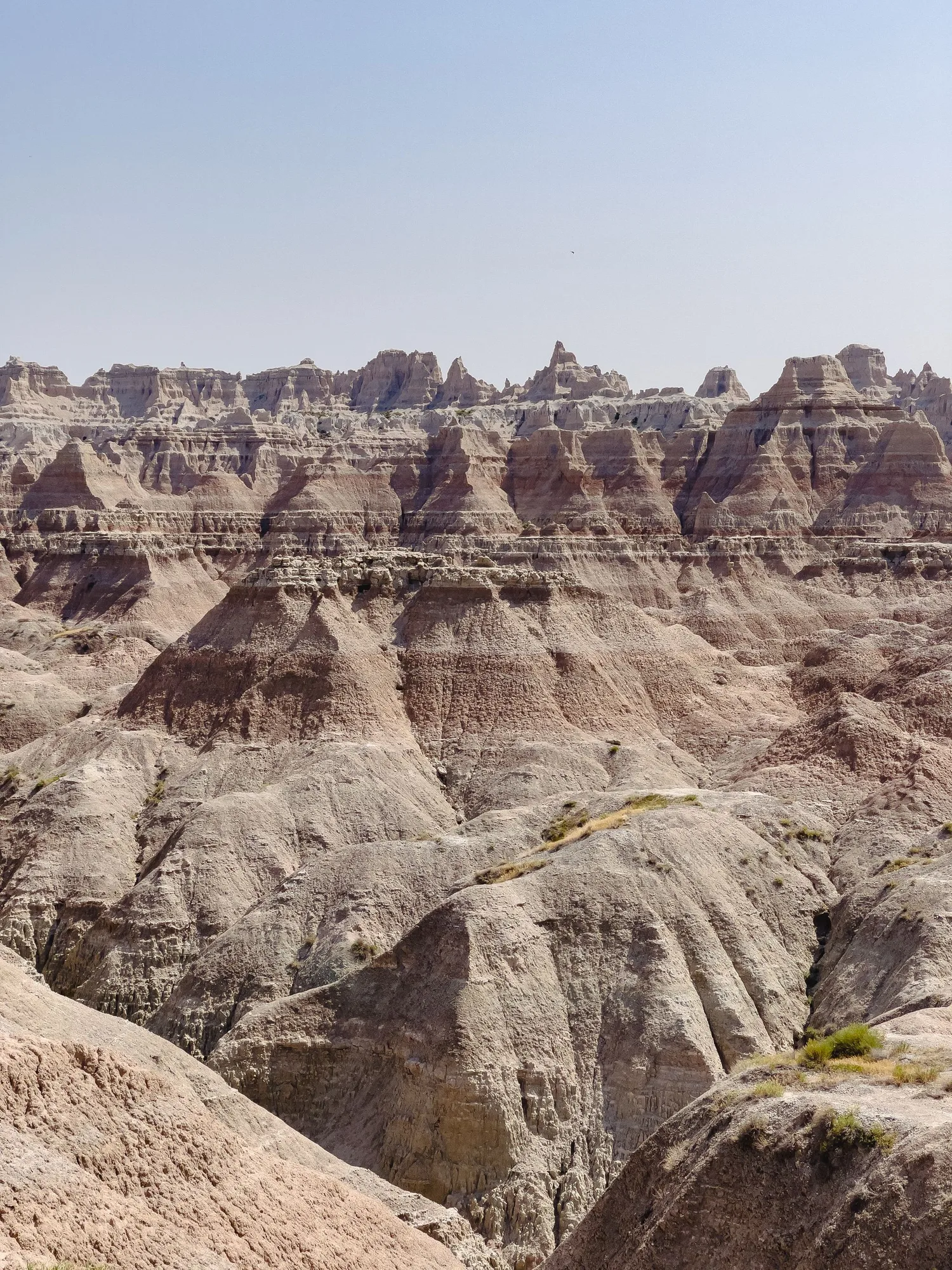
Badlands received 147 captive-bred ferrets between 1996 and 1999, released into the Conata Basin's prairie dog colonies at the park's southern edge. What makes the Badlands population genuinely notable, among ferret recovery sites nationwide, is that nobody has had to restock it with captive-bred animals since that original release. Travis Livieri, executive director of Prairie Wildlife Research, put the milestone plainly this year: "For twenty-six, twenty-seven years now, it's been a self-sustaining population on its own." A single ferret eats roughly a hundred prairie dogs a year, which gives some sense of just how much prairie dog town a stable ferret population actually needs underneath it.
- Meeteetse rediscovery SEP 26, 1981
- Badlands reintroduction 1996-1999
- Ferrets released 147
- Prairie dogs eaten per ferret, yearly ~100
Plan Your Badlands Visit
Ferrets are nocturnal and rarely seen by day visitors, but the prairie dog towns that support them are easy to spot along Sage Creek Rim Road. The trip planner can help you time it right.
Open the Trip PlannerPlague, Not Poison
Sylvatic plague, the same disease family as historical human plague, first showed up in Conata Basin's prairie dog colonies in 2008 and has recurred since, most recently alongside a severe drought in 2024. Plague kills prairie dogs directly, which starves ferrets out of both food and shelter, and it can infect ferrets themselves. Park biologists now vaccinate ferrets against it where they can and dust prairie dog burrows with insecticide to kill the fleas that actually carry it between colonies. Population counts across the wider Conata Basin, Badlands, and Buffalo Gap complex have swung hard as a result: roughly 355 ferrets in 2007, down to about 50 after a plague outbreak in 2013, recovering to around 250 by 2024, then back under 100 in 2025 as drought and plague hit at the same time. It's a population that keeps proving it can rebuild itself, and keeps needing to.
Elizabeth Ann, and the Ferrets That Came After Her
In 1988, tissue from a ferret named Willa was frozen at the San Diego Zoo's Frozen Zoo, a genetic archive built for exactly this kind of long shot. Willa had no surviving descendants, which meant her genes, roughly three times more genetically distinct than anything left in the living ferret population, were otherwise gone from the gene pool entirely. In December 2020, scientists working with Revive & Restore and the U.S. Fish and Wildlife Service cloned her. The resulting kit, named Elizabeth Ann, was announced to the public in February 2021, the first cloned endangered species native to North America. She never bred herself, and died in 2025, but she wasn't the end of the experiment.
Two more clones from Willa's line, Noreen and Antonia, were born in April 2024. Antonia went on to breed naturally in 2024, giving birth to two surviving kits, the first live offspring ever produced by a cloned animal of an endangered species anywhere. Both of those kits had litters of their own in 2025. A line of genetics that came within one freezer accident of disappearing forever now has grandkits.
Facts and figures checked against the National Park Service's black-footed ferret history for Badlands, South Dakota Public Broadcasting's 2026 reporting on the ferret population, and Revive & Restore's public reporting on the Elizabeth Ann, Noreen, and Antonia cloning program.
Shep's find in 1981 has an odd kind of afterlife now: eighteen surviving ferrets became the entire founding population of every black-footed ferret alive, including the ones denning in Badlands' prairie dog towns tonight, and including the cloned lines carrying genes from an animal that otherwise left nothing behind at all. None of it looks dramatic from a boardwalk. The ferrets themselves are almost never seen, nocturnal, small, living underground in burrows they didn't even dig. But the prairie stretching out from Sage Creek Rim Road is, quietly, one of the few places on the continent where a species written off twice keeps proving that call wrong.