Ed Riggs's gravestone doesn't list a career or a title. It lists a trail. "He engineered the construction of Echo Trail," it reads. "He wishes this to be his monument."
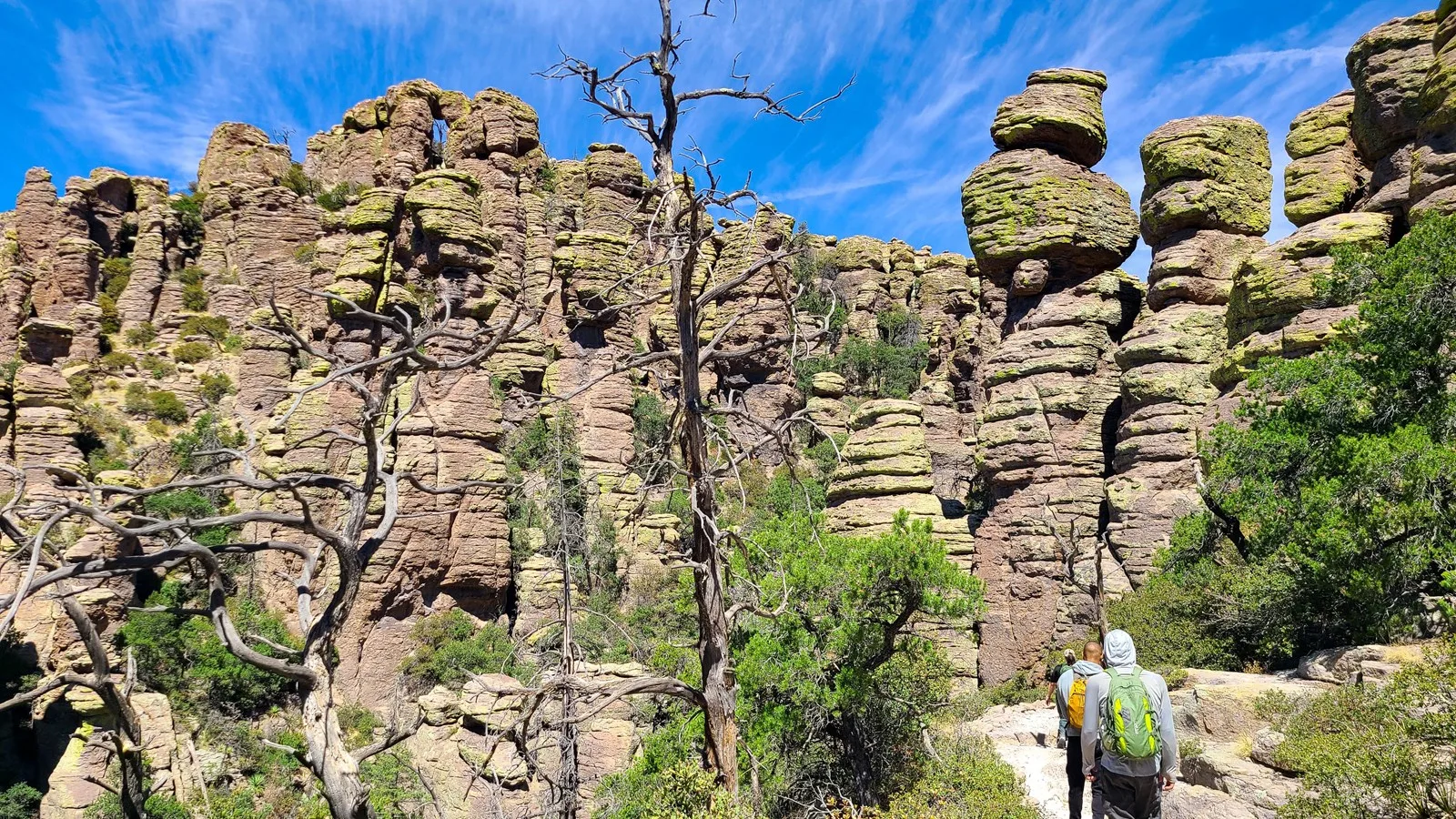
That trail is now part of the best-known hike in the country's newest national park. The rocks it runs through are 27 million years old. The reason anyone outside southeastern Arizona knows about them is one family, three women and a rancher, who spent most of a century making a living out of the Wonderland of Rocks.
Why the Ranch Matters to the Park
NPS describes Faraway Ranch as a story important to women's history. Emma Erickson started the purchase of the original property. Her daughter Hildegard started the guest ranch. Her daughter Lillian expanded it with her husband and ran it alone after his death. Along the way, the family's guests, photographs, and trail building helped turn a private wonder into a national monument, and the monument into the park that exists today.
A Two-Room Cabin, 1886
Emma Peterson, an immigrant from Sweden, bought a two-room cabin in December 1886. She married Neil Erickson the next month, in January 1887, and the couple settled on the 160-acre homestead. Farming was hard going, so Neil worked as a carpenter in Bisbee, and Emma ran the place alone for two or three months at a time.
In 1903 Neil became the first ranger of the Chiricahua Forest Reserve, and for the first time in their marriage he was home. The house grew with the family. By 1915 it was a two-and-a-half-story building with adobe and board-and-batten walls.
Guests on the Weekends
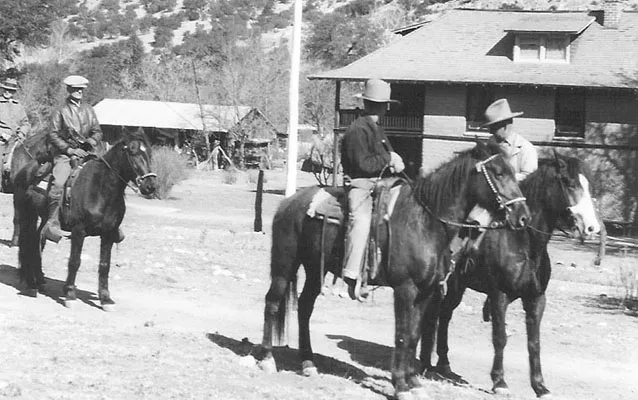
When the Forest Service transferred Neil to Flagstaff in 1917, the ranch passed to the three children. That same year Hildegard started boarding guests on the weekends. Lillian, who had been teaching, quit to help her. The business worked well enough that a year later the sisters bought the neighboring Stafford cabin and its land.
Hildegard married and moved away in 1920. Lillian stayed, and in 1923 she married Ed Riggs, a neighbor she had known since childhood. Ed added the comforts a modern guest ranch needed: bathrooms, oil heat, electricity, and a dining room with a fireplace built from stones carved by Buffalo Soldiers.
Lillian was the hostess, but NPS is clear that she also ran the details of the business. Years later, writing to a niece who wanted to run a guest ranch of her own, she laid out what that meant. "Remember you are not in town where you can call a plumber, an electrician, a carpenter, a mechanic, or a blacksmith, whenever you need one," she wrote, and then asked what her niece would do "when the water pipes freeze on the coldest night in forty years."
By the early 1930s the ranch could lodge up to thirty-two people at once. Ed served homemade ice cream on Sundays.
Visit Faraway Ranch
The Faraway Ranch Historic District sits near the park entrance, at the start of the level Silver Spur Meadow Trail. House tour hours vary, so check at the visitor center when you arrive.
Plan a Chiricahua dayHow a Ranch Made a Monument
Lillian's father had come across the rock formations years before, but NPS says surprisingly few Anglo-Americans knew about the area until the twentieth century. In 1921 Ed and Lillian began exploring it in earnest. They saw what the scenery could mean for the ranch, hired an amateur photographer to take panoramic photos, and sent the pictures to the county fair and to the chambers of commerce in several nearby towns.
The photographs started a grassroots push to protect the area. Arizona Governor George W. P. Hunt visited the Wonderland of Rocks in 1923 and supported a national monument. On April 18, 1924, President Calvin Coolidge created Chiricahua National Monument.
The Riggses had a stake in it, and NPS says so plainly: as the only place in the area offering lodging and meals, they had strong financial reasons to want the monument. After 1924 business at Faraway grew, with guests arriving from New York, California, and many other states.
Ed Riggs and Echo Canyon
The Bonita Canyon Road, the first good road into the monument, was dedicated in 1934, and seven thousand people came to the dedication. That same year a Civilian Conservation Corps camp opened on the Riggses' own property, with barracks for 200 men and a mess hall. It stayed until 1940.
Ed took a job as a CCC trail foreman. It paid $1,800 a year, more than the guest ranch brought in during 1936 or 1937.
Ed was sure his crew could put a trail into steep Echo Canyon, even though professional engineers said it couldn't be done. Frank Pinkley, superintendent of the Southwestern National Monuments, gave him the job on one condition: "if you fail to put a trail through that area, just hand in your resignation. Don't wait for me to fire you!"
The crew finished the trail in 1936.
The Lady Who Kept the Ranch
Lillian had been losing her hearing since she was young, and by 1942 she was also blind. In 1945 she and Ed sold part of the property and agreed to stay out of the guest ranch business for ten years. Ed died of a cerebral hemorrhage in 1950. Her mother, Emma, died a few months later.
Lillian reopened Faraway as a guest lodge in 1955, when the agreement ran out, and kept a cattle herd going. By then the ranch was an inholding, surrounded on all sides by the monument after a 1938 expansion. She closed the guest ranch in 1970, at eighty-two, and died in 1977. The National Park Service bought Faraway Ranch in 1979.
- Cabin bought DEC 1886
- Guest ranch opened 1917
- Monument created APR 18, 1924
- Echo Trail finished 1936
- NPS acquired the ranch 1979
Facts, dates, and all quotes are from the National Park Service: the Chiricahua Faraway Ranch history page and the NPS article series The Story of Faraway Ranch (Arizona Homestead, Chiricahua National Monument, Faraway During the Depression, and Perseverance in the Postwar Era), plus the park's Heart of Rocks and Echo Canyon trail pages. Lillian's letter is trimmed from the longer version NPS publishes. One NPS discrepancy: the ranch series says the 1938 expansion added about 8,000 acres, while the park's statistics page lists 6,407, so we left the acreage out. Photos: NPS, public domain.
The Echo Canyon trail Ed's crew cut in 1936 is now part of the 3.3-mile Echo Canyon Loop, which covers the densest pinnacles in the park. Most of the people on it have never heard of him. That is probably fine with him. He only asked for the trail.