On July 20, 1925, Utah's governor stood in Torrey and dedicated sixteen acres of red-rock canyon country as the state's newest park, a small win in a fight two brothers-in-law had been waging for four years. Four days later, one of those two men was dead, thrown from a boat into Fish Lake by a sudden storm, unable to swim.
His name was Joseph Hickman, and the natural bridge protected in that sixteen-acre parcel still carries his name today. He never got to see what his fight eventually became: a national monument, then a national park, drawing visitors from around the world to look at the arch he helped save and never got to watch succeed.
Two Brothers-in-Law With a Hard Sell
Ephraim Pectol coined the name "Wayne Wonderland" for the colorful stretch of canyon country between Bicknell and the Colorado River, and in 1921 he and his brother-in-law Joseph Hickman started a Boosters' Club in Torrey to get the word out. Pectol, as club president, sent stories and photographs to newspapers. It wasn't enough on its own, so a few years later Hickman organized the Wayne Wonderland Club, which grew into the broader Associated Civics Club of Southern Utah. Neither man had any formal conservation authority. What they had was a shared conviction that this landscape deserved more than being treated as rough, unusable terrain, and the persistence to keep saying so until someone with actual power listened.
A State Senator Writes His Own Bill
Hickman won election to the Utah legislature in November 1924, and once there he introduced a bill designating part of Wayne Wonderland as a state park. It passed, protecting sixteen acres near Fruita that included the natural bridge that would later carry his name. Governor George H. Dern presided over the dedication in Torrey on July 20, 1925. Hickman didn't stop at the state level either. He also introduced a resolution asking the federal government to consider the area for national monument status, a much bigger ask that would take another twelve years to answer.
Plan the Hickman Bridge Trail
0.9 miles each way, 400 feet of gain, to a 133-foot span. The trip planner can fit it into a Fruita morning alongside the petroglyphs.
Open the Trip PlannerThe Storm at Fish Lake
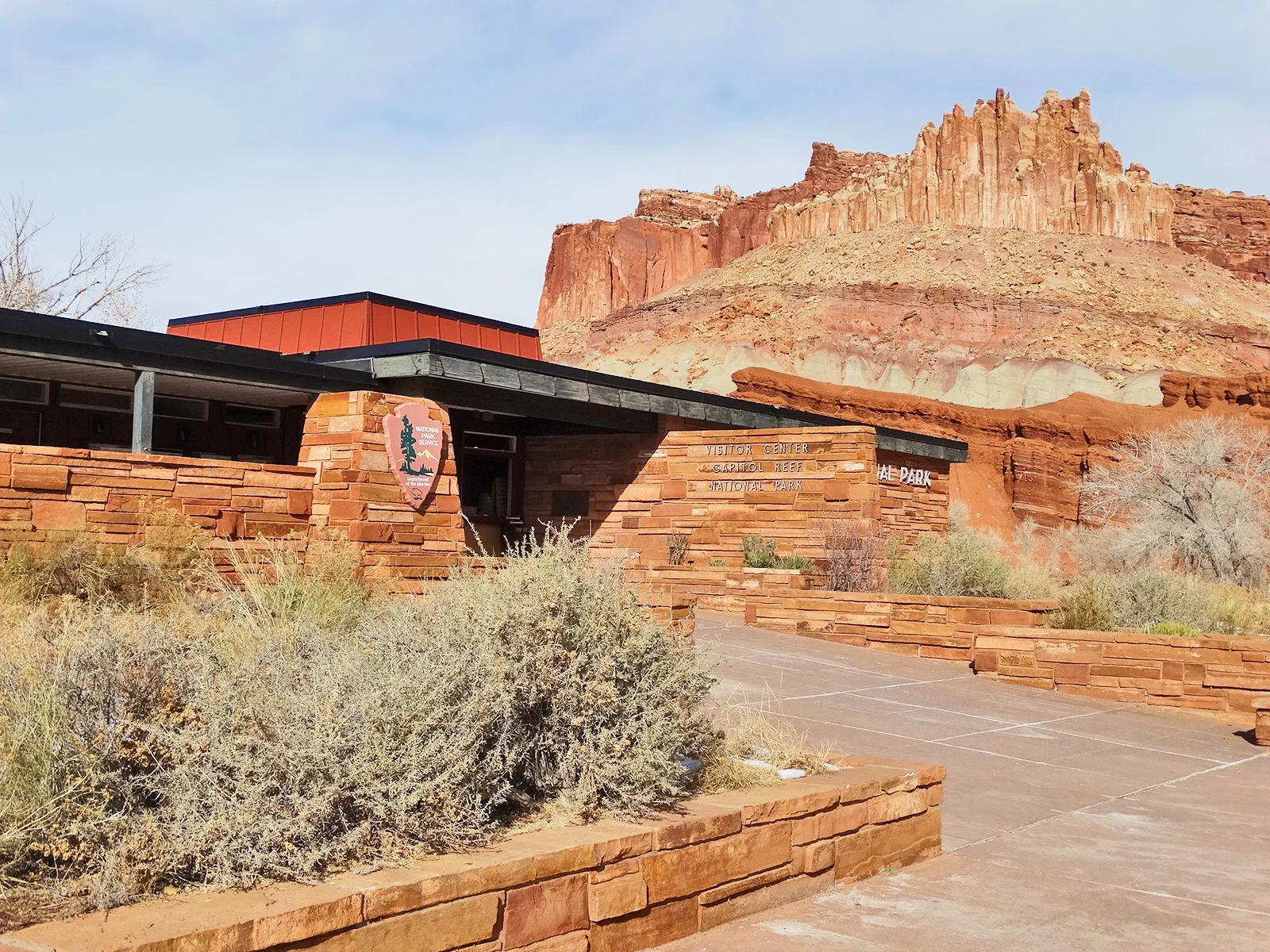
Four days after the Torrey dedication, on July 24, 1925, Hickman went to Fish Lake with a group of friends. A sudden storm hit while they were out on the water, throwing him from the boat. He couldn't swim, and he drowned. He was in the middle of the biggest win of his campaign when he died, having just secured state protection for the land he and Pectol had spent four years promoting, with the larger federal designation he'd formally requested still entirely unresolved.
- Boosters' Club founded 1921
- State park dedicated JUL 20, 1925
- Hickman drowned JUL 24, 1925
- National monument AUG 2, 1937
What Pectol Finished Alone
Ephraim Pectol kept working after Hickman's death, funding a photographer to document and lecture on Wayne Wonderland's scenery, then winning his own seat in the state legislature in 1933 to push a congressional resolution for national monument status. He spent four years guiding federal investigators and boundary surveys, neglecting his own business in the process, until President Franklin D. Roosevelt signed the proclamation creating Capitol Reef National Monument on August 2, 1937. The park didn't formally open to the public until 1950 and wasn't upgraded to full national park status until 1971, twenty-four years after Pectol himself died in 1947. Today, Hickman Bridge spans 133 feet and stands 125 feet high, reached by a trail that runs 0.9 miles each way with about 400 feet of elevation gain, one of the most photographed features in a park that exists because two brothers-in-law refused to let this place stay unnoticed.
Facts and figures checked against NPS.gov's Capitol Reef park founders materials and Hickman Bridge trail guide, cross-referenced against a detailed published historical account of the Wayne Wonderland campaign.
The sixteen acres Hickman's bill protected in 1925 are inside a national park today that spans nearly a quarter million acres, all traceable back to a Boosters' Club two brothers-in-law started because nobody else was going to. Hickman got four days to enjoy the first real win of that fight before Fish Lake took him. The bridge that carries his name has had a hundred years since to keep standing in his place.