
The Gunnison River drops 43 feet for every mile it runs through here. The Colorado River, cutting the Grand Canyon, drops less than 8.
It's Not Bigger Than the Grand Canyon. It's Just in More of a Rush.
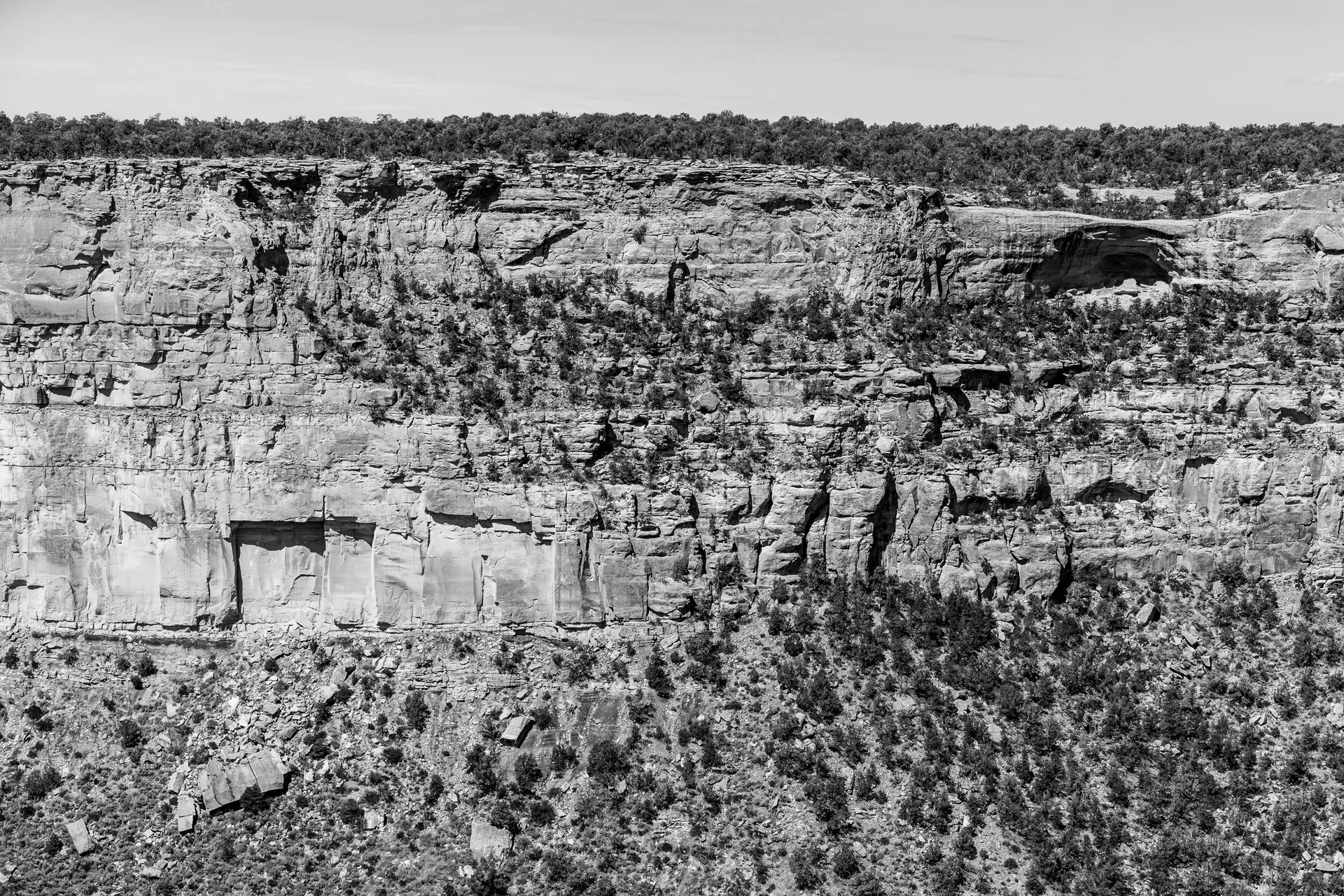
Stand at Chasm View on the North Rim and the canyon across from you is 1,100 feet away, rim to rim, measured by the National Park Service itself. That's the narrowest crossing in the park. Look straight down at Warner Point and the drop is 2,722 feet, the deepest point Black Canyon has. Both numbers sound enormous until you set them next to the Grand Canyon, which reaches roughly 6,000 feet deep at its lowest, more than twice what Black Canyon manages. So the honest comparison isn't depth. Black Canyon loses that one outright.
What it wins is gradient. The Gunnison River falls about 2,150 feet over the 50 miles it spends inside the canyon, an average of 43 feet per mile. The Colorado River, carving the Grand Canyon over roughly six million years, drops about 7.5 feet per mile, close to six times gentler. Geologists rank the Gunnison's descent through here as the fifth-steepest mountain river gradient on Earth. That's the actual reason this canyon feels the way it does when you're standing at the rim: not the raw drop beneath your boots, but a river down there that never had time to widen the walls the way a slower one would. It cut down. It didn't cut out.
- Deepest point WARNER POINT · 2,722 FT
- Narrowest rim-to-rim CHASM VIEW · 1,100 FT
- River gradient here ~43 FT PER MILE, AVG
- Colorado River in Grand Canyon ~7.5 FT PER MILE, AVG
Plan Your Black Canyon Visit
Most of the park's best overlooks sit on the South Rim Road, an easy drive with pullouts every mile or so.
Open the Trip PlannerThe Streaks on the Painted Wall Are Older Than Complex Life
The Painted Wall rises 2,250 feet from the river, the tallest sheer cliff face in Colorado. What gives it its name, and its streaks, are pink bands of pegmatite, a coarse igneous rock, cutting diagonally across dark gneiss and schist that the National Park Service dates to nearly two billion years old, among the oldest exposed rock anywhere in a national park. The pegmatite forced its way into the older rock as molten material, cooled slowly enough underground to grow crystals up to six feet long, and then sat there for roughly two billion years while everything above it eroded away and finally left it exposed to the air.
None of that pink rock is younger than the dark rock it cuts through, which is worth sitting with for a second. The lines that make the Painted Wall look almost deliberate, like brushstrokes, are actually a record of two separate events separated by enormous time: first a slow-cooling intrusion of granite deep underground, then, eons later, a river willing to cut fast enough and long enough to expose it. Everything else in the park (the overlooks, the trails, the narrow rim you're standing on) is really just the present moment's access point to a wall that was already ancient before there was anything alive to see it.
- Height 2,250 FT · TALLEST CLIFF IN COLORADO
- Base rock PRECAMBRIAN GNEISS & SCHIST, ~2 BILLION YRS
- Pink streaks PEGMATITE DIKES, CRYSTALS TO 6 FT
Depth and width figures checked against NPS.gov's official Canyon Dimensions page. River gradient, the Grand Canyon comparison, and the "fifth-steepest" ranking checked against NPS's Geodiversity Atlas entry for the park. Painted Wall height, rock age, and pegmatite crystal size checked against the same NPS geology source.
Come back to that first number: 43 feet a mile. It doesn't sound like much written down, closer to a highway grade than a geological superlative. But run it for 50 miles through rock that hard, for that long, and you get a canyon that never had the chance to relax into something wide and gradual. The Grand Canyon is bigger because its river was patient. This one isn't bigger. It was just never patient at all.