Tanalian Falls Trail
Easy–Mod
4 mi round trip+300 ft~2.5 hr
The park's most accessible trail, from Port Alsworth to a scenic waterfall. No permit.
 National
Alaska · Park 62 / 64
A wilderness bigger than Rhode Island and Connecticut combined, made famous by one man who built a cabin and lived there alone for thirty years.
Richard Proenneke, a former Iowan, arrived at Twin Lakes in 1968 and lived there mostly alone for the next thirty years, building his own cabin by hand with hand tools and documenting his daily life on film. That footage became the 2003 documentary Alone in the Wilderness, and his cabin, now on the National Register of Historic Places, remains open to the public each summer inside a park that otherwise has no roads, no towns beyond a handful of tiny communities, and roughly seven miles of maintained trail in over four million acres.
Port Alsworth, on the shore of Lake Clark itself, is the only meaningfully developed place in the park, reachable exclusively by small aircraft since no road reaches it at all. From there, most visitors either hike the modest trail network to Tanalian Falls and Kontrashibuna Lake, or book a floatplane trip to Chinitna Bay or Silver Salmon Creek, where brown bears gather each summer to graze on sedges and dig for clams in the tidal flats.
Come for the bears and the volcanoes, since two, Redoubt and Iliamna, sit right inside the park. Stay long enough to visit Proenneke's cabin and understand why he chose to stay here for three decades. Read the story, book your air taxi well ahead, and when you leave, mark it visited.

The full connection with nature, the isolation in the wilderness, and the firm decision to dive into his own soul made Richard Proenneke reach a level of existential consciousness that very few achieve.Adapted from a visitor account of Dick Proenneke's cabin at Twin Lakes
Six ways to spend your time, once the floatplane sets you down on the shore of Lake Clark.
The hand-built cabin at Twin Lakes where Proenneke lived alone for thirty years, open to the public daily each summer.
The signature stop · 30-min flight from Port AlsworthBrown bears gather in the estuaries here from spring through fall, grazing sedges and digging clams in the tidal flats.
Half day · floatplane tripThe park's most accessible hike, a moderate trail from Port Alsworth to a scenic waterfall.
Half day · moderate trailThe park's main contact point, with a wheelchair-accessible ramp and an all-terrain wheelchair available for loan.
Everyone · 30 minConsidered the paramount fishing spot in the park, with salmon runs peaking in August and September.
Half to full day · license requiredA historic Dena'ina trade route between Telaquana Lake and Twin Lakes, roughly 40 miles of trail-less terrain.
Full expedition · experienced backpackers onlyAnswer a few questions right here. We'll map your day, stop by stop, with a route, timings, weather, and a packing checklist grounded in real park data. No account, no leaving this page.
⚡ In a hurry? Adventure Light 5 questions →Every route rated honestly. This park has roughly seven miles of maintained trail total; everything beyond Port Alsworth is self-navigated wilderness.
The park's most accessible trail, from Port Alsworth to a scenic waterfall. No permit.
A moderate trail from Port Alsworth to a scenic lake, one of the park's few maintained routes. No permit.
A strenuous climb above Port Alsworth with sweeping summit views. No permit.
A floatplane trip to Twin Lakes to visit the historic hand-built cabin, open daily to the public each summer.
A guided floatplane bear-viewing trip to the coastal estuaries where bears graze and dig for clams.
A historic Dena'ina trade route between Telaquana Lake and Twin Lakes, entirely trail-less backcountry travel.
No permit required for backcountry travel or camping · free registration recommended at the Port Alsworth Visitor Center · access is exclusively by small aircraft or boat, with no road connection anywhere
Tap any animal to learn its story. Soon, the app will let you log what you spot and keep a life list for every park.
Gathers in large numbers along the park's coastal estuaries, grazing on sedges and digging clams in the tidal flats.
Found throughout most of the park except higher elevations, generally shier than the park's coastal brown bears.
The park's rivers and lakes support the legendary Bristol Bay salmon runs, drawing both bears and anglers.
Found grazing the tundra areas west of Lake Clark, part of the park's varied ecosystem.
Common on the steep western slopes of the Aleutian Range within the park, including near Tanalian Mountain.
Occasionally seen cruising offshore in Cook Inlet during the warmer months, part of the park's coastal marine life.
Breeds in the park's wetland areas, part of a broader recovery of the species across Alaska.
Found in the park's coastal rainforest zone along Cook Inlet, part of the temperate rainforest ecosystem of coastal Alaska.
A key spring food source for the park's coastal bears, growing in the salt marshes of Chinitna Bay.
Covers much of the park's higher elevations, a hardy plant community adapted to a short growing season.
Common in the park's inland boreal forest, particularly around Port Alsworth and the Twin Lakes area.
Common throughout the park's open areas, a familiar and fast-colonizing wildflower found across much of Alaska.
Soils near the park's two active volcanoes bear the influence of past eruptions, shaping which plants can establish there.
Richard Proenneke lived alone at Twin Lakes from 1968 to 1999, building his own cabin entirely by hand.
The park is bigger than Rhode Island and Connecticut combined, yet has only about seven miles of maintained trail.
Two active volcanoes, Redoubt and Iliamna, sit within the park; Redoubt has erupted twice in recent decades, in 1989 and 2009.
There is no road access anywhere in Lake Clark National Park; every visitor arrives by small aircraft or boat.
The questions people actually ask, answered from the park’s own current guidance. Fees and permit rules change every year, so each answer links back to the National Park Service page it came from.
No. Lake Clark doesn't charge an entrance fee or require any pass to visit. It also doesn't charge for backcountry activities like backpacking, camping, river running, or bear viewing; the only fees in the park are for staying at public use cabins. Source: NPS.gov
No permit is required for bear viewing, backpacking, camping, or river running anywhere in the park. You can visit coastal bear-viewing areas on your own or go with one of the licensed commercial outfitters that run day and overnight bear-viewing trips, which is what most visitors do given how remote the park is. Source: NPS.gov
By small plane only; there's no road system connecting Lake Clark to anywhere else. Most visitors fly in between June and October, when the weather is milder and there's a fuller range of lodging, transportation, and guiding services available. In winter, some areas are still reachable by planes on skis, but access depends heavily on weather. Source: NPS.gov
Stories, guides, and hard-won tips from the trail. The full Lake Clark deep dive lives on the blog.
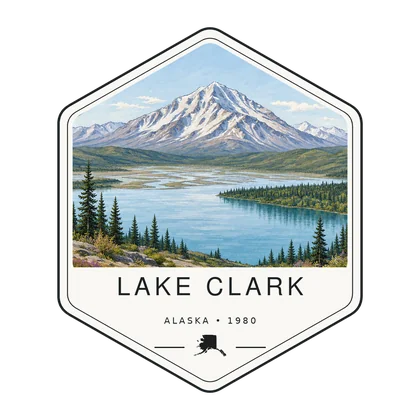
Log the visit, keep your story, and watch the map of all sixty-four fill in behind you. Every visit has a keepsake worth holding.
A short flight south across Cook Inlet: another Alaska bear-viewing destination, this one built around a legendary waterfall.
Open Park 60 → The collectionSee the full map and track every park you have visited.
View the map → PlanTurn Lake Clark into a trip with a custom, day-by-day itinerary.
Start planning → Go deeperAt 51, Richard Proenneke built a cabin by hand at Twin Lakes and stayed for thirty years, filming and journaling almost every day of it.
Read it →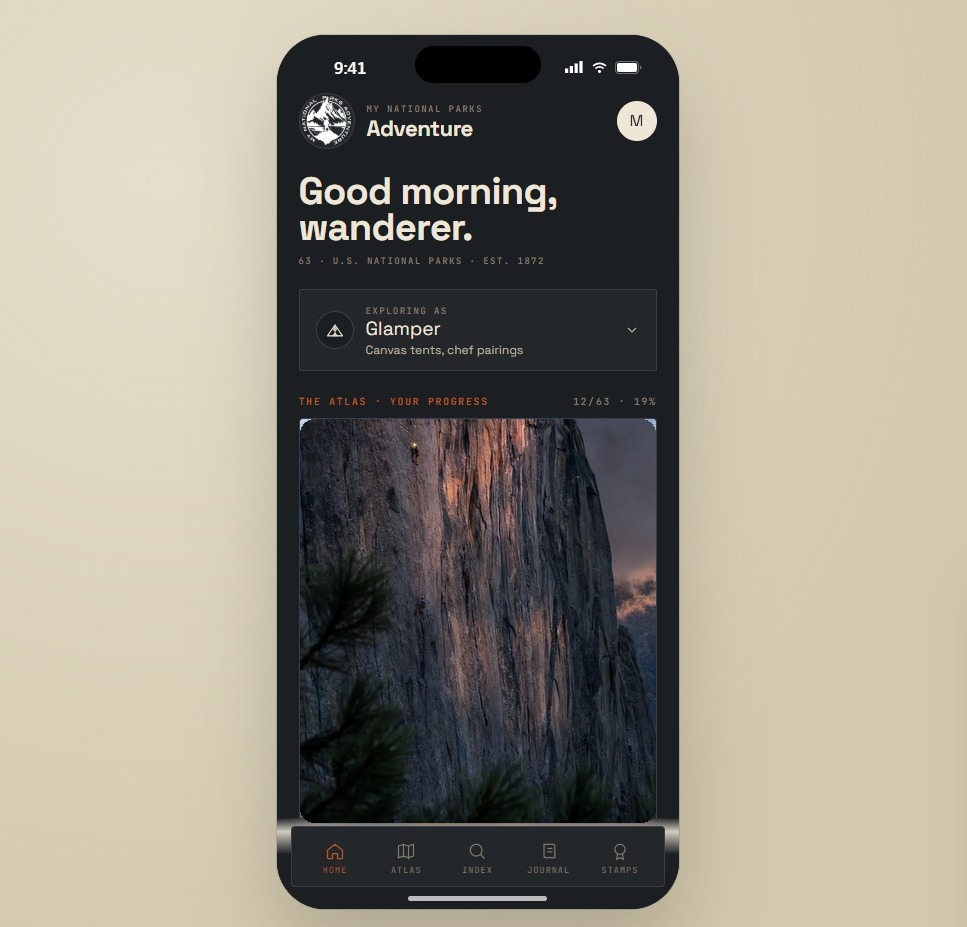
Offline maps, your passport, and every park in your pocket on the trail.
Join the waitlist →
The printed edition, part atlas, part journal, one story per park.
Notify me →Park-guide posters, enamel stamps, and the passport book to fill in.
Visit the shop →Field Notes
The parks do not perform for anyone. They stood here before the road, and they will stand here after it.