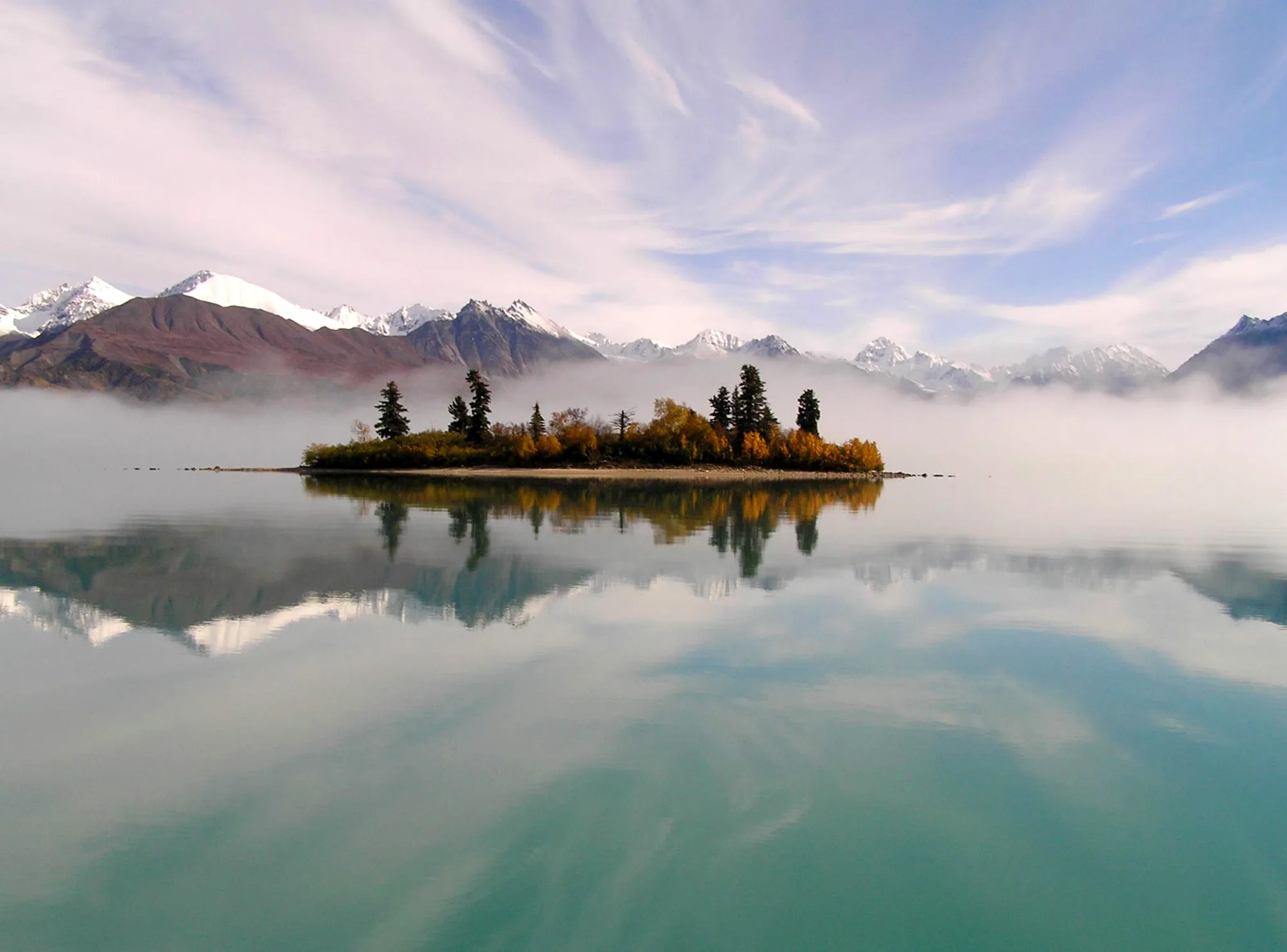
On May 21, 1968, a 51-year-old retired heavy-equipment mechanic named Richard Proenneke stepped off a floatplane at the upper end of Twin Lakes carrying a wall tent and a plan to build his own cabin from what the land around him could provide. He meant to stay a while. He ended up staying almost thirty years, and he wrote down nearly all of it.
A Retired Mechanic, Not a Hermit
Proenneke wasn't a wilderness novice looking for a stunt. Born in 1916 in Primrose, Iowa, he enlisted in the Navy the day after Pearl Harbor and served as a carpenter through 1945, including nearly two years stationed at Pearl Harbor itself. Rheumatic fever, caught after a hike near San Francisco, ended up earning him a medical discharge, after which he retrained as a diesel mechanic. By 1950 he'd made his way to Alaska, working as a heavy equipment operator at the Kodiak Naval Air Station, fishing salmon commercially, and eventually taking a job with the Fish and Wildlife Service out of King Salmon. He first saw Twin Lakes in 1962, six years before he moved there for good.
When he arrived to stay in May 1968, he built almost everything himself: a cabin assembled from hand-cut, interlocking log joints, a fireplace and hearth built from stones gathered on site, a foundation packed with gravel hauled up from the lake bed. He filmed the whole process on 8mm film without knowing what, if anything, it would ever become. He buried one-gallon cans below the frost line as a homemade refrigerator and built a raised food cache to keep bears out of his stores, the kind of practical, unglamorous engineering that kept a person alive out there far more than any survivalist instinct did.
- Born 1916, PRIMROSE, IOWA
- Navy carpenter 1941–1945, INCLUDING PEARL HARBOR
- First saw Twin Lakes 1962
- Arrived to stay MAY 21, 1968, AGE 51
Plan a Lake Clark Trip
Proenneke's cabin is reachable only by floatplane, the same way he first reached it in 1968.
Open the Trip PlannerThirty Years, Told in His Own Journals
Proenneke kept a journal from that first 1962 visit onward, and he kept writing almost daily once he moved in for good, eventually donating every volume to the National Park Service. The published collections run in five parts, covering 1967 to 1973, 1974 to 1980, 1981 to 1985, 1986 to 1991, and 1992 to 2000, and they read less like survival literature and more like the record of someone paying very close attention to an ordinary life. On Christmas 1974 he cooked himself hotcakes, chicken, mashed potatoes, brown gravy, noodles, dumplings, sourdough biscuits, honey, Jello, and hot chocolate, and noted that the birds outside knew it was Christmas too and came for extra helpings. He was not a hermit by his own account, corresponding regularly by mail and welcoming pilots and visitors who made the trip in, and he later served as a National Park Service Volunteer-In-Park, helping other visitors find their way around the place he knew better than anyone.
He finally left Twin Lakes for good in 1999, at 83, to live with his brother in California, and died there of a stroke on April 20, 2003, at 86. He'd already arranged for the cabin to go to the National Park Service, and his own 8mm footage, shot with no audience in mind, became the basis of the 2004 documentary "Alone in the Wilderness," produced by Bob Swerer Productions from film Proenneke himself had captured decades earlier. The cabin was added to the National Register of Historic Places in 2007, four years after his death, and it still stands at Twin Lakes today, maintained by the park service and open to the visitors who make the same floatplane trip he made in 1968.
- Journal volumes published 5, COVERING 1967–2000
- Left Twin Lakes 1999, AGE 83
- Died APRIL 20, 2003, AGE 86
- Documentary "ALONE IN THE WILDERNESS," 2004
- Cabin added to National Register 2007
Cabin construction, journal history, and the Christmas 1974 journal excerpt checked against the National Park Service's official account of Richard Proenneke's journals. Biographical background before 1968, the "Alone in the Wilderness" documentary, and his death date checked against published biographical sourcing consistent with the National Park Service's own record.
A floatplane still sets down on Upper Twin Lake the same way one did on May 21, 1968, carrying visitors instead of a 51-year-old with a wall tent, and the hand-cut joints in the cabin wall are the same ones he shaped without a nail gun or a crew, just to see if he could still do the work he'd learned building things his whole life. He wasn't hiding from anything. He was just paying closer attention than most people ever get the chance to.