Arrigetch Peaks Trek
A multi-day cross-country trek along Arrigetch Creek to the base of the granite spires, entirely off-trail.
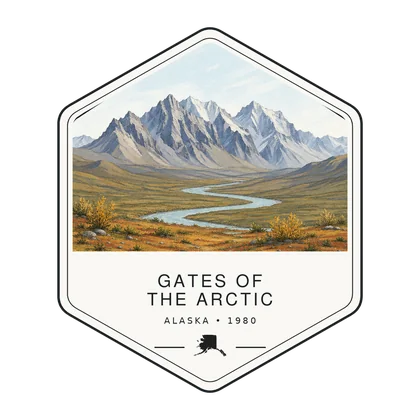
NationalAlaska · Park 59 / 63
No roads, no trails, no facilities of any kind. It's the least-visited national park in the entire system, and it stays that way by design.
Gates of the Arctic is the second-largest national park in the United States and, by a wide margin, the least visited: roughly 10,000 people a year, compared to millions at Grand Canyon in a single month. That's not an accident of remoteness alone; the park was deliberately established as trail-less wilderness, so that every visitor charts their own course across tundra, river valleys, and the jagged peaks of the central Brooks Range rather than following anyone else's path.
Getting here means flying to the small community of Bettles or Coldfoot from Fairbanks, then chartering a bush plane, typically equipped with floats or tundra tires, to land on a gravel bar or lake somewhere inside the park boundary. When the pilot leaves, you are genuinely on your own until the agreed pickup date, weather permitting. The Arrigetch Peaks, a cluster of dramatic granite spires reachable by a multi-day trek from a float-plane drop-off, are the most sought-after destination for experienced backpackers and climbers.
Come only if you're prepared to plan an expedition, not book a vacation. Stay long enough to understand why fewer people visit this park each year than visit the Grand Canyon in a single afternoon. Read the story, register your itinerary with a ranger station before you go, and when you leave, mark it visited.
If you want to experience genuinely wild landscape on its own terms, with no trails and no crowds, this is as close to that as you'll find in the United States.Adapted from a guide to visiting Gates of the Arctic National Park
There is no essentials list here in the usual sense. Every visit to this park is a self-directed expedition. Here's what most trips involve.
The only realistic way into the park's interior, typically landing on a gravel bar or remote lake.
The essential step · book months aheadA multi-day trek from a float-plane drop-off to a cluster of dramatic granite spires, the park's most sought-after destination.
Full expedition · experienced backpackers onlyThe Alatna, John, Kobuk, Noatak, North Fork Koyukuk, and Tinayguk offer some of the most remote float trips in the world.
Full expedition · packraft or canoeBettles, Coldfoot, or Fairbanks; not legally required, but strongly advised given the total absence of cell service and rescue infrastructure.
Everyone · before departureThe one non-flying option, requiring a river crossing and genuine backcountry skill; not a casual walk-in.
Experienced hikers onlyA more affordable way to see the park's scale for those without the time or budget for a full expedition.
Half day · from Bettles or ColdfootAnswer a few questions right here. We'll map your day, stop by stop, with a route, timings, weather, and a packing checklist grounded in real park data. No account, no leaving this page.
⚡ In a hurry? Adventure Light 5 questions →There are no maintained trails anywhere in this park. Every route below is a self-navigated backcountry journey, rated by genuine difficulty.
A multi-day cross-country trek along Arrigetch Creek to the base of the granite spires, entirely off-trail.
A gentle-flowing Wild and Scenic River float, passing directly beneath the Arrigetch Peaks.
One of the longest and most remote undammed river systems in the country, floated through open tundra.
Access on foot from the highway, requiring a river crossing and genuine wilderness navigation skill. No permit required.
Day hikes into the tundra near the Inupiat village of Anaktuvuk Pass, reachable by scheduled air taxi.
A scenic flight over the park's peaks and rivers without landing, the most affordable way to see the park's scale.
No permits required anywhere in the park, but registering your itinerary with an NPS ranger station is strongly recommended · bear-resistant food containers are required · zero cell service anywhere in the park
Tap any animal to learn its story. Soon, the app will let you log what you spot and keep a life list for every park.
Over 500,000 caribou migrate through the park twice a year, one of the largest remaining land migrations on Earth.
Common throughout the park; bear-resistant food containers are required, not optional, given the total lack of human infrastructure.
Packs follow the caribou migration through the park, part of one of the few fully intact large-predator systems in North America.
Found in parts of the park's tundra, adapted to survive the region's extreme winter conditions.
Common on the steep, rocky terrain throughout the Brooks Range within the park.
Hunts the open tundra for ground squirrels and other small mammals, occasionally visible from river floats.
Found in the park's clear, cold rivers, a draw for the rare angler who makes it this far.
Common across the park's tundra each brief summer, adding purple color to the otherwise muted landscape.
Uneven, boot-grabbing clumps of vegetation that make cross-country hiking here genuinely slow going; six miles can be a full day's travel.
Marks the southern edge of the park's boreal forest, at the northernmost limit of tree growth in North America.
Found in disturbed and open ground throughout the park, a familiar sight across much of Alaska.
A ground-hugging shrub common across the tundra, adapted to survive extreme cold and a short growing season.
Common in the park's wetland tundra areas, its cottony seed heads a distinctive summer sight.
Gates of the Arctic receives roughly 10,000 visitors a year, making it the least-visited national park in the entire U.S. system.
The park has zero roads and zero maintained trails anywhere within its 8.4-million-acre boundary, by deliberate wilderness design.
The Western Arctic caribou herd's twice-yearly migration through the park involves over 500,000 animals, one of the largest land migrations left on Earth.
Bush plane charters are the primary access method and typically the single largest expense of any trip here, often $1,500 to $3,500 or more.
The questions people actually ask, answered from the park’s own current guidance. Fees and permit rules change every year, so each answer links back to the National Park Service page it came from.
No, Gates of the Arctic charges no entrance fee and requires no registration just to enter. There are no entrance stations either, since the park has no road access at all. Source: NPS.gov
No permit is required for individual visitors, but rangers strongly recommend a backcountry orientation at one of the park's four visitor centers before you head out, where you'll get current weather, wildlife, and bear safety information. Organized groups are the exception, they need to contact the park several months ahead for permit and group-size requirements. Source: NPS.gov
There are no roads that reach Gates of the Arctic, so the only ways in are on foot or by small bush plane. Most visitors charter a plane out of Fairbanks, Bettles, or Coldfoot, and access depends heavily on weather, since flights can be grounded for days at a time. Source: NPS.gov
No, the park has no established or maintained trails anywhere. You travel cross-country through tussock tundra, brush, and river crossings, which makes progress slow and demands real backcountry route-finding skill before you commit to a trip. Source: NPS.gov
Stories, guides, and hard-won tips from the trail. The full Gates of the Arctic deep dive lives on the blog.

Log the visit, keep your story, and watch the map of all sixty-three fill in behind you. Every visit has a keepsake worth holding.
Just southwest across the Brooks Range foothills: another roadless, trail-less Arctic park, this one with sand dunes.
Open Park 60 → The collectionSee the full map and track every park you have visited.
View the map → PlanTurn Gates of the Arctic into a trip with a custom, day-by-day itinerary.
Start planning → Go deeperDenali's 20,310-foot summit, Wrangell-St. Elias, Glacier Bay, and an active volcano: Alaska's parks by mountain range.
Read it →
Offline maps, your passport, and every park in your pocket on the trail.
Join the waitlist →
The printed edition, part atlas, part journal, one story per park.
Notify me →
Park-guide posters, enamel stamps, and the passport book to fill in.
Visit the shop →Field Notes
The parks do not perform for anyone. They stood here before the road, and they will stand here after it.