Anhinga Trail
Easy
0.8 miflat~30 min
A paved and boardwalk loop over a slough with reliably close alligator, turtle, and wading-bird sightings. No permit.
 National
Florida · Park 20 / 64
A river of grass fifty miles wide and six inches deep, moving so slowly you can't see it move at all.
Most rivers have banks you can point to. The Everglades doesn't work that way: water sheets slowly south from Lake Okeechobee across a nearly flat limestone shelf, spread so wide and so shallow that early surveyors didn't recognize it as a river at all. Marjory Stoneman Douglas gave it the name that stuck, calling it a river of grass, and the description is more literal than poetic. The whole ecosystem depends on that slow, wide, shallow flow, and decades of draining and diking for agriculture nearly broke it before restoration efforts began clawing pieces of it back.
What that flow supports is one of the largest concentrations of wading birds and alligators in North America, alongside the only place on Earth where alligators and crocodiles coexist. The dry season, roughly December through April, concentrates wildlife around the remaining water and makes it the best time to see almost everything the park is known for.
Come for the alligators sunning six feet from a boardwalk. Stay for the scale of a landscape that genuinely has no edge you can see. Read the story, trust the live data above for what is open today, and when you leave, mark it visited.

There are no other Everglades in the world. They are, they have always been, one of the unique regions of the earth, remote, never wholly known.Marjory Stoneman Douglas · The Everglades: River of Grass, 1947
Six ways to spend your time, from an alligator-lined boardwalk to a fifteen-mile bike loop deep into the sawgrass.
A short boardwalk over a slough where alligators, turtles, and anhingas gather close enough to watch without binoculars.
The signature walkA flat 15-mile paved loop through open sawgrass prairie, rentals available at the entrance, tram tours if you'd rather not pedal.
Half day · all levelsThe only place on Earth where alligators and American crocodiles coexist, at the park's remote southern end.
Half day · boat toursA boardwalk into a dense hardwood hammock built around one of the largest mahogany trees in the country.
Everyone · 20 minA short walk to an elevated view over the sawgrass river of grass, especially striking in the last hour of light.
Everyone · 20 minGuided tours from outside the park reach mangrove tunnels and open water inaccessible on foot.
Half day · guidedAnswer a few questions right here. We'll map your day, stop by stop, with a route, timings, weather, and a packing checklist grounded in real park data. No account, no leaving this page.
⚡ In a hurry? Adventure Light 5 questions →Every trail rated honestly, with distance, climb, and a note on where the alligators actually are.
A paved and boardwalk loop over a slough with reliably close alligator, turtle, and wading-bird sightings. No permit.
A shaded loop through a hardwood hammock right beside the Anhinga Trail, cooler and quieter than the open boardwalk. No permit.
A boardwalk into a jungle-like hardwood hammock around one of the largest mahogany trees in the United States. No permit.
A short boardwalk to an elevated platform over the open sawgrass prairie, one of the best wide views in the park. No permit.
A flat paved loop through open sawgrass to a 45-foot observation tower, walkable, bikeable, or by guided tram. No permit.
A shaded mangrove trail ending at a mudflat boardwalk popular with wading birds. Buggy; bring strong repellent. No permit.
No permit for day hikes or the Shark Valley loop · backcountry camping permits via Recreation.gov required for overnight canoe/kayak trips
Tap any animal to learn its story. Soon, the app will let you log what you spot and keep a life list for every park.
The park's signature animal, visible from nearly every boardwalk. Never approach, feed, or crowd one; they can move faster than people expect.
Prefers the brackish coastal waters near Flamingo. This is the only place on Earth where alligators and crocodiles share the same habitat.
A striking pink wading bird once hunted nearly to extinction for its feathers, now a conservation success story visible in the park's marshes.
A diving bird with no oil glands, so it swims fully submerged then perches with wings spread to dry, a common sight along its namesake trail.
Grazes the shallow coastal waters near Flamingo, most easily spotted from boat tours in the calm winter months.
One of the most endangered mammals in North America, with a small population in the park's remote pinelands. Sightings are exceptionally rare.
A large freshwater snail that anchors the marsh food web, its eggs a critical food source for the endangered snail kite.
A sharp-edged sedge that dominates the open marsh, giving the Everglades the descriptive name River of Grass.
Three species line the park's coastal edges, their tangled roots filtering water and sheltering juvenile fish and birds.
One of the largest mahogany trees in the United States grows in the tropical hardwood hammock that shares its name.
Grow attached to tree branches rather than soil, drawing moisture and nutrients from the humid air of the hardwood hammocks.
Nicknamed for its peeling red bark, said to resemble a sunburned tourist. A common hammock tree throughout South Florida.
Grows in the deeper freshwater sloughs, its knobby knees rising above the waterline in the park's cypress domes and strands.
The Everglades is the only ecosystem on Earth where alligators and crocodiles coexist naturally in the wild.
The park is designated a UNESCO World Heritage Site, International Biosphere Reserve, and Wetland of International Importance, one of few places to hold all three.
Water moves through the sawgrass marsh at roughly a quarter mile per day, so slow the flow is imperceptible without instruments.
Marjory Stoneman Douglas's 1947 book The Everglades: River of Grass reframed the swamp as a river, reshaping public support for its protection.
The questions people actually ask, answered from the park’s own current guidance. Fees and permit rules change every year, so each answer links back to the National Park Service page it came from.
A private vehicle pass costs $35 and is good for 7 days. A motorcycle pass is $30, and anyone walking, biking, or paddling in pays $20 per person, with kids under 16 free. Fee stations don't take cash, so plan to pay by card or buy your pass online ahead of time. Source: NPS.gov
Yes, overnight stays at backcountry sites and chickees require a wilderness permit, which you get in person no more than 24 hours ahead at the Gulf Coast or Flamingo visitor center. From April through November permits are free with self-registration, but from November through April they cost $10 plus $2 per person per night, with a 14-day maximum stay. There's no reservation needed just to enter the park, this permit only covers overnight backcountry camping. Source: NPS.gov
Stay at least 15 feet back from any alligator, and give it even more room if it starts hissing, that's it telling you you're too close. Never feed one, it's illegal and carries a fine, and it also teaches alligators to associate people with food, which makes them more dangerous over time. Alligators hunt mostly from dusk to dawn, so use extra caution near water at those hours. Source: NPS.gov
Stories, guides, and hard-won tips from the trail. The full Everglades deep dive lives on the blog.
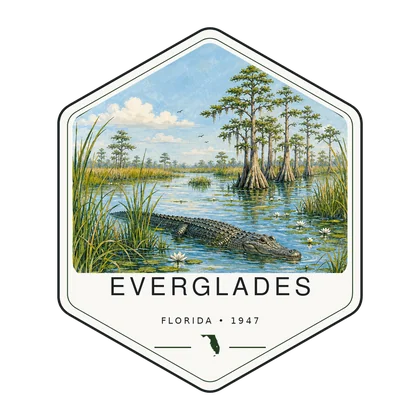
Log the visit, keep your story, and watch the map of all sixty-four fill in behind you. Every visit has a keepsake worth holding.
See the full map and track every park you have visited.
View the map → PlanTurn the Everglades into a trip with a custom, day-by-day itinerary.
Start planning → Go deeperIn the areas pythons reached first, raccoon sightings are down ninety-nine percent.
Read it → Explore moreFind your next park anywhere in the country.
Browse parks →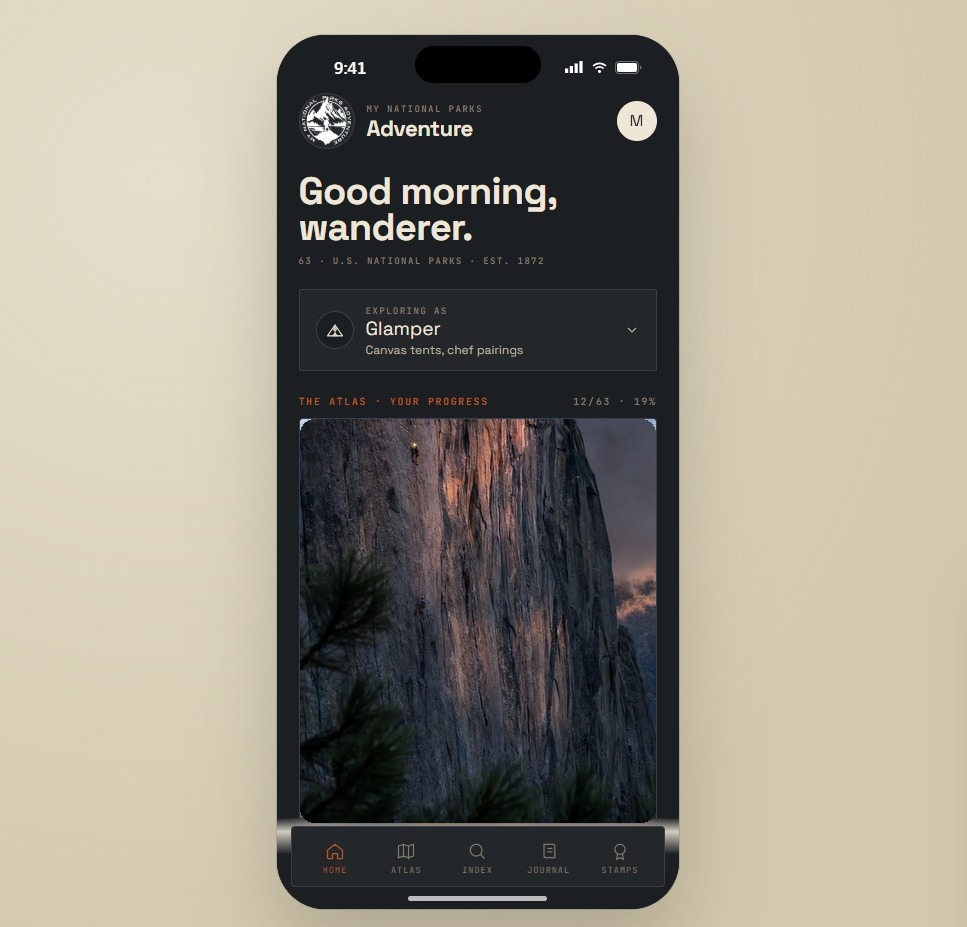
Offline maps, your passport, and every park in your pocket on the trail.
Join the waitlist →
The printed edition, part atlas, part journal, one story per park.
Notify me →Park-guide posters, enamel stamps, and the passport book to fill in.
Visit the shop →Field Notes
The parks do not perform for anyone. They stood here before the road, and they will stand here after it.