
Every July, a few hundred people sign up to spend ten days in the Everglades hunting snakes with their bare hands. Most of them catch nothing. Some of them catch a lot. In 2026 the winner, a man named Tom Rahill, brought in ninety-six Burmese pythons and ten thousand dollars, and none of it made much of a dent, because nobody actually knows how many pythons are still out there.
What's not in dispute is what the snakes have already done. In the parts of the park where pythons have been established longest, raccoon sightings are down ninety-nine percent. Rabbits and foxes have all but disappeared from the same survey routes. A single invasive species, first confirmed breeding in the Everglades around the year 2000, has rearranged who eats whom across one of the largest wetlands in North America, and the fight to slow it down now runs on radio collars, bounty hunters, and snakes trained to betray their own kind.
The Hurricane Andrew Story Isn't Quite True
The story most people repeat is tidy: Hurricane Andrew flattened a python breeding facility near Homestead in 1992, the snakes got loose, and the Everglades has had a python problem ever since. Florida's own wildlife agency says that's not what the evidence shows. Individual pythons were being spotted in the park as early as 1979, more than a decade before Andrew made landfall, and a 2011 study concluded that a handful of snakes were likely released well before 1985, growing slowly through the 1990s into a confirmed breeding population by around 2000.
Ecologist Dan Simberloff has pointed out that the population growth researchers tracked in the 1990s was centered some twenty miles from the facility Andrew supposedly destroyed, a distance that's hard to reconcile with a single dramatic release. Ian Bartoszek, who now runs one of the park's main removal programs, puts it more simply: the real answer is probably "all of the above," a slow accumulation of escaped and abandoned pets rather than one storm with a body count.
What the Roads Stopped Showing
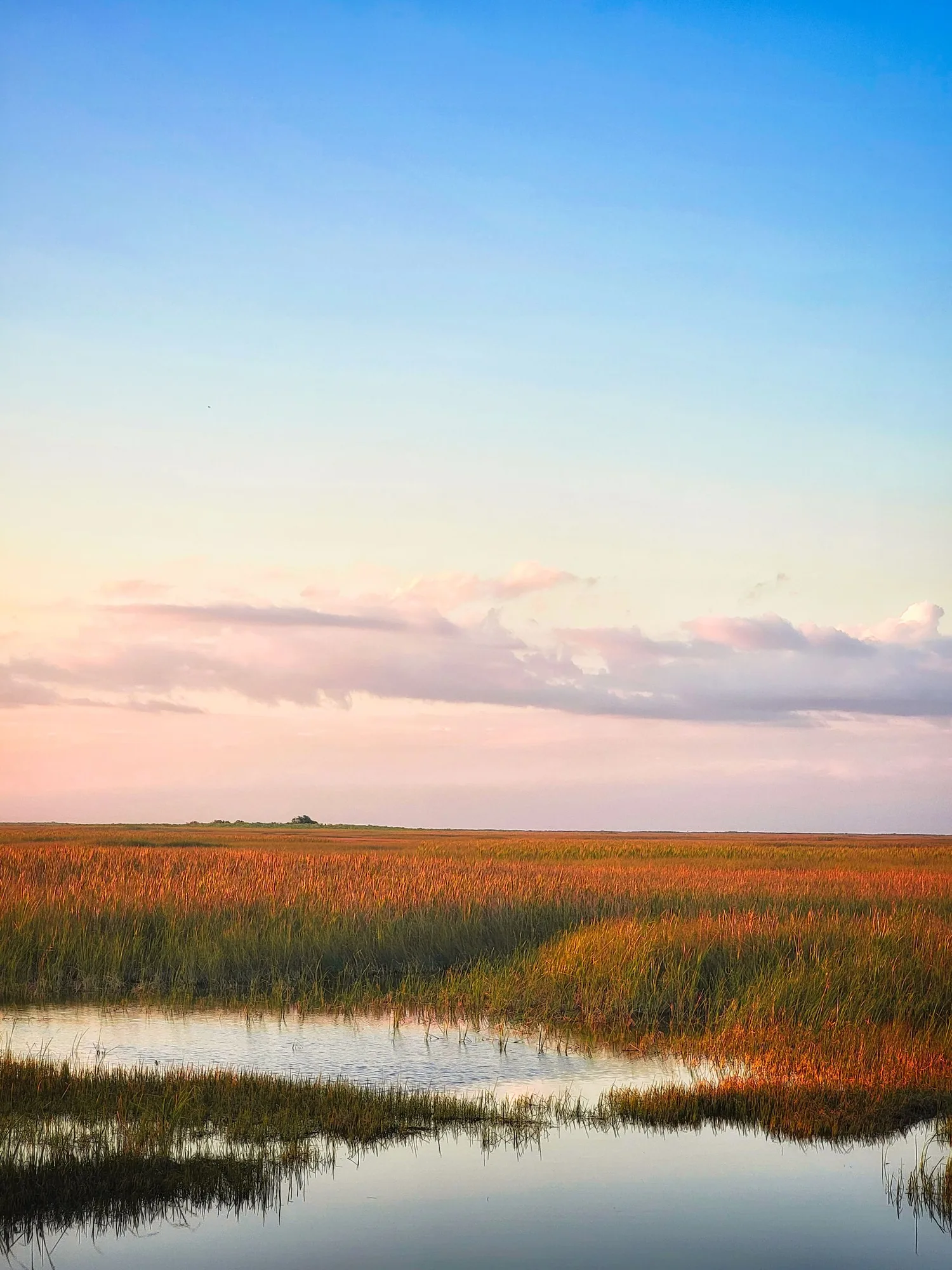
A 2012 study compared road-survey sightings of mammals before and after pythons became established, and the numbers are the kind that get a paper into a major journal on their own. Since 1997, raccoon sightings were down 99.3 percent. Opossums were down 98.9 percent. Bobcats were down 87.5 percent. In the park's most remote southern areas, the ones where pythons had been established the longest, marsh rabbits, cottontails, and foxes had effectively stopped showing up at all.
Nobody has an exact count of how many pythons are actually out there. The U.S. Geological Survey estimates tens of thousands across more than a thousand square miles of South Florida, with some outside estimates running far higher, though those larger figures are closer to speculation than a real census. The snakes are camouflaged, largely solitary, and just as happy underwater or underground as on dry land, which is a long way of saying they're built to not be found.
Plan Your Everglades Visit
Pythons are rarely seen by day hikers, but the park's boardwalks and trails are where most encounters (and most removals) actually happen. The trip planner can help you time it right.
Open the Trip PlannerThe People Hired to Find Them First
The South Florida Water Management District runs a contracted removal program, paying hunters an hourly wage plus fifty dollars for the first four feet of any python they bring in and twenty-five dollars for every foot after that, with a two-hundred-dollar bonus for a verified nest. More than five thousand pythons had been removed under the program by the middle of 2020, and it's still running.
The more targeted approach comes from the Conservancy of Southwest Florida, which has spent thirteen years fitting male pythons with radio transmitters and releasing them to do what male pythons do naturally: find females during breeding season. Researchers just follow the signal. Over the most recent season alone, the program removed 177 pythons totaling more than eight thousand pounds and prevented an estimated 4,100 eggs from hatching. A quarter of the females examined had eaten white-tailed deer. "These science-based management efforts are suppressing local python reproduction," Bartoszek said of the results. "With continued pressure, we hope to see these removal numbers decline over time."
- Breeding population confirmed ~2000
- Raccoon sightings decline since 1997 99.3%
- 2026 Python Challenge winner 96 SNAKES
- Conservancy program total since 2013 1,750 PYTHONS
The Biggest One Anyone's Caught
Jake Waleri was working alongside Conservancy biologists Ian Easterling and Stephen Gauta in Big Cypress National Preserve, just west of Everglades National Park, when they caught a python that measured out at nineteen feet and weighed a hundred and twenty-five pounds, the longest one ever verified in Florida, beating the previous record by more than three inches. A separate python caught in 2022 still holds the all-time weight record at two hundred fifteen pounds. "We had a feeling that these snakes get this big," Easterling said, "and now we have clear evidence." Waleri, for his part, seemed to take the moment less as a trophy than a job well done. "It's awesome to be able to make an impact on South Florida's environment," he said.
Facts and figures checked against the U.S. Geological Survey's published python research, the 2012 mammal-decline study summarized by USGS, the South Florida Water Management District's Python Elimination Program, and the Conservancy of Southwest Florida's public reporting on its scout-snake program and record catches.
Tom Rahill's ninety-six snakes from this year's Challenge sound like a lot until you set them against a state that may hold anywhere from tens of thousands to several hundred thousand more, depending on whose estimate you trust. The nineteen-foot python from Big Cypress is still out there in spirit if not in body, a reminder of how much size a snake can reach in a landscape built almost entirely in its favor. The raccoons that used to trip the road-survey cameras every few nights mostly don't anymore. That's the actual scoreboard, and it isn't the one anyone's winning yet.