
Wind Cave has exactly one natural opening to the surface, a hole roughly ten by fourteen inches, small enough that a person can't fit through it. Air moves through that opening constantly, sometimes rushing out fast enough to blow a hat off, sometimes pulling inward hard enough to hold a piece of paper against it. The cave isn't breathing because it's alive. It's breathing because of what's trapped underneath it, and scientists have started using that breath to guess at something they otherwise have almost no way to measure.
Wind Cave's surveyed passages now stretch past a hundred and sixty miles, one of the longest cave systems ever mapped anywhere on Earth. By the National Park Service's own estimate, based on the volume of air the cave exchanges through that single opening, less than ten percent of the cave has been found.
Barometric Pressure, Doing the Work
Underground, Wind Cave's air volume stays essentially fixed, sealed off from the sky by hundreds of feet of rock, with only that one small natural opening connecting it to the outside world. The atmosphere above ground is anything but fixed: barometric pressure rises and falls with the weather, sometimes by a lot, sometimes within a single afternoon. When surface pressure climbs higher than the cave's internal pressure, air gets pushed in through the opening. When surface pressure drops, air gets pulled back out. At its strongest, wind at the entrance has been measured moving at more than seventy miles an hour, all of it driven by nothing more exotic than the difference between the air pressure inside a sealed space and the air pressure outside it.
The Breath as a Measuring Tool
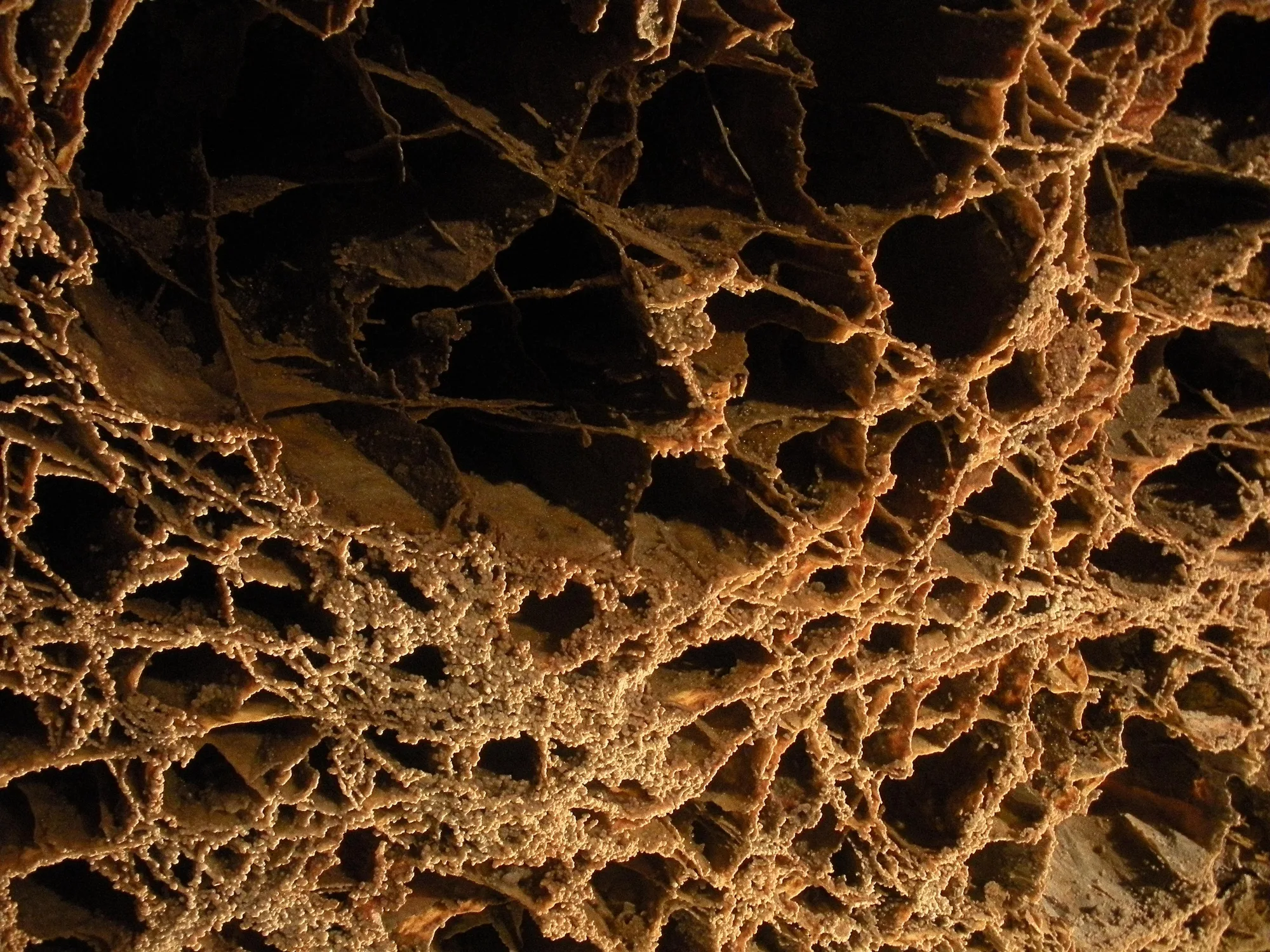
Researchers monitor how much air moves through the entrance over time, then use that volume to estimate the total air-filled space underground, mapped and unmapped combined, since the cave has to exchange air roughly in proportion to how much of it there is. Run that math against the roughly 160-plus miles of passage that have actually been surveyed, and the National Park Service's own conclusion is direct: less than ten percent of the cave has been found. A park scientist has put a similar figure a different way, estimating that only five to ten percent of Wind Cave is currently mapped, which would put the true extent of the system somewhere in the hundreds of additional miles, passages nobody has walked, named, or drawn onto a map yet.
Plan Your Wind Cave Visit
Every ranger-led tour covers only a fraction of a percent of the known cave, let alone the part still unmapped. The trip planner can help you fit one in alongside the park's above-ground trails.
Open the Trip PlannerA Steady Climb, One Survey Trip at a Time
When the National Park Service began managing Wind Cave in 1903, fewer than ten miles of it were known. That number passed one hundred miles in 2001, one hundred fifty miles in 2019, and roughly one hundred sixty miles by April 2022, at which point Wind Cave already ranked among the ten longest caves known anywhere in the world. Survey trips have continued since: cave scientist Hazel Barton led an expedition in January 2022 that broke into a large, previously unmapped chamber in an area called the Western Fringe, a room she named Revenge Fantasy, full of leads nobody had followed yet. By 2024, continued surveying had pushed the total past Ukraine's Optymistychna Cave, making Wind Cave the sixth-longest cave system documented anywhere on Earth. One park scientist described the recent growth plainly: cavers "added a little bit here, and a little bit there," and the total kept climbing.
A Volume, Not a Map
The airflow method has a real limitation the National Park Service states plainly: a volume calculation can't distinguish between one enormous chamber and a thousand small, tangled passages, since both could hold the same amount of air. The unmapped ninety percent could be a handful of huge rooms nobody has reached, or it could be hundreds of miles of narrow, twisting passage too tight for a caver to push through, or, more likely, some mixture of both that nobody will know for certain until it's actually explored, one hand-drawn survey line at a time.
- Surveyed length 160+ MI (6TH-LONGEST WORLDWIDE)
- Estimated mapped LESS THAN 10%
- Natural entrance ~10 BY 14 IN
- Recorded entrance wind 70+ MPH
Facts and figures checked against the National Park Service's own explanation of the cave's barometric wind and its stated estimate that less than ten percent of the cave has been mapped, plus published reporting on the cave's survey milestones as it passed 100, 150, and 160-plus miles. The specific current total mileage changes as survey trips continue, so the figure here reflects the most recently reported milestone rather than a fixed, final number.
The hole is still just ten by fourteen inches, too small for a person, plenty big enough for the entire cave to breathe through. Every gust moving through it is carrying information about a space nobody has ever stood inside, a hundred and sixty mapped miles that, by the cave's own math, might not even be a tenth of the story.