
In 1971, a University of Texas graduate student named Douglas Lawson was walking a desert arroyo in Big Bend when he spotted something eroding out of the bank: a bone, clearly part of a wing, too large to belong to anything he could immediately place. His professor, Wann Langston Jr., confirmed what it was. Not a bird. A pterosaur, and one bigger than anyone had previously imagined a flying animal could be.
That fossil became Quetzalcoatlus, named for the Aztec feathered-serpent god, and it remains the largest flying animal ever discovered anywhere on Earth. It has never been found outside Big Bend.
The Discovery, and What Came After It
Lawson's 1971 find, the type specimen of Quetzalcoatlus northropi, consists of wing bones without a skull or a body, which meant its full size could only be estimated by comparing those bones to more complete remains of smaller relatives. Langston's continued fieldwork in the same formation eventually turned up smaller, more complete pterosaur specimens with wingspans around 18 feet, long debated as juveniles of the same giant species before researchers formally split them into their own species, Quetzalcoatlus lawsoni, named for the man who found the first bone eroding out of that arroyo bank.
How Big, Exactly, Depends on Who's Estimating
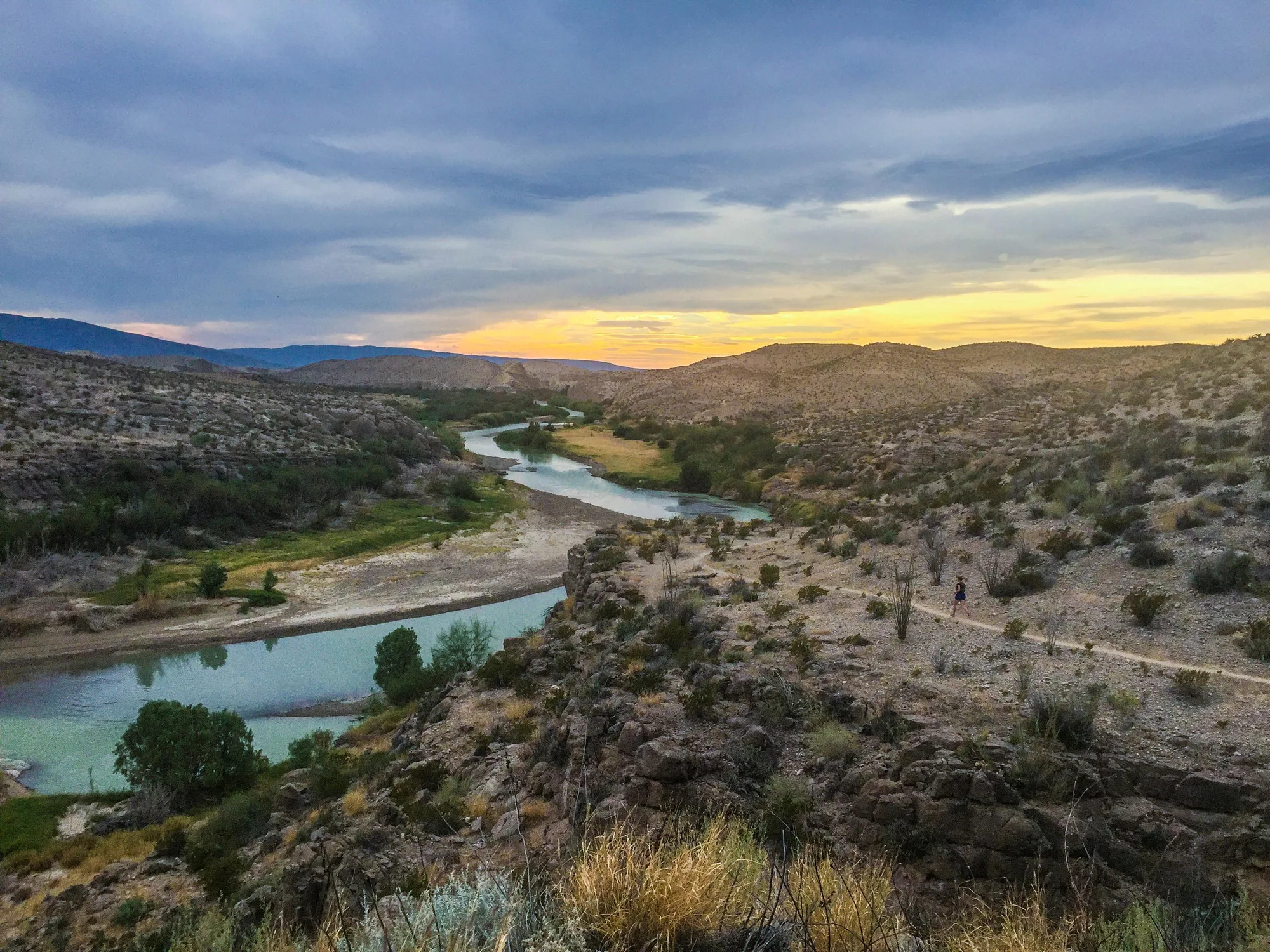
Estimates for Quetzalcoatlus northropi's wingspan run from 36 to 39 feet, a range worth stating honestly rather than picking whichever number sounds more dramatic, since it reflects real uncertainty in reconstructing a giant animal from partial bones rather than sloppy reporting. At an estimated weight just over 500 pounds, it hunted by wading through shallow water and probing with a long, toothless jaw for small animals and invertebrates. Recent biomechanical research out of the University of Texas found that an animal this size likely used both its legs and its wings together to launch into flight, a detail that matters because a creature this large pushes right up against the physical limits of what flight is even possible for.
Plan Your Big Bend Visit
The Fossil Discovery Exhibit near the park's north entrance is an open-air site built around finds like this one. The trip planner can help you fit it into a route through the park.
Open the Trip PlannerA Record Spanning 130 Million Years
The National Park Service describes Big Bend's fossil-bearing rock as preserving a largely intact 130-million-year slice of geologic time, running through the extinction event that ended the age of dinosaurs. Three formations carry most of the record: the marine Boquillas Formation, roughly 100 to 95 million years old; the coastal-swamp Aguja Formation, roughly 80 to 75 million years old; and the Javelina Formation, roughly 75 to 66 million years old, the youngest of the three and the one that produced both Quetzalcoatlus specimens. The National Park Service states that more than 90 dinosaur species have been identified across this record, a figure worth attributing directly to the agency's own materials rather than treating as independently confirmed, since the number of individually named dinosaur species from Big Bend that turn up in the published paleontological literature is considerably smaller than 90. Named or not, the sheer density of the fossil-bearing layers here is not in dispute.
A Crowded Late Cretaceous Coastline
Alamosaurus, described by the National Park Service as the last of the great sauropods, shared this landscape, though size estimates for it vary widely across sources and should be treated as uncertain rather than a single settled figure. So did Bravoceratops, a large horned dinosaur discovered in 2013, and Agujaceratops, whose fossils were first excavated back in 1938 by William Strain, with later herd discoveries hinting at social behavior in a species that lived roughly 77 million years ago. In the water, Deinosuchus, a giant relative of modern crocodilians, and a mosasaur found in the older Boquillas Formation add a reminder that Big Bend's fossil record isn't only about the sky. It's a whole ecosystem, caught in rock, from the swamp floor to whatever was big enough to fly over it.
- Discovered 1971, BY DOUGLAS LAWSON
- Wingspan estimate 36-39 FT
- Estimated weight JUST OVER 500 LB
- Formation JAVELINA, ~75-66 MYA
Facts and figures checked against the National Park Service's own pages on Big Bend's fossil record and its pterosaur discoveries, plus University of Texas at Austin research on Quetzalcoatlus flight biomechanics. Wingspan is given as the 36-to-39-foot range found across NPS's own materials rather than a single figure. The National Park Service's own claim of more than 90 dinosaur species is attributed directly to the agency here rather than independently confirmed, since the number of individually named species in the published paleontological record for the park appears considerably smaller. Size estimates for Alamosaurus vary widely across available sources and are described here as uncertain rather than fixed.
The bone Douglas Lawson saw eroding out of that arroyo in 1971 was just a fragment of a wing, not even a whole one. It was enough. More than half a century later, Quetzalcoatlus is still the largest flying animal science has ever confirmed existed, and it has still never turned up anywhere except this one stretch of Texas desert.