Somewhere over Big Bend on a clear, moonless night, the Milky Way isn't a faint smudge you have to squint for. It's a wide, bright band arching overhead, bright enough to cast a shadow. The National Park Service's own night-sky monitoring team doesn't hedge about what that means: Big Bend has the darkest measured skies of any national park in the lower 48 states.
That's not an accident of geography alone. It's also the result of a specific, dated effort, on both sides of an international border, to keep the sky that way on purpose.
Gold Tier, February 2012
On February 6, 2012, the International Dark-Sky Association designated Big Bend a Gold Tier International Dark Sky Park, its highest rating, covering the park's more than 800,000 acres. At the time of that designation, Big Bend was the largest International Dark Sky Park in existence, a title tied directly to its size and its near-total absence of competing light. Sky-quality monitoring at the park has run continuously since 2003, giving the Gold Tier designation nearly a decade of measured data behind it rather than a one-time reading.
A Sky With Nothing Underneath It
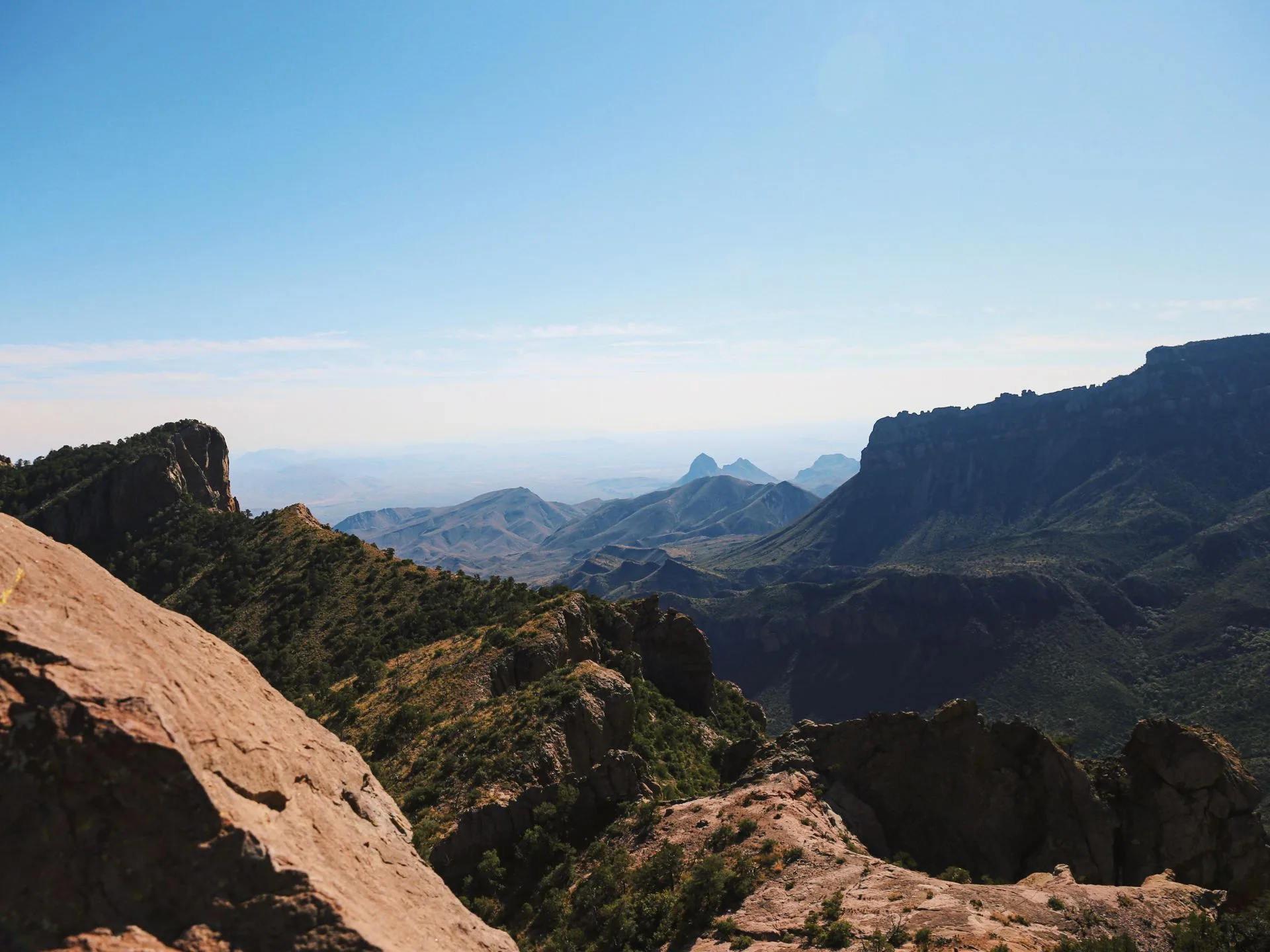
Brewster County, where most of the park sits, covers more than 6,000 square miles and is home to fewer than ten thousand people, a population density of roughly 1.5 people per square mile. Widen the view to the full tri-county Big Bend region, more than 12,000 square miles, larger than the state of Maryland, and the total population is still only around 18,000. That emptiness extends south too: in April 2022, the region around the park was designated the Greater Big Bend International Dark Sky Reserve, spanning roughly 15,000 square miles and crossing the US-Mexico border to include privately managed protected land in Coahuila. It's one of the largest dark sky reserves anywhere in the world, and it exists specifically because the emptiness driving Big Bend's darkness doesn't stop at the river.
Plan Your Big Bend Visit
A clear, moonless night here is worth building a trip around. The trip planner can help you time a visit against the lunar calendar.
Open the Trip PlannerDarkness Takes Maintenance
Even a small national park facility, with its visitor centers, campgrounds, and roads, adds up to real light pollution if nobody manages it. Big Bend's own retrofit cut outdoor lighting energy use across the park by 98 percent, replacing fixtures that scattered light upward and outward with ones that pointed it only where it was needed. The tri-county region outside the park backed the same goal with its own lighting ordinances, decisions that predate the park's Gold Tier designation by decades, and the presence of the McDonald Observatory nearby, built in the 1930s in neighboring Jeff Davis County, gave the region a long-standing institutional reason to keep pushing for darker skies well before international dark-sky designations existed at all.
What You Actually See
Rangers and volunteers run regularly scheduled night-sky programs at Big Bend, from full star parties with telescopes to guided moonlight walks, listed on the park's weekly ranger program schedule alongside its daytime hikes and talks. None of it requires special equipment or a reservation months out, just showing up on a clear night in a place with, by the park's own measurement, less competing light than anywhere else a visitor could stand in the continental United States.
- Gold Tier designation FEBRUARY 6, 2012
- Park size at designation 800,000+ ACRES
- Lighting energy cut 98%
- Binational reserve ~15,000 SQ MI, EST. 2022
Facts and figures checked against the National Park Service's own pages on Big Bend's International Dark Sky Park designation and stargazing programs, plus DarkSky International's reporting on the 2022 Greater Big Bend International Dark Sky Reserve designation and regional population figures from Sul Ross State University's Borderlands Research Institute. Specific sky-brightness claims (a Bortle class or a sky-quality-meter reading) circulate on secondary travel sites but are not stated on the primary NPS pages checked for this article, so this piece relies on NPS's own qualitative "darkest in the lower 48" language rather than an unverified precise figure.
The Milky Way overhead at Big Bend isn't a special effect the park added. It's what the sky already looks like everywhere, minus the light that usually gets in the way. Take away nearly everyone for twelve thousand square miles, cut the lighting that's left by 98 percent, and this is apparently just what's underneath the whole time.