
Fly into Pago Pago and the mountains behind the harbor look, from a distance, like any other tropical green. Walk into them and the forest starts explaining itself: banyans buttressed into small cathedrals, a canopy stacked in tiers, and somewhere overhead, a shape gliding between fruit trees that isn't a bird at all.
A Rainforest With No Equivalent in the System
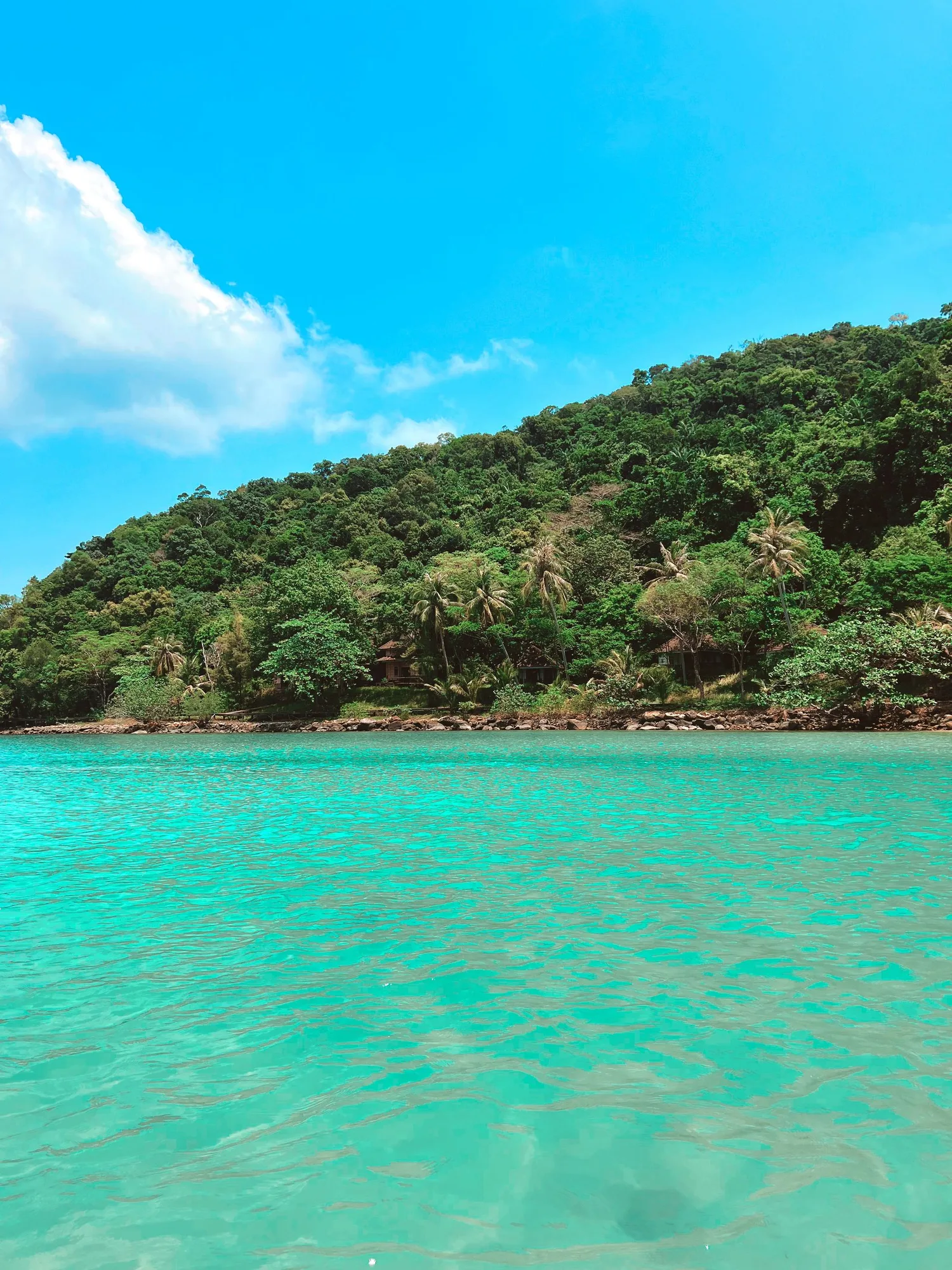
Every one of the park's three volcanic islands is covered mostly in rainforest, but not the same rainforest twice. Taʻu carries cloud forest near its summit, cool and wet enough that clouds sit inside the canopy rather than above it. Tutuila's ridges hold lowland ridge forest instead, drier and more exposed to the trade winds. Between the two, the park documents 343 species of flowering plants and 135 species of ferns, and roughly 30 percent of them exist nowhere else on Earth.
That last number is the one that matters most. A plant found only in these mountains has no backup population somewhere else if this forest goes. The park is effectively the entire range for a third of what grows in it.
- Rainforest types CLOUD FOREST (TAʻU) & LOWLAND RIDGE FOREST (TUTUILA)
- Flowering plants 343 SPECIES DOCUMENTED
- Ferns 135 SPECIES DOCUMENTED
- Endemic species ~30% FOUND NOWHERE ELSE
Plan a Rainforest Hike in American Samoa
The Pola Island Trail and Tutuila's ridge trails put you inside both forest types in a single visit.
Open the Trip PlannerThe Bats Are Doing the Bees' Job
The park is home to two species of flying fox, the Samoa flying fox and the white-naped flying fox, both fruit bats large enough to see clearly at dusk as they move between trees. In most rainforests, that pollination and seed-dispersal work gets split among insects, birds, and mammals. Here, the flying foxes carry an outsized share of it themselves, moving pollen and seeds between trees too far apart for smaller pollinators to bridge.
They aren't the only animals doing distinctive work in this forest. Seabirds, terns, boobies, frigatebirds, petrels, and shearwaters, come to the islands specifically to breed, filling cliffs and offshore islets that would otherwise sit empty. And every year, bristle-thighed curlews make the trip from breeding grounds in Alaska to spend Samoa's summer here, one of the longer bird migrations connecting a U.S. national park in the Pacific back to the mainland most of its visitors call home.
- Pollinators / seed dispersers SAMOA & WHITE-NAPED FLYING FOX
- Breeding seabirds TERNS, BOOBIES, FRIGATEBIRDS, PETRELS, SHEARWATERS
- Winter migrant BRISTLE-THIGHED CURLEW, FROM ALASKA
Rainforest types, plant and fern counts, and endemism figures checked against the National Park Service's official nature and index pages for American Samoa. Flying fox species and breeding seabird species checked against NPS's official birds page for the park; the bristle-thighed curlew's Alaska-to-Samoa migration is drawn from the same source.
Stand still long enough under that canopy and the shape overhead resolves into a fruit bat, wingspan wide enough to blot out a patch of sky, doing on its own the job that would otherwise take an entire guild of smaller animals. Thirty percent of what's rooted around it exists nowhere else in the world. The forest doesn't advertise any of this. It just keeps doing it, one bat, one flower, one curlew flying in from Alaska, at a time.