Both trails climb a bare granite cliff face using iron rungs bolted into the rock, with nothing but open air on one side and a real chance of a serious fall if a hand slips. Neither is technical climbing, no rope or harness involved, which is exactly what makes them feel more dangerous than they are and lures in more hikers than are actually ready for them.
They are not interchangeable, though, and the gap between them is bigger than the half mile of extra trail suggests. One is open essentially all season and gets busy by nine in the morning. The other is closed for roughly a third of the year, on purpose, for a bird.
The Beehive
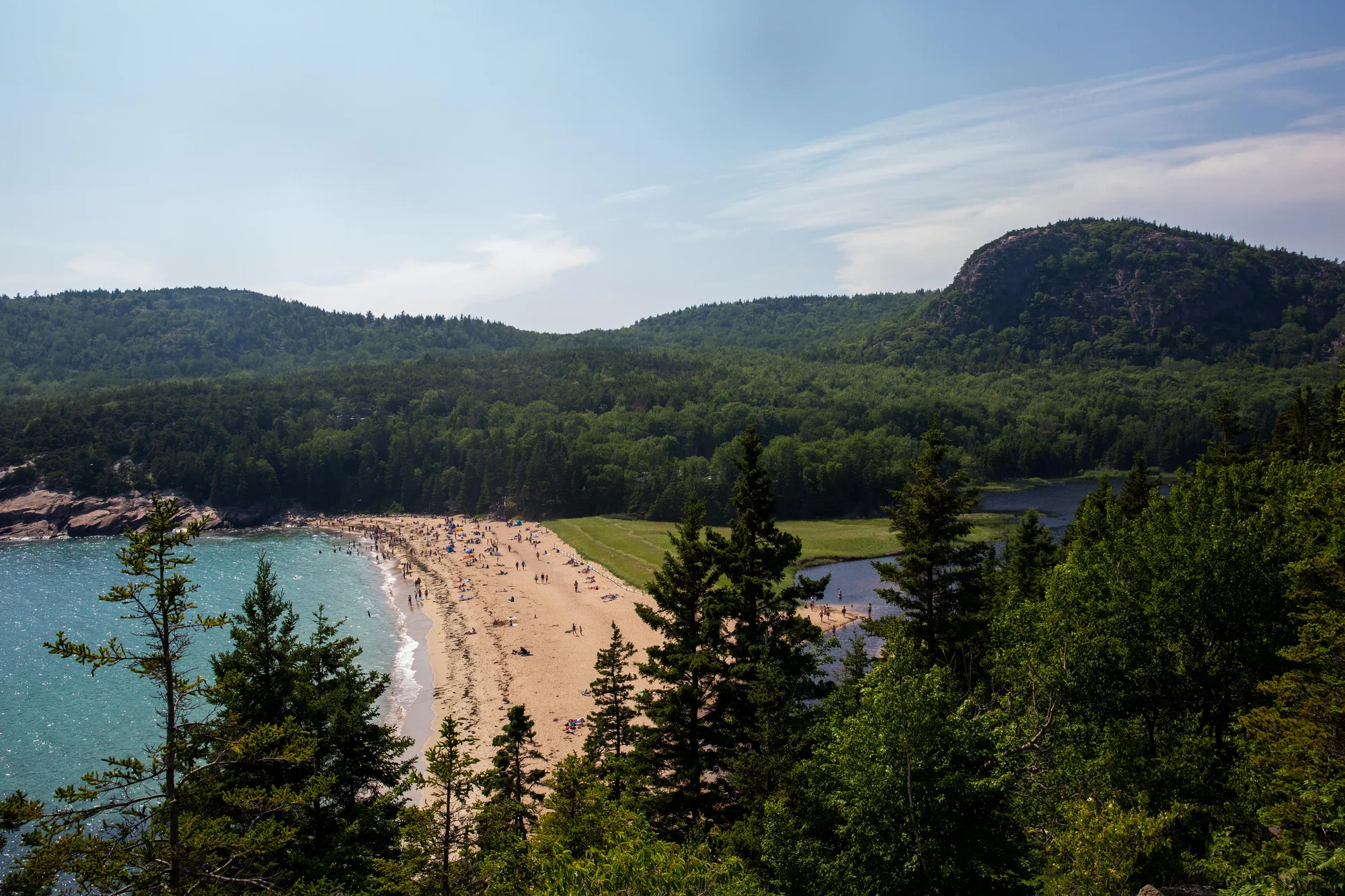
At 1.4 miles round trip with about 450 feet of climbing, the Beehive is the shortest real exposure hike in the park, and also the busiest. Iron rungs and narrow ledges run straight up a cliff face directly above Sand Beach, and the whole thing is over in under an hour for most hikers. No permit, no seasonal closure, which means no natural limit on how many people are on the rungs at once, and on a clear summer morning that can mean an actual line waiting to climb.
The Precipice
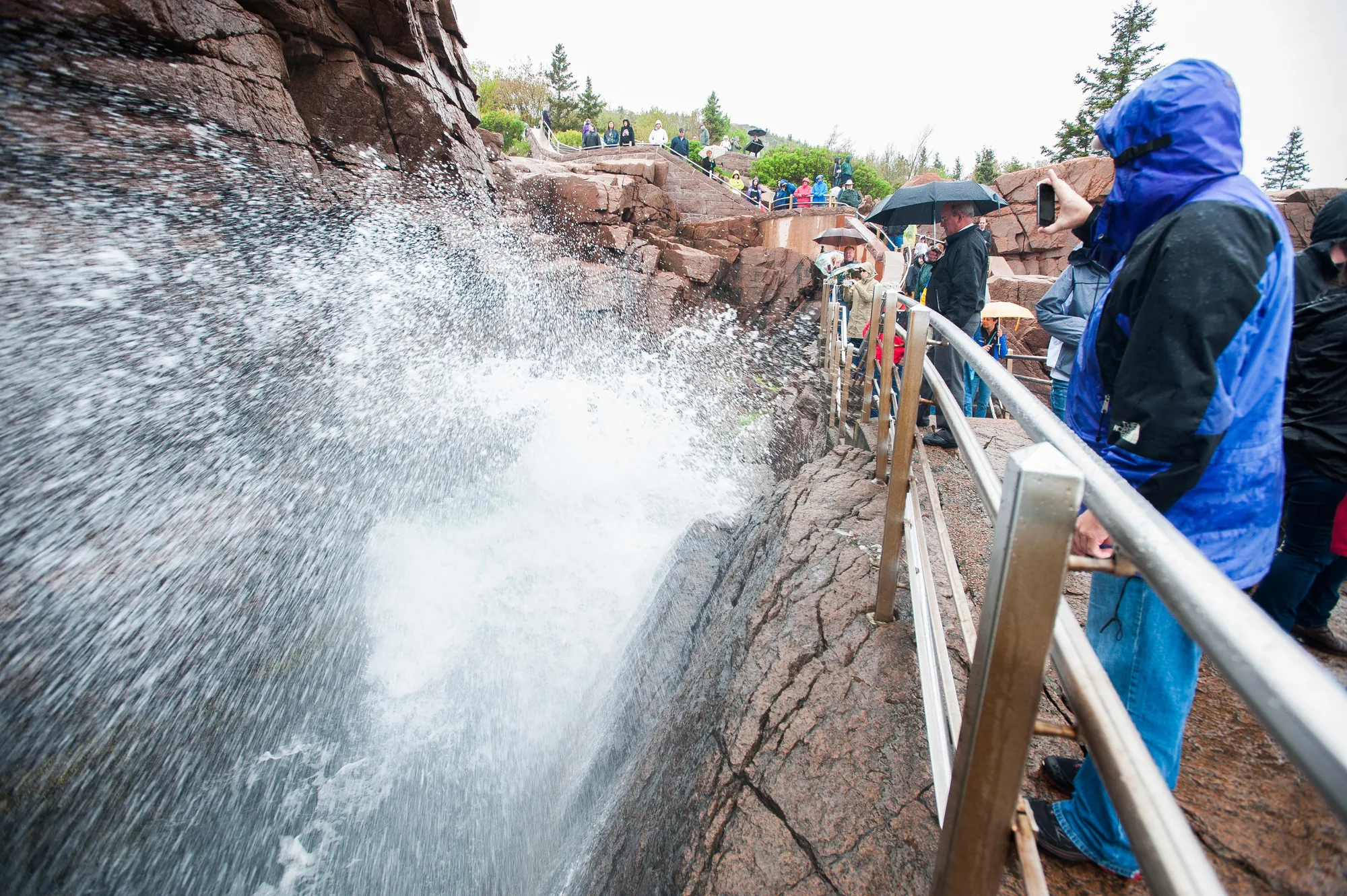
At 2.1 miles round trip with about 1,000 feet of climbing, the Precipice covers less than a mile more than the Beehive but takes noticeably longer, and the park itself calls it the most exposed trail in Acadia. It closes every spring and stays closed until mid-August most years, while peregrine falcons, once wiped out east of the Mississippi by pesticide use and reintroduced here through a long recovery effort, nest on the same cliff the trail climbs. When it's open, the crowd thins out fast past the first few rungs, simply because fewer people commit to the length and exposure.
Check the Season Before You Drive Out
The AI trip planner flags the Precipice closure automatically so a wasted trip to a locked trailhead never happens.
Open the Trip PlannerNeither One Forgives a Bad Day
Both trails are non-technical in the sense that no rope or harness is required, and both are genuinely dangerous in the sense that a fall from the exposed sections would likely be serious or fatal. Skip both entirely in rain or right after it, when the granite and iron rungs turn slick, and skip both if height or exposure is a real, not theoretical, problem for anyone in the group. There's no shame in turning around partway up either one. The rungs go both directions.
Which One Is Actually for You
First time doing an exposure hike, short on time, or hiking with a nervous but game beginner: the Beehive, accepting that it will be crowded. Want the fuller, longer version and the trail happens to be open (check the season first, it closes more months than it's open): the Precipice, and go early to actually get the quiet the closure is protecting. Afraid of both crowds and heights: Sand Beach and the Ocean Path below are real Acadia too, and nobody's trip is worse for skipping the rungs entirely.
Distance, elevation, and seasonal closure dates checked against NPS.gov's current Acadia trail pages and this site's own already-verified hike data for both trails.