In the fall of 2024, a helicopter crew worked the South Unit of Theodore Roosevelt National Park for two weeks, pushing wild horses toward a corral as part of a roundup the park had scheduled months earlier. The plan going in was to remove up to fifteen of them. What actually happened, once the operation ended, was that the Park Service announced none would be excessed at all.
That reversal came after a fight that had, briefly, threatened to remove the entire herd, on the grounds that the horses had no legal standing to be in the park in the first place. The bison living in the same badlands have a very different, and much older, story, but the two animals turn out to share the same underlying problem: how do you manage a herd that can't simply grow forever inside a fixed piece of ground.
The Park's Bison Came From Nebraska
The National Park Service reintroduced bison to the South Unit in 1956, releasing twenty nine animals brought from the Fort Niobrara National Wildlife Refuge in Nebraska. The North Unit's herd came later, seeded in 1962 with ten bulls and ten cows. Today the park manages toward a target of two hundred to five hundred bison in the South Unit and one hundred to three hundred in the North, numbers kept in check through roundups held roughly every two to three years, usually in October after the breeding season, using low-stress handling techniques. Between 1956 and 2016 alone, the park transferred out more than thirty seven hundred bison, the overwhelming majority of them, over ninety percent, to sixty seven tribes and reservations across fifteen states.
Twenty Nine Animals Left a Narrow Legacy
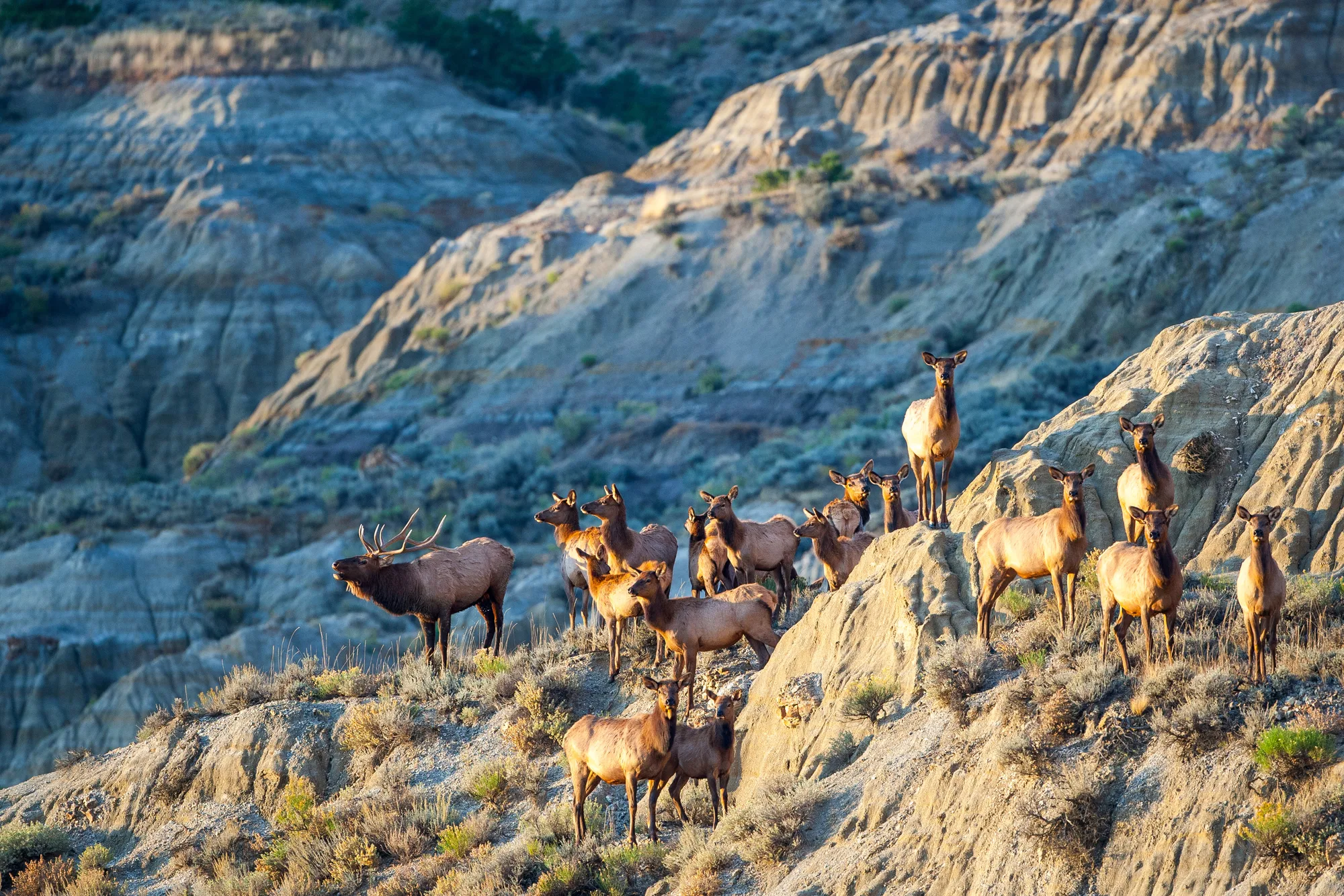
A National Park Service genetics study identified forty three distinct bison genetic lineages from historical and archaeological samples across North America. Thirty three of those have gone extinct. Every bison currently living in this park belongs to a single one of the ten surviving lineages, a finding the Park Service's own bison management materials tie directly to low genetic diversity in both the North and South Unit herds relative to other Department of the Interior bison populations. In 2017 the park began working to introduce ten bison from another federal herd into the North Unit specifically to widen that gene pool. It's a reminder that a healthy-looking herd grazing across open badlands can still be one narrow genetic bottleneck away from real vulnerability, invisible from a car window and entirely visible in a blood sample.
Plan Your Theodore Roosevelt Visit
Both bison and wild horses roam freely along the park's scenic drives. The trip planner can help you time a visit around roundup season, when access to some roads changes.
Open the Trip PlannerA 1978 Target the Herd Long Outgrew
A 1978 environmental assessment set a long-term population target for the South Unit's free-roaming horses at just thirty five to sixty animals, a number the herd had grown well past by 2023, when it stood at roughly two hundred. That summer, Superintendent Angie Richman told reporters plainly that the park has no law or requirement for the horses to be there at all, a framing that treated the herd as unauthorized livestock rather than protected wildlife, and set off preparation for an environmental assessment that could have removed the entire population.
Congress, a Town, and a Roundup That Changed Nothing
Public pushback moved fast. Advocacy groups like Chasing Horses Wild Horse Advocates organized opposition, the town of Medora passed an ordinance supporting the herd's continued presence, and the North Dakota Legislature backed a resolution to preserve it, with Governor Doug Burgum offering the state's help managing it. Senator John Hoeven inserted language into a federal appropriations bill directing the park to maintain a herd consistent with what existed when Roosevelt himself ranched here, with an emphasis on genetic viability, and Congress approved it. When the roundup finally happened in October 2024, the helicopter operation that had once threatened the whole herd ended with a National Park Service statement that at this time, no horses would be excessed in that year's effort. A subset of the roughly two hundred horses remaining in the park received GPS collars afterward, for ongoing range monitoring rather than removal.
- Bison reintroduced SOUTH UNIT 1956, NORTH UNIT 1962
- Surviving bison genetic lines 10 OF 43, PARK USES 1
- 1978 horse population target 35-60 ANIMALS
- Oct 2024 roundup removals ZERO
Facts and figures checked against National Park Service pages on bison history, bison management, and bison genetics research for Theodore Roosevelt National Park, an NPS news release on the 2024 bison and horse operations, and contemporaneous reporting from Fortune and National Parks Traveler on the 2023-2024 wild horse debate. Current exact wild horse population figures vary slightly between NPS statements and advocacy-group counts; we've used NPS's own "approximately 200" figure from its fall 2024 release rather than a more precise but non-NPS number.
Drive the South Unit loop today and the horses are still out there, grazing the same badlands Roosevelt rode through on his own horse more than a century ago, exactly where a 2024 helicopter crew could have thinned them and chose not to. The bison a few miles away carry a quieter, less publicized version of the same story: a herd rebuilt from almost nothing, still managed generation by generation to keep it from becoming nothing again. Neither animal survives here by accident. Both survive because someone, at some point, decided they were worth the paperwork.