There are four kinds of solution to a crowded national park, if you sort them the way this problem tends to get sorted: mechanical, organic, structured, and analytical. That's an odd way to describe a shuttle bus and a reservation system. It's also the more useful way, because it separates what you can build from what you can only teach. Overcrowding in the parks has turned out to need both.
An article in The Guardian laid out the overcrowding crisis facing America's national parks: rising visitation running up against the limits of aging infrastructure. What follows here is a breakdown of that piece, the short-term fixes it points to, the longer investment it says the parks still need, and the alternative ideas for getting more people meaningful access without more people trampling the same half-mile of trail.
The Short-Term Fix
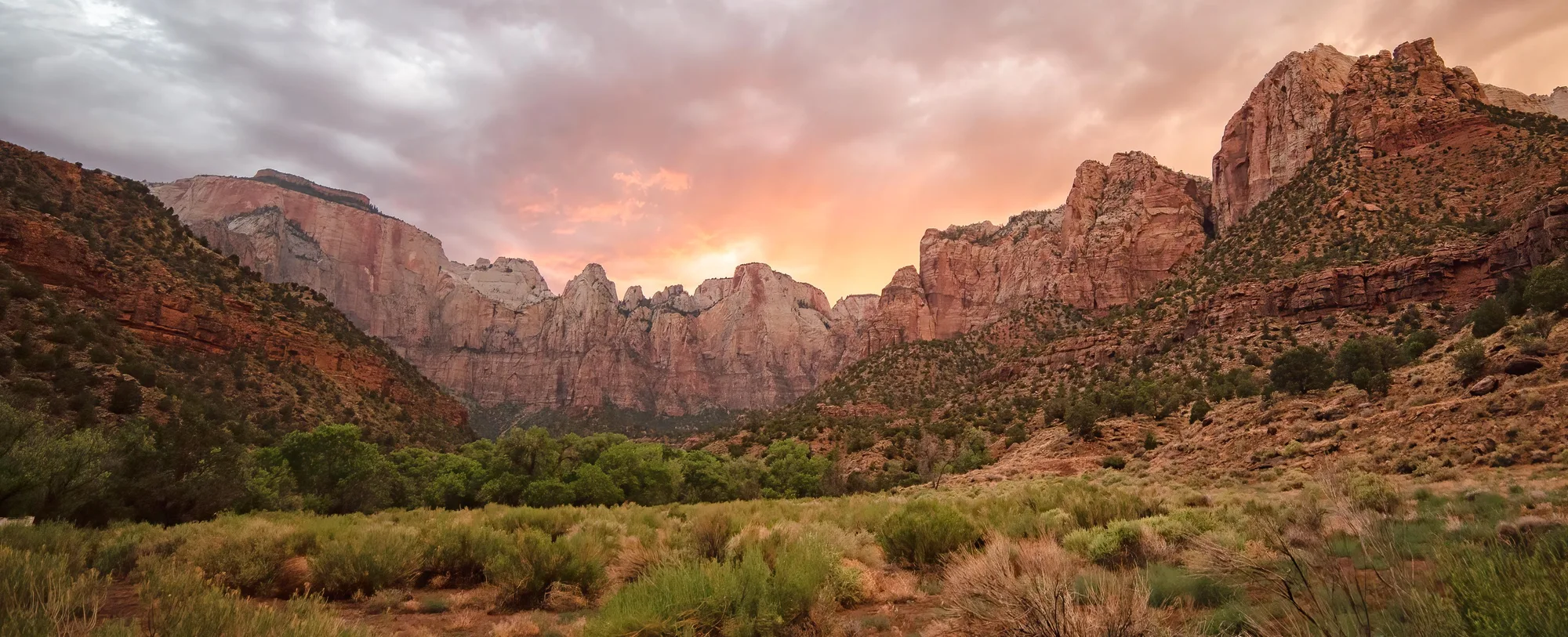
Visitor management is the lever available right now: timed entry permits, shuttle services, reservation systems. Zion has run its own version of this for years, and it's a working example of what the Guardian piece is describing.
- Timed entry permits spread visitors across the day instead of stacking them at 10 a.m.
- Shuttle services cut down on private vehicle traffic and the parking-lot gridlock that comes with it.
- Reservation systems for popular attractions and campsites keep visitor numbers inside what the site can actually hold.
- Better signage and information point people toward less-crowded areas and alternate trails they didn't know existed.
- Education and awareness (Leave No Trace, responsible wildlife viewing) work on the visitors already there, not the ones still arriving.
The Longer Investment
That means expanding parking, improving trails, and upgrading visitor facilities (restrooms, visitor centers, picnic areas) built for the visitation numbers parks are actually seeing now, not the numbers they were designed for decades ago. None of that happens fast. It requires the kind of sustained investment that outlasts a single budget cycle, which is exactly why the Guardian piece treats it as a separate problem from the short-term fixes rather than a bigger version of the same one.
Plan Around the Crowds
Pick your park and your dates, and the trip planner builds a day-by-day around the busiest windows, not through them.
Open the Trip PlannerAlternative Ideas for Equitable Access

Great Smoky Mountains, the most-visited park in the system and free to enter, is the kind of park these ideas are built for: a few other angles on the same problem.
- Off-peak promotion: discounted fees or special events during shoulder seasons, to pull visitation away from the same six summer weekends.
- Diversifying park experiences: new trails, lesser-known parks, features that aren't the one everyone photographs, to disperse people across more of what already exists.
- Virtual access: virtual reality experiences, interpretive centers, online educational resources, for people who can't make the trip at all.
The Guardian piece is upfront that these are potential solutions, not settled ones. It calls for further research and closer collaboration with park authorities and stakeholders before any of this gets treated as solved.
The Question Is Just as Important as the Answer
Go back to that four-part sort (mechanical, organic, structured, analytical), because it's not just a tidy way to categorize a list. It's an argument about what a real solution has to include. Mechanical solutions are the systems and infrastructure: permits, reservations, crowd-management tech. Organic solutions are the harder-to-measure kind: a visitor who understands why the trail closure exists and stays off it anyway isn't following a rule, they're making a choice.
Structured solutions are the policy layer: planning, funding, the transportation and facilities that let the other two actually function at scale. Analytical solutions are what tells you where to point all of it, predictive modeling and real-time monitoring, so decisions about capacity and resources are based on data instead of guesswork. Timed entry without visitor education just moves the crowd around. Infrastructure without data on where people actually go gets built in the wrong place.
That shuttle bus from the opening isn't hypothetical. Zion put one on the road in 2000, specifically to cut down the canyon's traffic and parking problems, and by 2025 its drivers had logged the system's 100 millionth boarding. The short-term relief and the long-term investment aren't competing strategies. They're both required, running at the same time, for as long as visitation keeps climbing, which takes park authorities, government agencies, local communities, and visitors all pulling in the same direction, a harder thing to arrange than a shuttle schedule, but the part that actually preserves these places for whoever shows up next.
Facts and figures checked against the Guardian report this piece is based on, NPS.gov (visitation and shuttle-system history), and the National Park Service's own published visitation rankings for Great Smoky Mountains and Zion.