Skyline Drive doesn't dip into a single valley in its entire 105-mile length. That was the plan from the first survey crews in January 1931: a road that stays on the spine of the Blue Ridge the whole way, so every mile offers a view instead of a wall of trees. Building a road that stubborn took eight years, three separate funding phases, and, for a long stretch of it, men who'd never built a road before, hired specifically because they needed the work.
What opened in pieces between 1934 and 1939 is still the single defining feature of Shenandoah National Park, a road built during the worst economic collapse in American history that turned out to be worth every delay.
July 18, 1931
Field surveys for Skyline Drive began in January 1931, six months of walking the Blue Ridge crest to plot a route that would follow the ridgeline for its entire length rather than cutting through any valley. Official groundbreaking followed on July 18, 1931, funded initially through the Federal Drought Relief Administration, a Depression-era program aimed at putting unemployed men to work on public projects rather than handing out direct relief. The first completed stretch, between Swift Run Gap and Thornton Gap, opened to cars in 1934.
Every subsequent section came in its own separate phase, on its own budget, over the following five years, since a road this specific to build could not be rushed into one continuous construction push.
A Thousand Men With Shovels
Once the Civilian Conservation Corps formed in 1933, it took over the bulk of Skyline Drive's remaining work, and roughly a thousand men and boys eventually labored on the project. Their work went well beyond paving: crews graded the slopes on both sides of the roadway by hand, built stone guardrails and retaining walls, constructed the overlooks that still line the route today, and planted thousands of trees and shrubs to stabilize the disturbed ground. After Shenandoah's official 1935 establishment, the park hired another 300 men specifically to keep construction moving on the sections still unfinished.
Seventy-five overlooks exist along the finished drive today, nearly all of them built by hand, by young men who in most cases had never operated construction equipment before their CCC enrollment.
Drive It the Right Way
Thirty-five miles an hour and seventy-five overlooks make Skyline Drive a full-day trip if you do it right. The planner builds the stops in.
Open the Trip PlannerWhat It Actually Cost
Congress approved an initial $1 million for Skyline Drive in late 1932, worth roughly $18.7 million today. That number didn't hold. The first completed section alone cost $1,570,479 by 1934, and each subsequent phase carried its own six-figure price tag: $1,235,177 for the Front Royal-to-Thornton Gap section in 1936, $1,666,528 to finish Swift Run Gap to Jarman Gap in 1939, and $358,636 for the final stretch to Rockfish Gap that same year. Added together, the total ran well past triple the original 1932 estimate, a cost overrun typical of a road that had to be custom-built into a mountain ridge rather than laid across flat ground.
- Total length 105 MILES
- Overlooks 75
- Construction span 1931 TO 1939
- Speed limit 35 MPH
Hawksbill Mountain
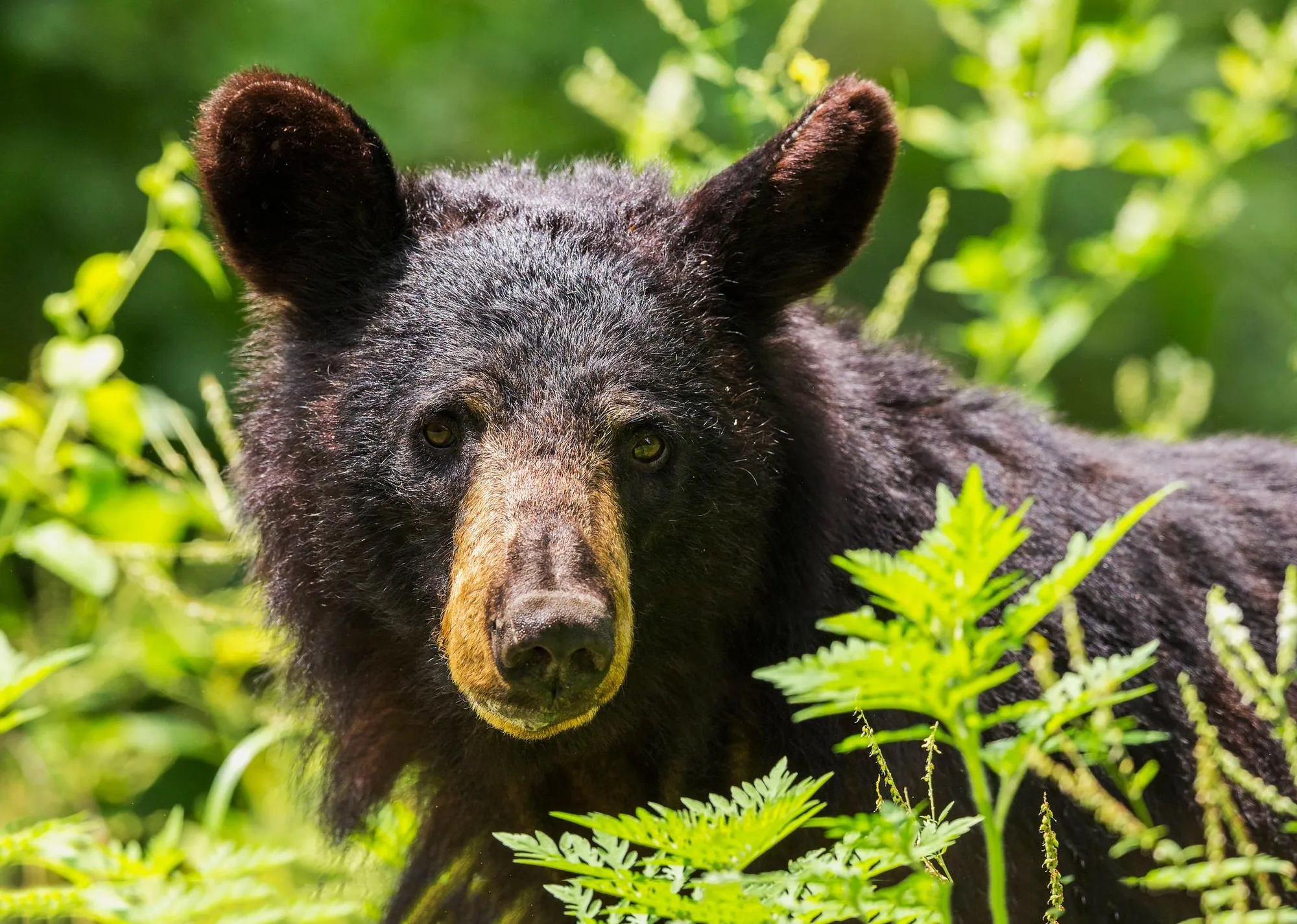
Skyline Drive's highest point along the road itself reaches 3,680 feet, but Hawksbill Mountain, the tallest peak in the entire park at 4,051 feet, sits just off the drive, accessible by a short trail rather than by car. It's a fitting detail for a road built specifically to keep drivers on the ridge without ever quite putting them on the very top of it, leaving the last few hundred feet, and the best view in the park, for whoever's willing to walk.
Facts and figures checked against NPS.gov's Skyline Drive history materials and published Civilian Conservation Corps construction records for the road's four completion phases between 1934 and 1939.
The survey crews who walked this ridge in January 1931 were mapping a road nobody could yet see, through terrain that would eventually cost triple what Congress first agreed to pay for it. Drive it today at the posted 35 miles an hour and it takes about three hours, door to door, for a road that took the better part of a decade to build one overlook at a time.