
Somewhere near the park's offices sits a pile of rock that shouldn't exist: petrified wood, mailed back one piece at a time by people who took it and couldn't live with themselves.
The Wood Comes Back With a Note Attached
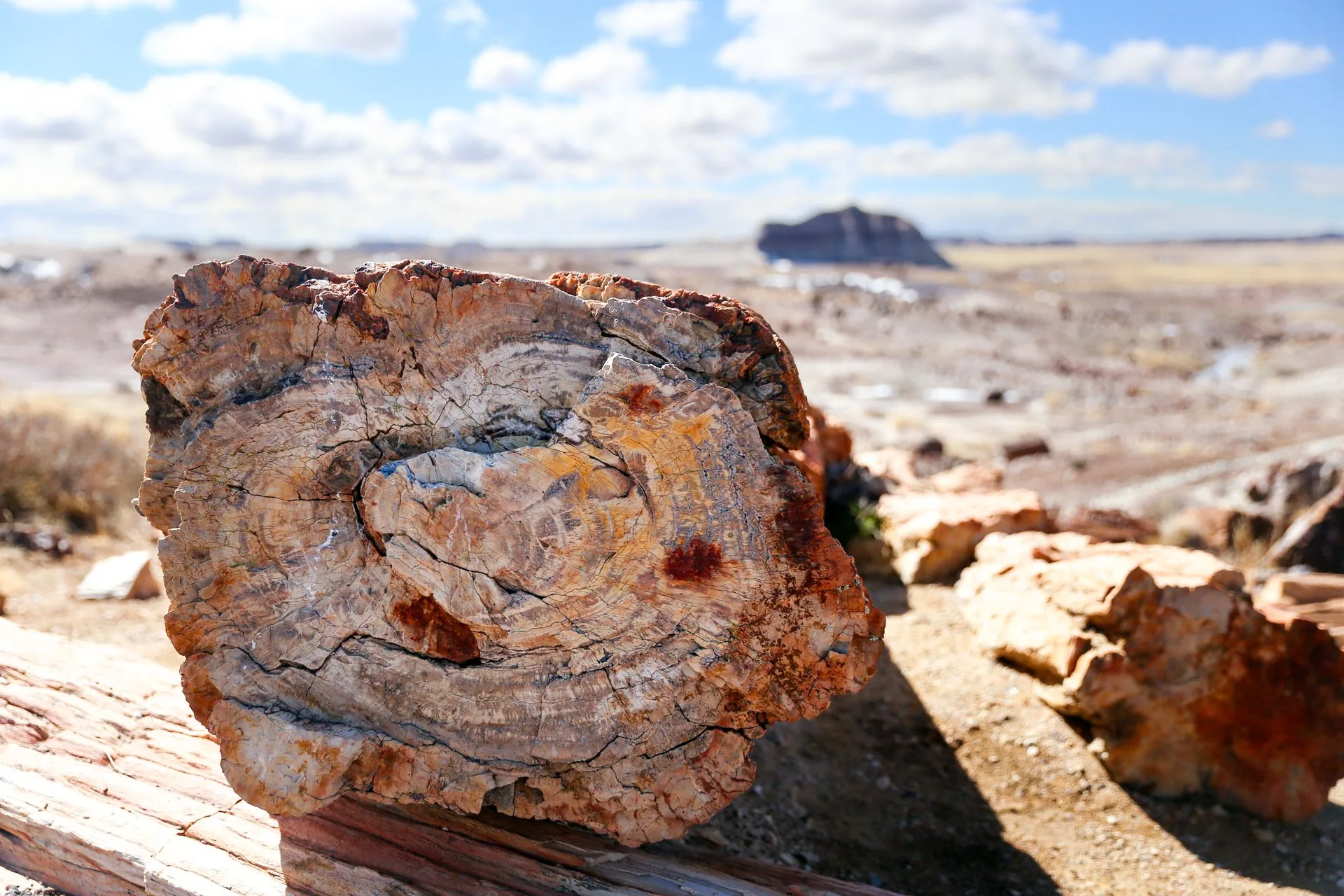
It is illegal to remove petrified wood from the park, and has been for the entire life of the park as a protected area. That hasn't stopped people from pocketing a piece as a souvenir, and it hasn't stopped a smaller but steady number of them from eventually mailing it back. Park records of returned wood, accompanied by letters, go back at least to 1938. Some letters are a single apologetic line. Others run for pages, describing a run of bad luck the writer became convinced started the day the rock came home with them: a job lost, a marriage strained, a car that wouldn't start.
The wood and its letters accumulate near the park's offices in what staff and visitors alike call the Conscience Pile, not an official exhibit, just a place where returned stone ends up because there's nowhere else for it to go. A 2015 book, Bad Luck, Hot Rocks, pulled a collection of these letters directly from the park's own archive and put them in front of a wider audience for the first time. The story has kept resurfacing since, most recently in a 2025 radio segment that introduced yet another generation of visitors to the idea that this particular rock seems to come with strings attached.
Plan Your Petrified Forest Visit
Leave the wood where you found it. It's illegal to remove, and, if the letters are any indication, some visitors wish they had.
Open the Trip PlannerThe Numbers Are Softer Than the Legend
The scale of the theft is harder to pin down than the folklore around it suggests. A 2008 article in National Parks Traveler quoted park staff offering a rough figure, roughly 12 tons of petrified wood removed per year, based on an estimate from about a decade earlier. The same article flagged that figure as likely inflated, possibly by a full order of magnitude, since it was a guess extrapolated from a small sample rather than anything the park could actually measure at its many unstaffed boundaries. No current official tally of annual theft volume is published by the park.
What is measurable is the return rate: a steady trickle of packages, year after year, small enough that no single one makes news but constant enough that the pile keeps growing. Whether visitors believe in a curse or just feel guilty either works. The wood ends up back on federal land either way, addressed to a park that never asked for an apology, just for the rock.
- Returned wood with letters documented since AT LEAST 1938
- Book compiling park-archive letters "BAD LUCK, HOT ROCKS" (2015)
- 2008 staff estimate of annual theft ~12 TONS/YR (FLAGGED AS LIKELY HIGH)
- Current official theft tally NOT PUBLISHED
The Conscience Pile's history and the 1938-onward letter record checked against National Parks Traveler's 2008 and 2013 reporting, cross-referenced with the Wikipedia entry on the Conscience Pile and coverage from the National Parks Conservation Association and Collectors Weekly. The roughly-12-tons-per-year figure is attributed to a 2008 park-staff estimate as reported by National Parks Traveler, not to an NPS.gov statistics page, and that article's own caveat about the figure being possibly overstated is carried forward here. No current official NPS theft-volume statistic could be located.
Most stolen souvenirs just disappear into a drawer somewhere, forgotten. The petrified wood doesn't seem to let people forget it, which is either a two-hundred-million-year-old coincidence machine or just what happens when you take something a park spent decades telling you not to take. Either way, the pile keeps growing, one guilty package at a time, addressed to a park that never asked for the rock back, only never to have lost it.