
Sixty-seven degrees north of the equator, well above the Arctic Circle, there is a field of sand dunes that climb 100 feet above the surrounding spruce forest, the kind of landscape a person expects to find in the Sahara, not in the Alaskan bush. The Great Kobuk Sand Dunes cover roughly 25 square miles of active, wind-shaped sand inside Kobuk Valley National Park, and for close to two decades now, they've also served as one of the more unusual research sites in American planetary science.
A Desert Built By Glaciers, Not Heat
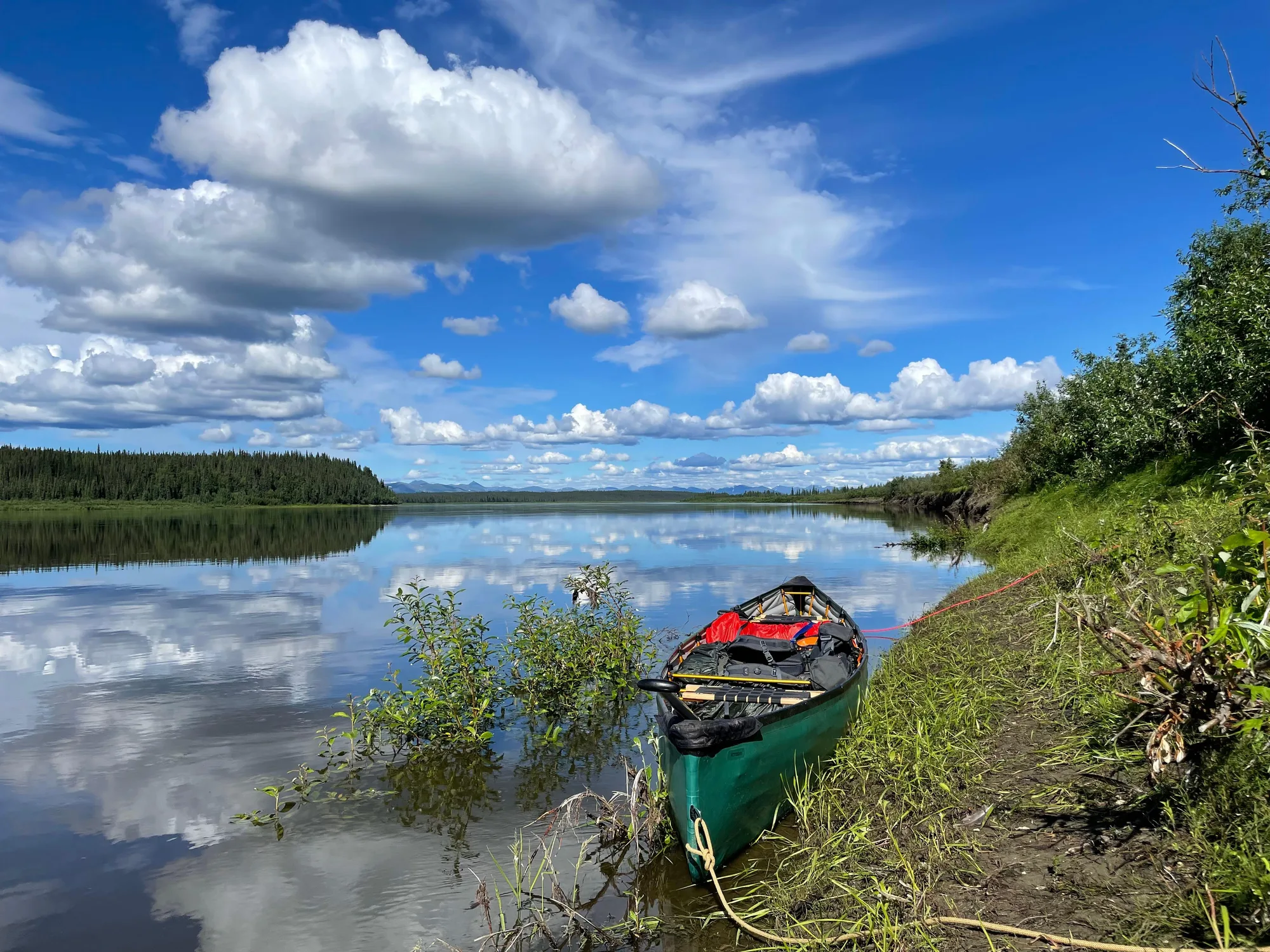
During past ice ages, glaciers ground down the mountains ringing the Kobuk Valley into enormous quantities of loose sand and silt. Meltwater streams carried that material down into the valley floor, and Arctic winds picked up the finest of it and piled it into dunes wherever the surrounding mountains blocked enough of the wind to let sand settle. The valley itself, ice-free even during the coldest glacial periods, acted like a bowl that caught what the ice, water, and wind delivered from every side.
What's left today is a landscape that still shows both of those forces at work: transverse dunes, long wind-built ridges, dominate the northern part of the field, while crescent-shaped barchan dunes and parabolic dunes, both shaped by shifting wind direction, cover the south. Roughly 90 percent of the sand originally deposited across the valley has since been stabilized under tundra and forest, which means the 25 square miles of bare, active dune field still visible today is only the part of a much larger ancient sand sea that hasn't yet been reclaimed by plants.
- Active dune area ~25 SQ MI
- Dune height UP TO 100 FT ABOVE THE FOREST
- Formation GLACIAL SEDIMENT, WIND-DEPOSITED
- Stabilized sand ~90% NOW UNDER TUNDRA/FOREST
Plan a Kobuk Valley Trip
There's no road to the dunes. Every real visit starts with a chartered air taxi and a river float from Kotzebue.
Open the Trip PlannerWhy NASA-Funded Scientists Keep Coming Back
Hydrogeologist Cynthia Dinwiddie of the Southwest Research Institute began investigating the Great Kobuk Sand Dunes as a planetary analog site in 2008, with fieldwork in 2010 conducted in conditions cold enough that average daily temperatures sat around 6 degrees Fahrenheit. The appeal for Mars research is the dunes' pace: frozen and crusted with snow and frost for much of the year, they migrate excruciatingly slowly compared to dunes in warmer deserts, closer to the sluggish rate at which Martian dunes are observed to move than anything found in the Sahara or Death Valley. Remote-sensing methods developed by researcher Marius Necsoiu let the team track that slow movement precisely enough to compare it directly against Martian dune data.
The most striking finding so far involves water. Using ground-penetrating radar and resistivity surveys, Dinwiddie's team detected a thin layer of liquid water sitting just below the dunes' frozen active layer, evidence of a freeze-drying process that concentrates and preserves moisture in cold sand rather than letting it evaporate away. That matters for Mars because it offers a working, observable model for how liquid water might behave, and briefly persist, in the cold, arid sand of the Martian surface, a question that goes directly to whether Mars could once have supported, or might still support, similar near-surface water. Researchers have also studied debris flows and gully erosion on the dunes' steeper faces, features that closely resemble formations photographed on Martian slopes, and found that, counterintuitively, the dune field's larger dunes tend to move faster than its smaller ones. None of it required a rocket. It required a plane ticket to Kotzebue and a willingness to work at 6 degrees.
- Lead researcher CYNTHIA DINWIDDIE, SOUTHWEST RESEARCH INSTITUTE
- Research began 2008
- Key fieldwork 2010, ~6°F AVERAGE DAILY TEMPS
- Key finding LIQUID WATER BELOW THE FROZEN ACTIVE LAYER
Dune formation, size, and dune types checked against the National Park Service and NASA's Earth Observatory. The Mars analog research, its researchers, and its findings checked against the National Park Service's own account of the research and a Southwest Research Institute press release describing the study.
Stand on top of one of these dunes in winter and the thermometer might read single digits, the wind might be the only sound for miles, and the sand under your boots is, by any reasonable definition, frozen. It doesn't look like a research frontier. But the same slow, cold, water-holding sand that makes this place feel like the edge of nowhere is exactly what makes it useful to people trying to understand a planet 140 million miles away.