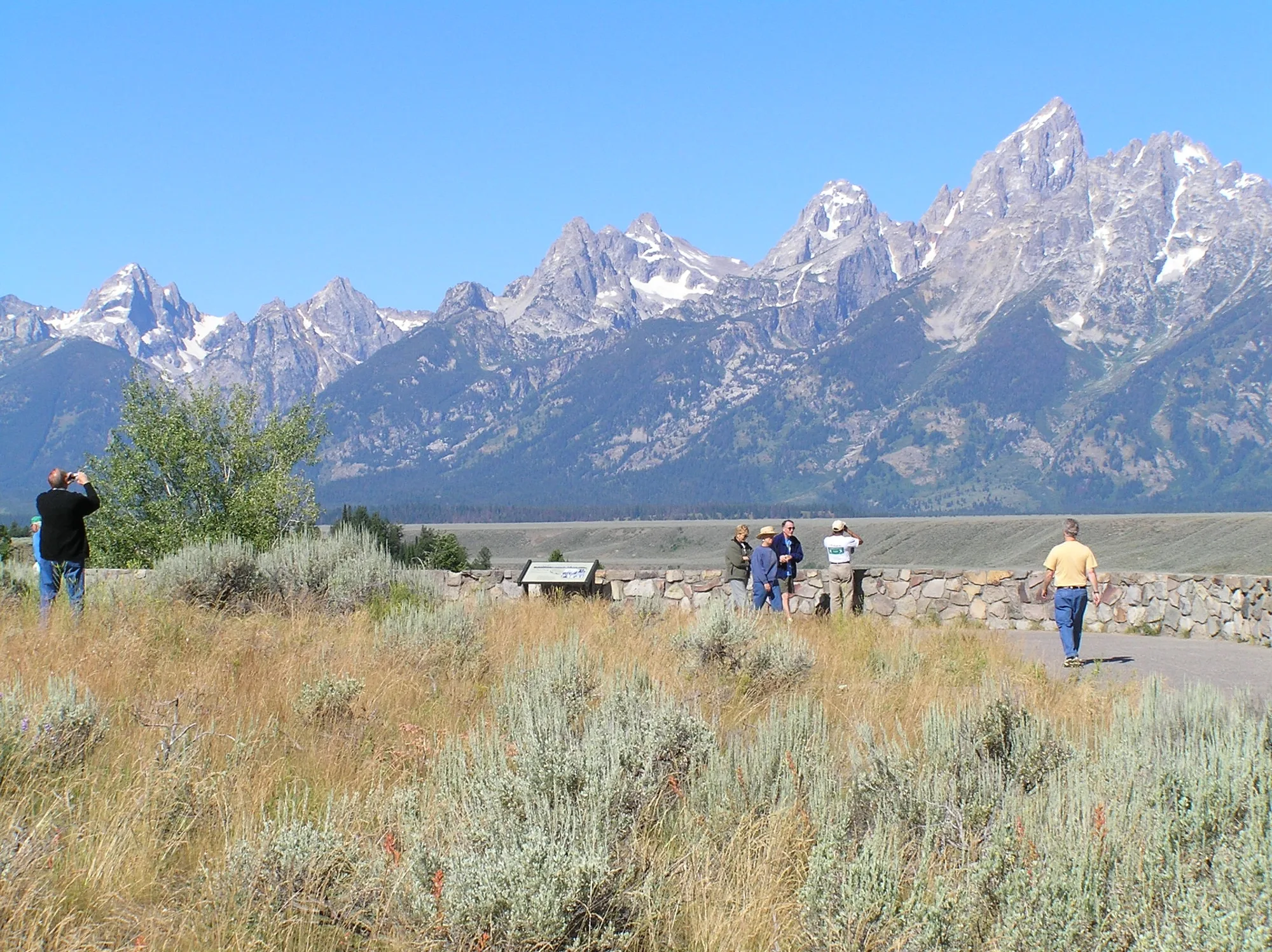
There are no foothills. Drive up from Jackson and the sagebrush flat just ends, handing off straight to granite that keeps going for another mile and a half of open air. Nothing gradual about it. The Tetons are the youngest mountain range in North America, and they're built from some of the oldest rock on the continent, and the reason there's nothing in between the valley and the peaks is that the range simply hasn't been standing long enough to wear its own edges off.
That's the thread worth following through the rest of this park too: things that look like they've always been there, that turn out to be a lot newer and a lot more contested than they let on. The mountains are still moving. So, not that long ago, was the argument over whether this was supposed to be a national park at all.
Young Mountains, Old Rock
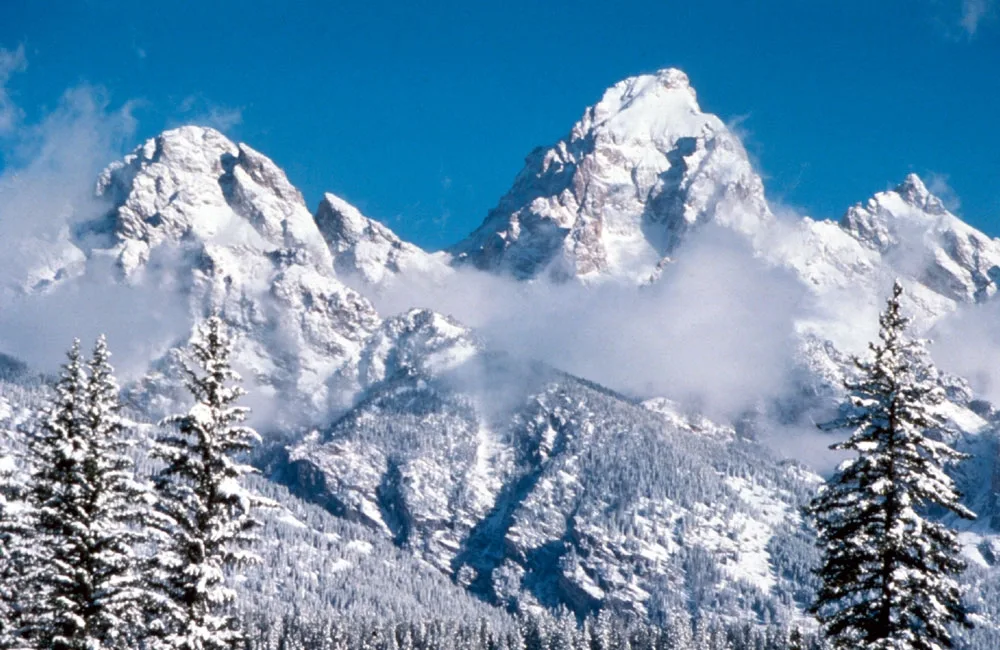
The Teton Fault runs along the base of the range, and it's the reason the mountains look the way they do. Movement on it started roughly ten million years ago, with most of that motion packed into just the last two million, which by mountain-building standards is barely a running start. Older ranges have had tens of millions of years for wind and water to grind their sharp edges into gentle foothills. The Tetons haven't had time. They just go straight up.
The rock doing the rising is a different story. Some of the granite in the range, including in Grand Teton and Mount Moran, cooled into its current form about 2.5 billion years ago. Parts of the underlying rock date back further still, over 2.7 billion years, among the oldest exposed rock anywhere in North America. So the peaks are new. The material they're made of is almost as old as the planet's continents get.
And the fault is still working. Total vertical displacement along it comes to almost 30,000 feet, most of which shows up not as extra height on the peaks but as a valley that dropped away beneath them. The last major earthquake on the Teton Fault happened somewhere between 4,800 and 8,000 years ago, strong enough by the geologic record to have hit magnitude 7.5. It will move again. Nobody knows when.
- Grand Teton's summit 13,775 FT
- Fault movement began ~10 MILLION YEARS AGO
- Oldest exposed rock 2.7 BILLION YEARS OLD
The Land Nobody Was Supposed to Notice
The park Congress created in 1929 only covered the peaks themselves, federal land already inside the Teton Range. Jackson Hole, the valley below, stayed private, and dude ranches and homesteads kept spreading across it. Horace Albright, who ran Yellowstone at the time, wanted the valley protected too, so in 1927 he brought in John D. Rockefeller Jr., who quietly agreed to buy up more than 100,000 acres of it.
Quietly is the important word. The purchases ran through a front called the Snake River Land Company, and the local banker handling the deals didn't know who was actually behind them. When the truth came out in 1930, Jackson Hole was furious. A senator held public meetings against it. A newspaper, The Grand Teton, was founded for the sole purpose of fighting the plan. An investigation later found that federal agents had pushed some homesteaders off land they didn't hold clear title to, more aggressively than the Park Service had done anywhere else in Wyoming.
Congress refused to touch Rockefeller's land for over a decade, so in 1943 Franklin Roosevelt sidestepped Congress and created Jackson Hole National Monument by executive order instead. That's when things got loud. The governor threatened to remove federal officials from the valley by force. The actor Wallace Beery joined a county commissioner and a group of armed ranchers who illegally drove cattle across the new monument in protest, on camera, for the newsreels. A national columnist compared Roosevelt's order to Hitler annexing Austria. Wyoming sued the federal government over it, and lost only on a technicality.
It took the rest of the decade, and a war, before attitudes shifted. Tourism kept growing, ranchers kept aging out, and on September 14, 1950, Harry Truman signed the bill that finally folded the monument into Grand Teton National Park for good. Thirty-one years, start to finish, for a park boundary most visitors now drive through without a second thought.
- 1929 ORIGINAL PARK, PEAKS ONLY
- 1943 FDR CREATES JACKSON HOLE NATIONAL MONUMENT BY EXECUTIVE ORDER
- 1950 TRUMAN MERGES THE MONUMENT INTO THE PARK
The Lake the Glacier Left Behind
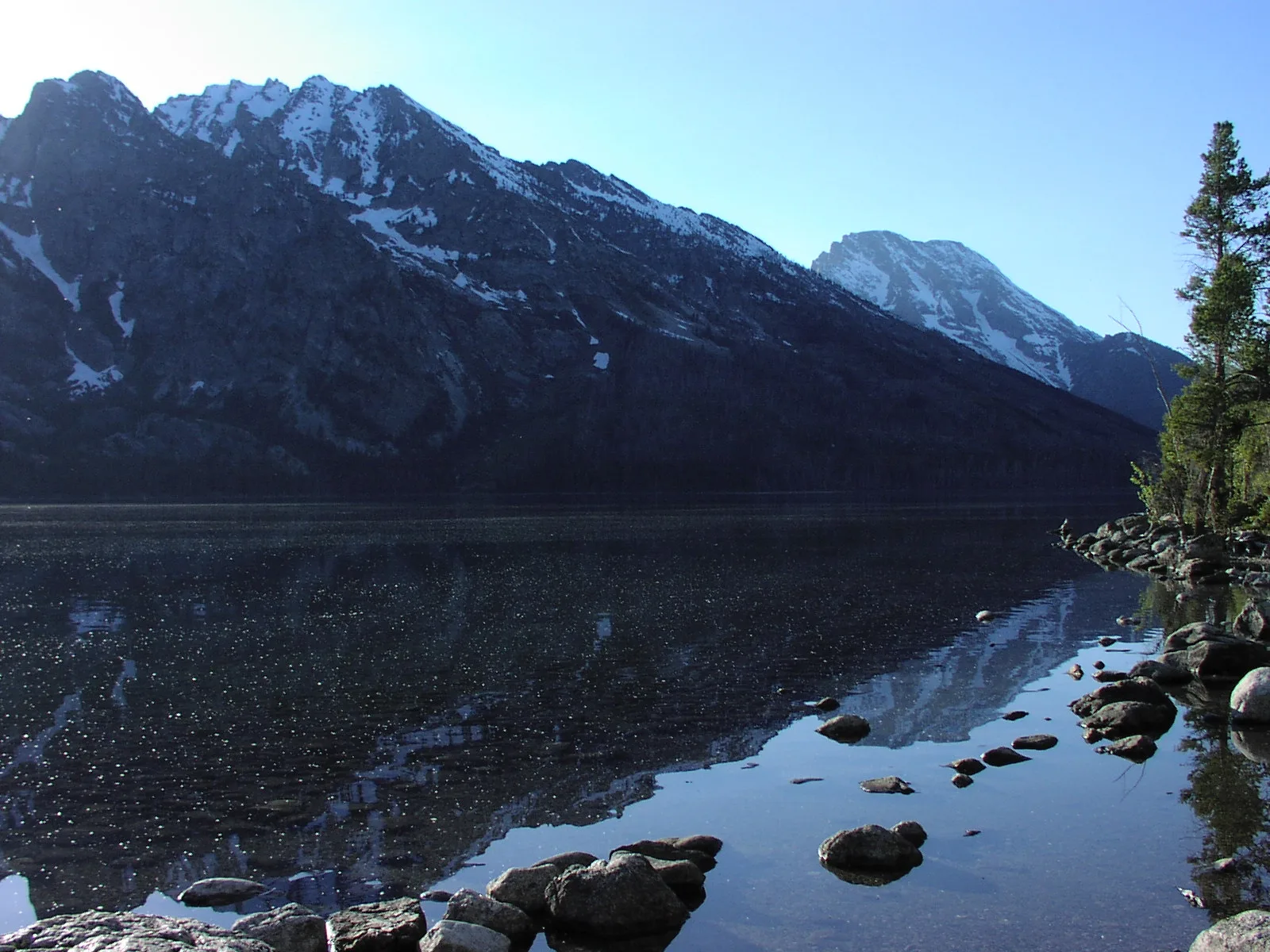
Jenny Lake formed around 12,000 years ago, when a glacier carving out Cascade Canyon shoved a wall of rock debris in front of itself and left it there after the ice retreated. That wall, a terminal moraine, is what's holding the lake in today. It runs 256 feet deep in places and spreads across nearly 1,200 acres, a full lake sitting almost at the foot of the range.
A shuttle boat crosses it in about ten minutes and drops hikers at the mouth of Cascade Canyon, which turns a six-mile round trip to Hidden Falls and Inspiration Point into something closer to two. Skip the boat and the Jenny Lake Trail loops the whole shoreline instead, 7.1 miles, flat enough for an afternoon and never far from the water.
Either way, the payoff is the same: the closest a short hike gets you to standing inside the range instead of just looking at it from the road.
Turn This Route Into a Real Plan
Pick your dates and your crew: the AI trip planner builds the day-by-day for Grand Teton, boat shuttle times and drive times included.
Open the Trip PlannerThe Barn Everyone Has Already Seen
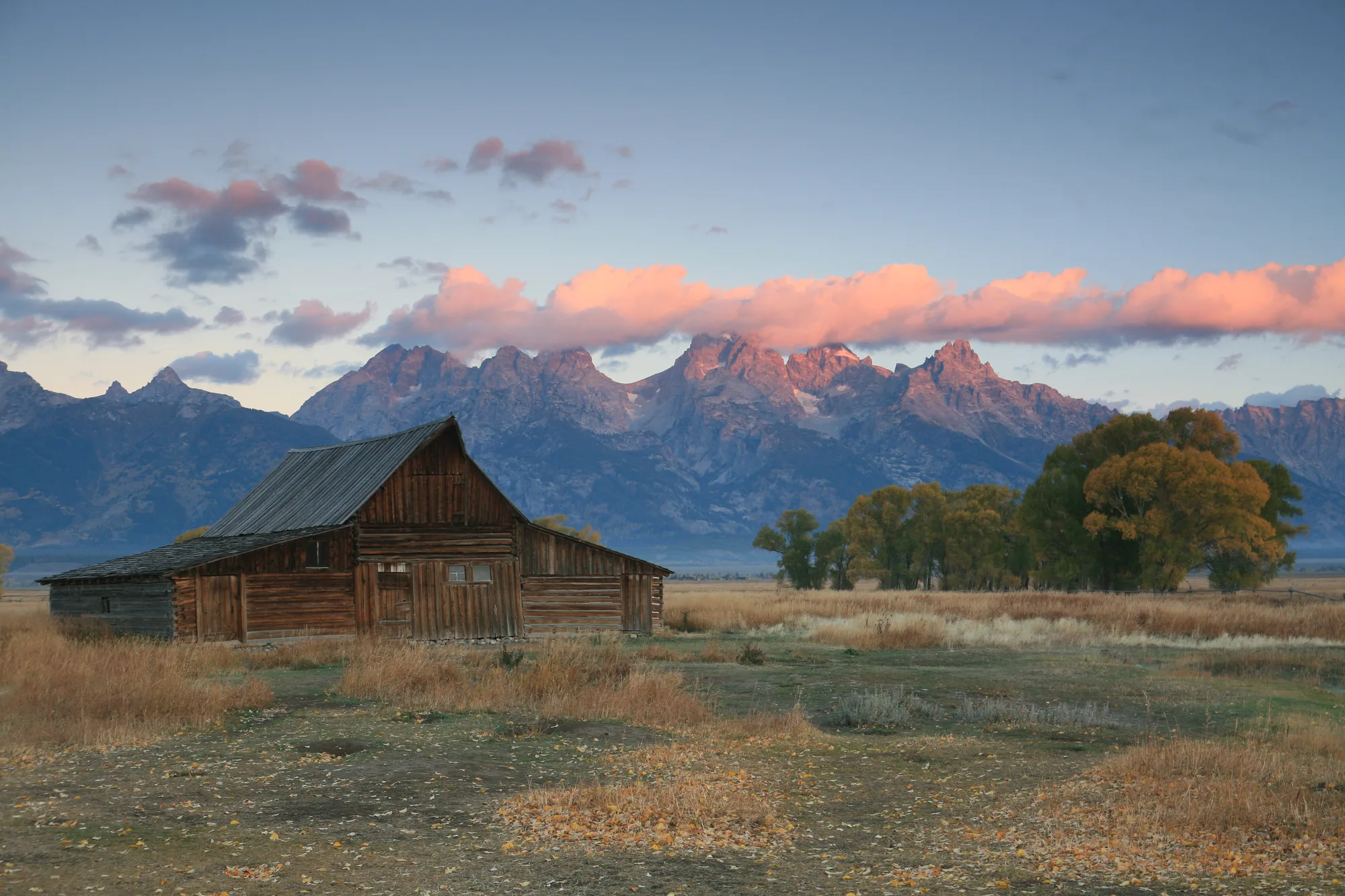
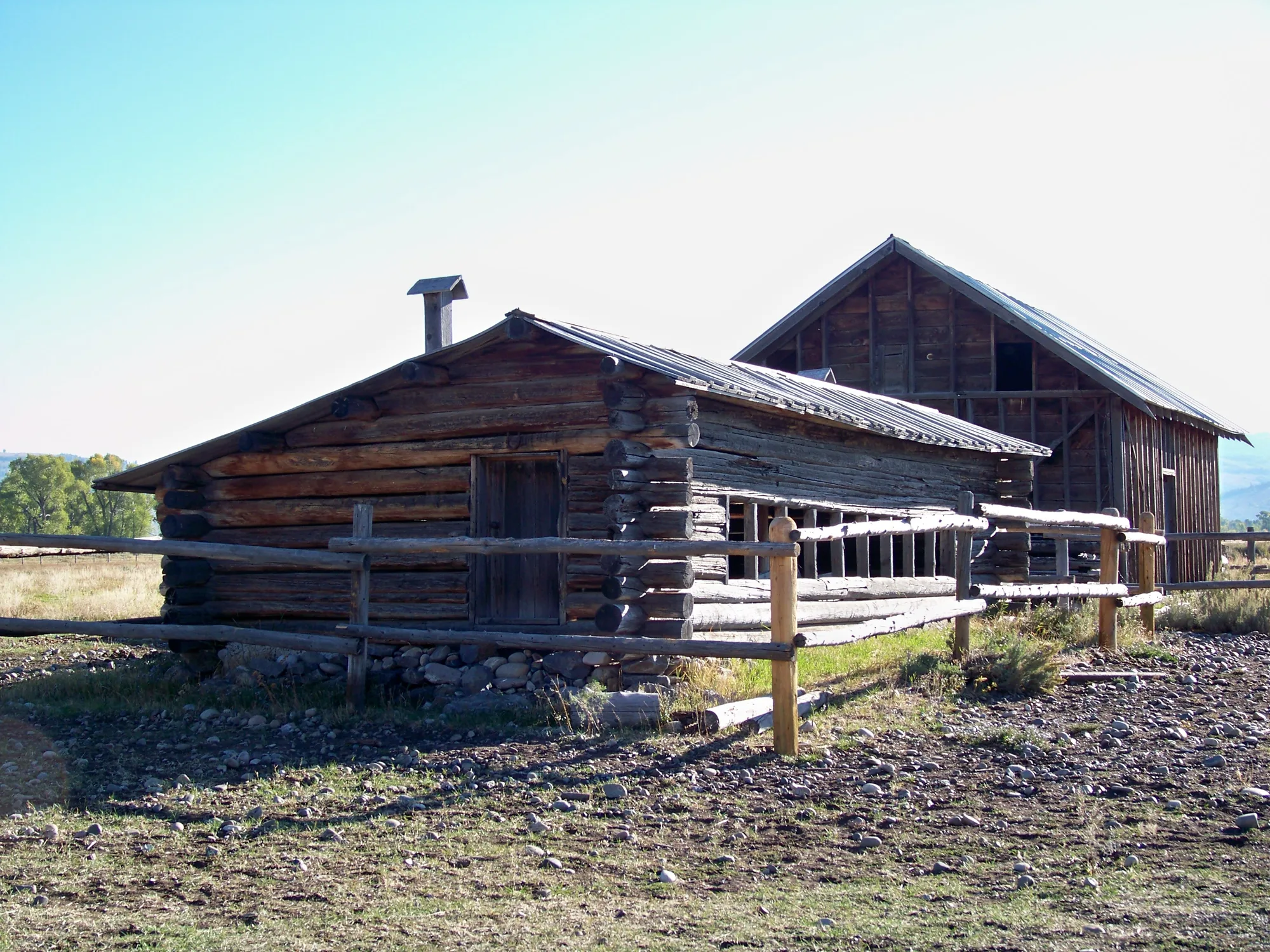
Thomas Alma Moulton and his sons started their barn on Antelope Flats around 1912 and didn't finish it until 1945, adding to it piece by piece as the homestead could afford it. It's still standing, on what became known as Mormon Row, one of the last parcels the Moulton family eventually sold to the Park Service. The barn with the Teton Range framed behind it has since become one of the most photographed buildings in the country, reproduced on calendars and postcards by people who mostly have no idea it took a family thirty-three years to build.
Go at sunrise if the photo matters to you. Go at any hour if it doesn't. Either way it's a homestead, not a stage set, built by people who were trying to make a living on a valley floor that a lot of Washington, decades later, decided was worth more as scenery than as ranchland.
The Snake River, From a Boat
Guided float trips run the Snake River through the park on water flat enough for kids and grandparents, no whitewater involved, just a slow drift past cottonwood banks with the whole range on one side the entire way. It's the same view Ansel Adams photographed from the Snake River Overlook in 1942, minus the climb, minus the crowd at the pullout.
What Made This Park Famous to People Who'd Never Been
For close to two decades, a grizzly known to researchers as 399 raised litter after litter of cubs in the meadows and roadside willows around Grand Teton, often in plain view of visitors pulled over with cameras. She became one of the most photographed wild bears alive, a genuine celebrity with her own name recognition among people who had never set foot in Wyoming. She was killed by a vehicle near Jackson in October 2024, and her remains were returned to the park the following month.
Her fame did something real: it turned bear jams, the traffic backups that form when a grizzly wanders near a road, into one of the most reliable wildlife sightings in the park, and it made bear safety a subject visitors actually paid attention to instead of skimming. Carry bear spray, know how to use it, and give any bear you see the distance rangers ask for. That's not a suggestion left over from one bear's story. It's the same rule for every bear in the park, and it'll outlast all of them.
Leave It the Way You Found It
The fault moves without warning. So does the weather: roads close, boat shuttles stop running in high wind, and a plan built three months out should still bend on the day.
Drive back down toward Jackson at the end of it and that same abrupt line shows up again, granite dropping straight back into sagebrush with nothing gradual in between. Grand Teton tops out at 13,775 feet above that valley floor, a number that means less on paper than it does driving under it with no foothills to soften the approach. Check conditions before you go, carry more water than feels necessary, and treat every closure as the park doing its job, not getting in the way of yours.
Fault, rock-age, and Jenny Lake figures checked against USGS.gov's geology of Grand Teton National Park and against NPS.gov. The Jackson Hole land-purchase history and the timeline for grizzly 399 were checked against NPS's own park history and news pages.