
At the Apgar Visitor Center, a sign used to make a promise the park couldn't keep. It said the glaciers here would be gone by 2020, a specific, confident date printed for anyone walking in the door. The National Park Service pulled that sign in 2020, along with matching ones at Logan Pass and St. Mary, and replaced the fixed deadline with something messier and more honest: the glaciers are shrinking, and nobody knows the exact year that ends.
That correction is worth sitting with before anything else here, because Glacier is a park whose entire identity rests on something disappearing on a schedule nobody can actually pin down. The retreat itself is real and well documented. The date was not. Six stops through the park, roughly the order a Going-to-the-Sun Road trip would take you, trace how a landscape gets named for its own vanishing point, and what happens when the science outpaces the sign.
A Park Built by a Journalist and a Railroad
George Bird Grinnell spent the better part of two decades pushing Congress to protect this stretch of the Rockies, writing about it in his own magazine, Forest and Stream, until the campaign finally had somewhere to land. He had unlikely company. The Great Northern Railway, run by Louis Hill, saw a business case as much as a conservation one: a national park his own trains could reach and his own hotels could fill. Congress passed the bill, and President Taft signed Glacier National Park into law on May 11, 1910.
Hill didn't wait long to cash in. Over the following years the Great Northern built a string of Swiss-style chalets and grand hotels across the park, part of a marketing campaign that branded Glacier as "America's Switzerland" to travelers who might otherwise have booked a transatlantic ticket instead of a domestic one. The conservation case and the sales pitch arrived in the same decade, and it's genuinely hard to say which one built more of what still stands here.
- 1891–1910 GRINNELL'S CONGRESSIONAL CAMPAIGN
- MAY 11, 1910 TAFT SIGNS GLACIER INTO LAW
- 1913–1915 GREAT NORTHERN BUILDS ITS HOTELS
- 1932 WATERTON–GLACIER PEACE PARK, FIRST OF ITS KIND
Pebbles That Remember Being Underwater
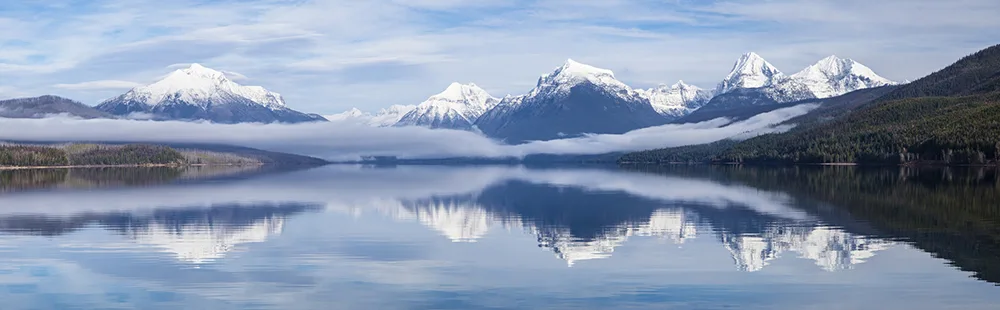
Lake McDonald runs about ten miles long and, by the National Park Service's own account, roughly 464 feet deep at its lowest point, the deepest and longest lake in the park. None of that is what most visitors actually crouch down for. It's the pebbles. Wade in almost anywhere along the shore and the rock underfoot comes in red, green, and near-black, worn smooth and sorted by wave action into bands of color that look deliberate.
The color is iron, and the story behind it predates the lake by a very long time. Red rock formed in shallow ancient seawater, oxidized by regular exposure to open air at low tide. Green rock formed the same way in deeper water, where the iron barely touched oxygen at all. The near-black rock at the lake's upper end started as one of the other two, then got heated and compressed by later geological pressure until it darkened. Glaciers broke all of it loose from the surrounding mountains, rivers carried the fragments down, and a very long stretch of wave action did the polishing. It's beach glass, more or less, made by a mountain range instead of an ocean.
The One Stretch of Glacier That Doesn't Look Like Montana
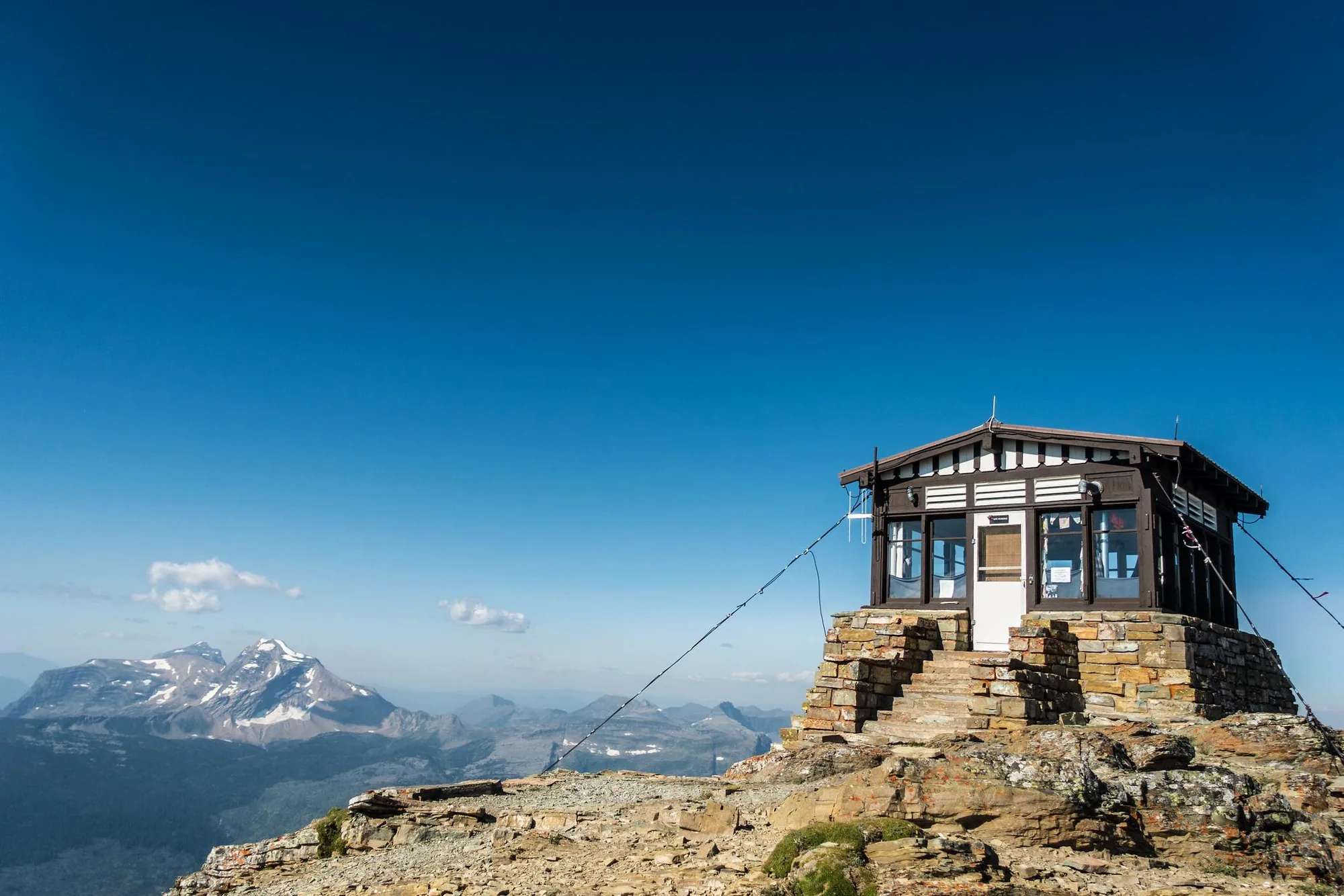
A half-mile boardwalk loop off the Going-to-the-Sun Road, the Trail of the Cedars runs through what the National Park Service simply calls old growth forest, cedars overhead more than 80 feet tall, ferns and moss underfoot in a spot damp enough to feel imported from somewhere with a lot more annual rainfall. From there, the trail to Avalanche Lake itself runs 4.6 miles round trip and climbs about 741 feet, easy enough for most visitors, ending at a lake ringed by waterfalls that spill down from the snowfields above it for most of the year.
It's a strange interruption in a park that's mostly open rock and sky. For twenty minutes on the boardwalk section, Glacier looks like it borrowed a forest from the Pacific Northwest and hasn't gotten around to giving it back.
Turn This Route Into a Real Plan
Pick your dates and your crew: the AI trip planner builds the day-by-day for Glacier, drive times along the Sun Road included.
Open the Trip PlannerEleven Years, Fifty Miles, One Road
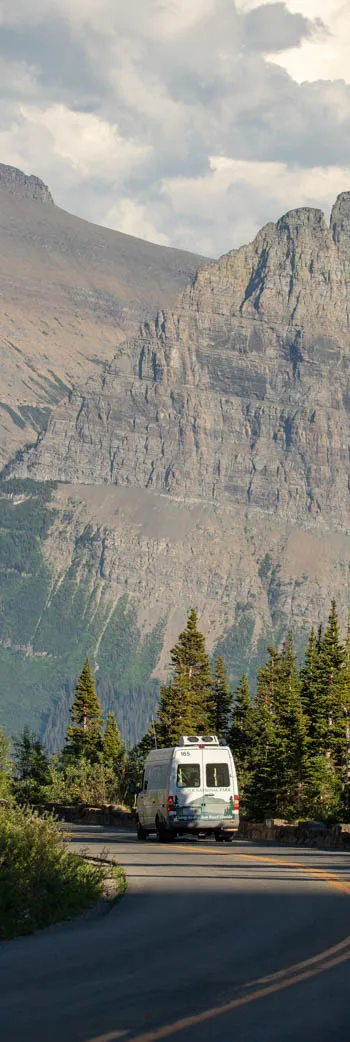
Going-to-the-Sun Road took from 1921 to 1932 to build, roughly fifty miles of two-lane road blasted and built along cliff faces that would still be a hard job with modern equipment. It crosses the Continental Divide at Logan Pass, 6,646 feet up, and it's a National Historic Landmark now, recognized for the engineering as much as for the scenery, built in the "National Park Service Rustic" style meant to look like it grew out of the mountain rather than being cut into it. It usually isn't fully open until sometime in June, snow permitting, and the alpine section closes again by mid-October.
Logan Pass is also where one of the old "gone by 2020" signs stood, alongside the versions at Apgar and St. Mary: three copies of the same prediction, posted at three different elevations, wrong on the same date.
One Hundred and Fifty Down to Twenty Six
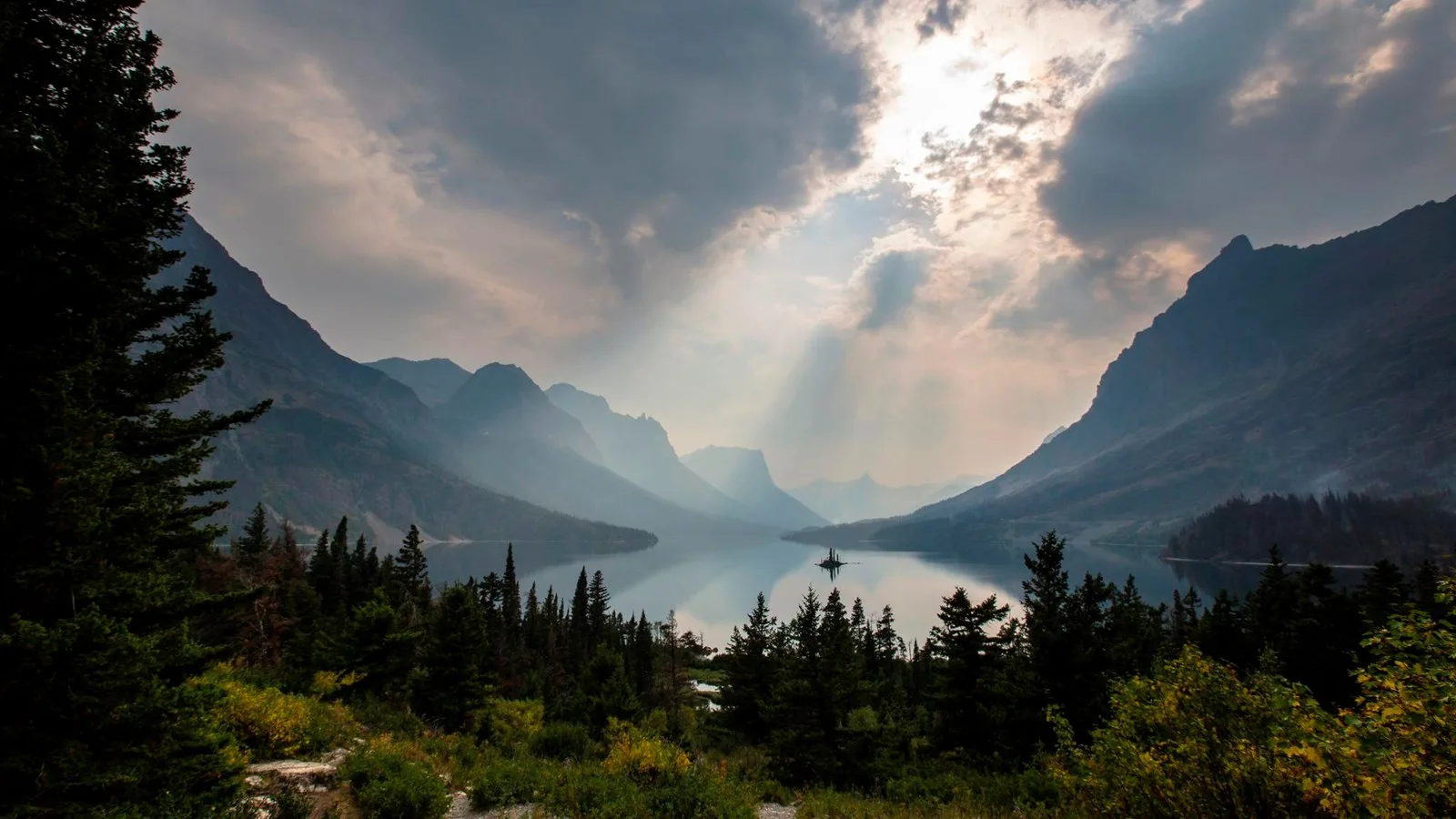
Pull back from any single overlook and the number that actually matters is this one: researchers count roughly 150 glaciers across the park in the mid-1800s, near the end of what's called the Little Ice Age. A 2015 survey found 26 still large enough, at least 25 acres, to count as active glaciers by the U.S. Geological Survey's own working standard. That's the retreat behind the sign that used to stand at St. Mary's own visitor center, the one that named 2020 with a straight face and got pulled that same year when the date arrived and the glaciers, unevenly, hadn't finished disappearing.
The replacement sign doesn't try to guess again. It says, plainly, that when the glaciers will completely disappear depends on how and when people act, and that the one consistent fact is that they're shrinking. Saint Mary Lake itself, carved by ice and ringed by peaks that reflect almost too perfectly on a still morning, is what's left behind once ice like that finishes moving through a valley and pulls back. The lake is the glacier's old signature. The mountains are what it carved on its way out.
A Hotel the Railroad Almost Let Burn
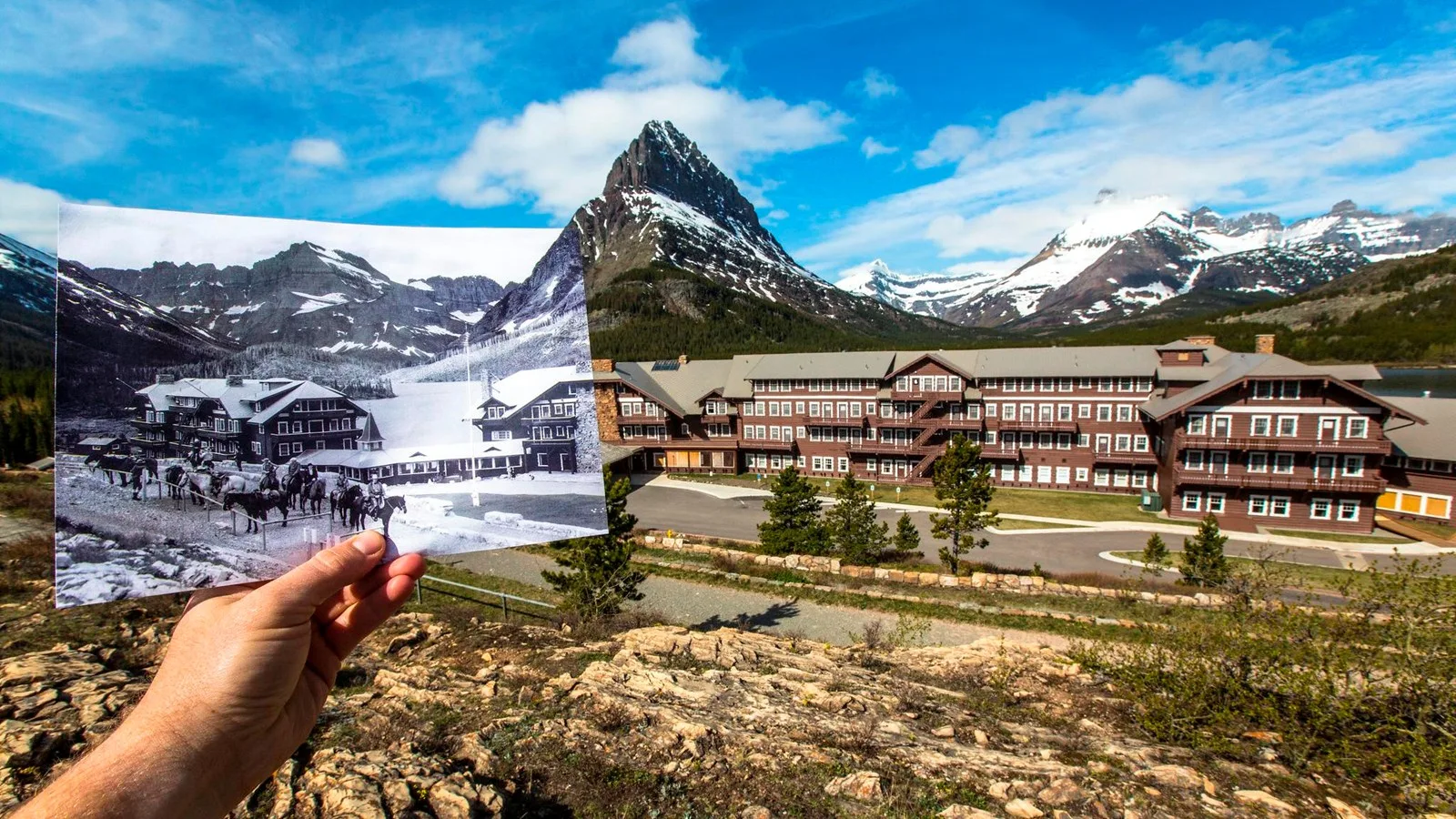
Many Glacier Hotel went up in 1914 and opened on July 4, 1915, built by the Great Northern Railway in the same Swiss chalet style as the rest of Louis Hill's hotel chain, sold hard on the idea that a train ticket could buy something close to the Alps without the ocean crossing. Decades later, it came close to burning down when the Heaven's Peak Fire ran down the Swiftcurrent Valley toward it. Hotel staff spent a night keeping the wooden structure wet and stamping out spot fires while several nearby buildings burned to the ground around them. The hotel survived.
When word reached Great Northern's management that their landmark had been saved, the reply that came back by telegram was one word: "Why?" It was the Depression, ticket sales were down, and a railroad that had built a Swiss fantasy hotel in Montana to sell train seats had, by then, mostly stopped caring whether the building survived to sell any more of them. The hotel outlasted the company's enthusiasm for it by about a century, and counting.
Back at Apgar, the sign that replaced the old one doesn't try to give a year, either. It says the glaciers are shrinking and leaves it there, an admission that the honest answer was less dramatic than the wrong one, but true. Come see it while it's still doing what it's doing. Nobody standing at that sign can tell you exactly how long that turns out to be.
Founding history, Going-to-the-Sun Road, and Waterton–Glacier Peace Park facts checked against NPS.gov's own Glacier history and Going-to-the-Sun Road landmark materials. The 2020 sign replacement, its exact old and new locations (Apgar, Logan Pass, and St. Mary), and its replacement wording checked against KRTV's reporting. The 150-to-26 glacier count came from a 2015 USGS/NPS glacier survey as published via npshistory.com. Lake McDonald's depth and Glacier's founding date were cross-checked against Wikipedia. Lake McDonald's colored-pebble geology, which NPS's own pages don't detail at the mineral level, came from a general-audience geology write-up and should be read as a solid but secondary source. Many Glacier Hotel's fire history and the "Why?" telegram came from the Flathead Beacon's reporting on the park's fire history.