
On June 27, 2025, a National Park Service crew in Glacier Bay photographed a humpback whale with a gash behind its dorsal fin deep enough to expose the blubber underneath. The wound looked fresh, park staff said, maybe only hours old. The whale wasn't a stranger. Researchers had a file on it already: Whale #2583, sighted in these waters since 2013, struck by what officials guessed, from the size of the wound, was a medium to large vessel.
It was the second strike documented in the area that week. The park's whale population has spent the past decade climbing back from a collapse that nearly halved it, and every boat moving through the water it's recovering in is now something Glacier Bay actively manages, down to the knot.
Forty Years of Knowing Them by Tail
Humpback whales can be identified individually by the black-and-white pattern on the underside of their tail flukes, unique enough to function like a name. Glacier Bay's monitoring program has been building on that fact for more than forty years, making 2026 roughly its forty-second consecutive season of photo-identification survey work in the bay and neighboring Icy Strait. Whale #2583's file, tracing back to 2013, is one entry in a catalog that now runs to hundreds of individuals returning to the same water year after year.
The most recent full accounting, covering the 2024 season, documented 187 unique whales during the core June-through-August survey window, 192 across the full season once whales spotted outside that window were added in. That same year produced 24 confirmed mother-calf pairs, the highest number recorded since the program began tracking births in 1985, working out to a crude birth rate of 12.8 percent against a pre-2014 baseline average of 9.2 percent. On paper, it reads like a population in strong recovery. It is, but only against a low that took years to reach.
What "the Blob" Did to a Calving Rate
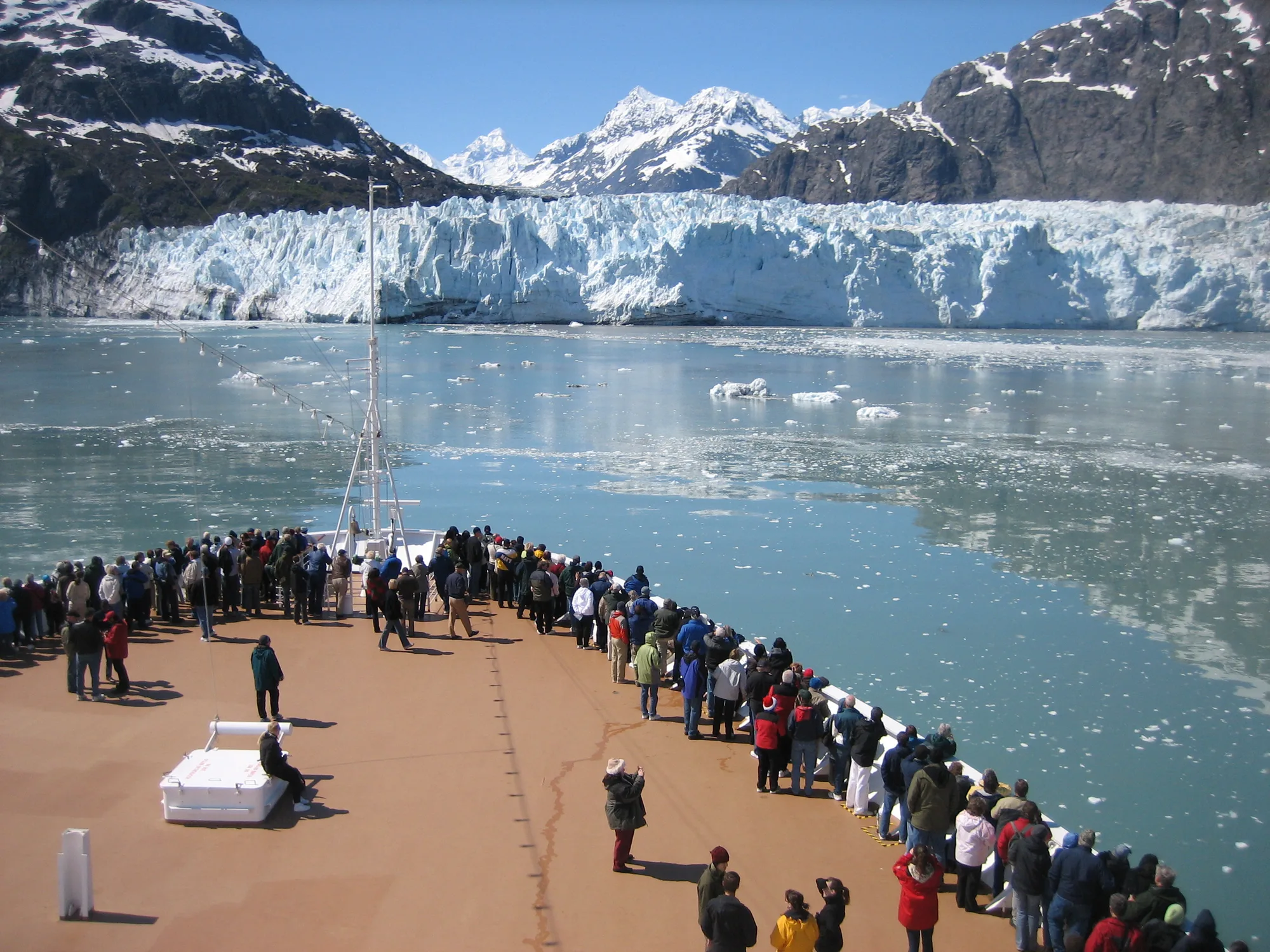
Between 2014 and 2016, an unusually persistent patch of warm water settled over the Northeast Pacific, since nicknamed the Blob by the oceanographers who study it, and it scrambled the food web humpbacks depend on. By 2018, the National Park Service reports, the whale population using Glacier Bay and Icy Strait had dropped 56 percent compared to 2013 levels, less than half as many animals present as before. The reproductive collapse was worse than the raw headcount. From 1985 through 2013, roughly one calf was born for every three adult females tracked each season. After the heatwave hit, that fell to one calf for every twenty-five.
Calf survival, separately tracked, dropped from 40 percent down to 3 percent. Adult survival fell too, from 98 percent to 89 percent, a smaller-looking number that still meant meaningfully more whales dying than the population could replace. Recovery has been real but slow: by 2020 and 2021 the calving rate had climbed back to roughly one calf per fourteen whales, and researchers were still finding whales that looked unusually thin five years after the heatwave technically ended. Even with 2024's record calf count, Glacier Bay's whale abundance sits about 26 percent below its pre-heatwave peak, and neighboring Icy Strait remains nearly 34 percent below its own high.
Plan Your Glacier Bay Visit
Whale sightings on the boat tour into Glacier Bay are common in summer, but never guaranteed. The trip planner can help you build a visit around the season the whales are actually here.
Open the Trip PlannerThe Bay Has a Daily Vessel Cap
Under park regulations at 36 CFR 13.1160, Glacier Bay caps large-vessel traffic year-round: two cruise ships and three tour vessels a day, plus one passenger ferry. Charter and private vessels get a wider allowance, but only during the peak season from June 1 through August 31, when up to six charter vessels and twenty-five private vessels a day are permitted. Outside that window, both categories drop off the daily count entirely.
Speed is regulated separately from headcount. From May 15 through September 30, vessels moving through the bay's designated whale waters are held to 20 knots, with the park superintendent authorized to lower that ceiling to 13 knots when conditions call for it. In Johns Hopkins Inlet specifically, from July 1 through August 31, the limit drops further, to 10 knots. Vessels are barred from approaching within a quarter nautical mile of a humpback at all, and if a whale surfaces closer than that, the rule is to slow to 10 knots or less and steer away, not toward, the animal.
The Rules Can Tighten Without Warning
On July 17, 2026, acting superintendent Joni Seay issued an emergency update setting a new 13-knot limit across the eastern side of Lower Bay Whale Waters, an area running from the mouth of Glacier Bay to a line drawn between the northern tips of Strawberry Island and Lars Island, an area that normally falls under the standard 20-knot ceiling. The stated reason was straightforward: whales were feeding heavily in that stretch of water, and the park wanted vessels moving through it slower than the season's baseline speed allowed.
That kind of mid-season tightening is now part of how Glacier Bay operates, not an exception to it, and Whale #2583's injury the previous summer is the reason it carries real weight. The park's own account of that strike noted it wasn't isolated: a second whale had been hit that same week, and the year before, several whale-vessel collisions had already been documented in nearby Icy Strait and Cross Sound, two of them fatal. A whale the monitoring program had followed since 2013, tracked through a heatwave that nearly halved its species locally, still ended up hit by something moving too fast to avoid it. The speed limits exist because the alternative already happened.
- Unique whales identified 187 (192 TOTAL)
- Mother-calf pairs 24, A RECORD
- Crude birth rate 12.8% VS 9.2% PRE-HEATWAVE
- Abundance vs. pre-heatwave peak ~26% LOWER, GLACIER BAY
Facts and figures checked against the National Park Service's news releases on the July 2025 whale strike and the July 17, 2026 whale waters update, the NPS Glacier Bay & Icy Strait Humpback Whale Population Monitoring program's 2024 season resource brief (Neilson et al.), and vessel quota and speed regulations at 36 CFR 13.1160. Whale identification, calving-rate, and vessel-quota figures are stated as published; where a regulation applies only seasonally (charter and private vessel quotas, the Johns Hopkins Inlet speed limit) we've noted the dates.
Whale #2583 is still out there. The gash behind its dorsal fin will scar over, the way older strike wounds on other catalogued whales already have, one more mark in a photo-ID file that now runs back thirteen years. What's changed since the summer it was hit is the water around it: a stricter speed limit in the exact stretch of bay where whales like it come to feed, issued not on the season's usual calendar but the week the park decided the whales needed it. Forty-two years of photographing the same tails has given Glacier Bay something most places managing wildlife never get, a population it actually knows by name, and the ability to tell, almost in real time, when the rules protecting it need to change.