
In 1896, a USGS geologist named Joseph Diller noticed something in Crater Lake that didn't belong. A log, thirty feet long, was floating not on its side like ordinary driftwood but straight up and down, a few feet of it sticking out of the water like a swimmer treading in place. He tied a length of baling wire to it so he could find it again.
That log is still out there. Park staff and researchers have tracked it, off and on, for more than a hundred and thirty years, and it still floats the same way it did when Diller first found it, upright, patient, drifting wherever the wind pushes it. Nobody has ever fully explained why.
A Log That Shouldn't Float This Way
The log is about thirty feet long, and the National Park Service's own measurements put roughly three feet of it above the waterline, though other accounts describe closer to four, a small enough discrepancy that either is close to right. Diller published his early observations of it in 1902, the same year Crater Lake became a national park. Carbon dating on the wood puts its age at more than four hundred and fifty years, meaning the tree it came from was already centuries old, growing somewhere on the caldera slopes, long before it ever ended up in the water at all.
It Moves More Than You'd Think
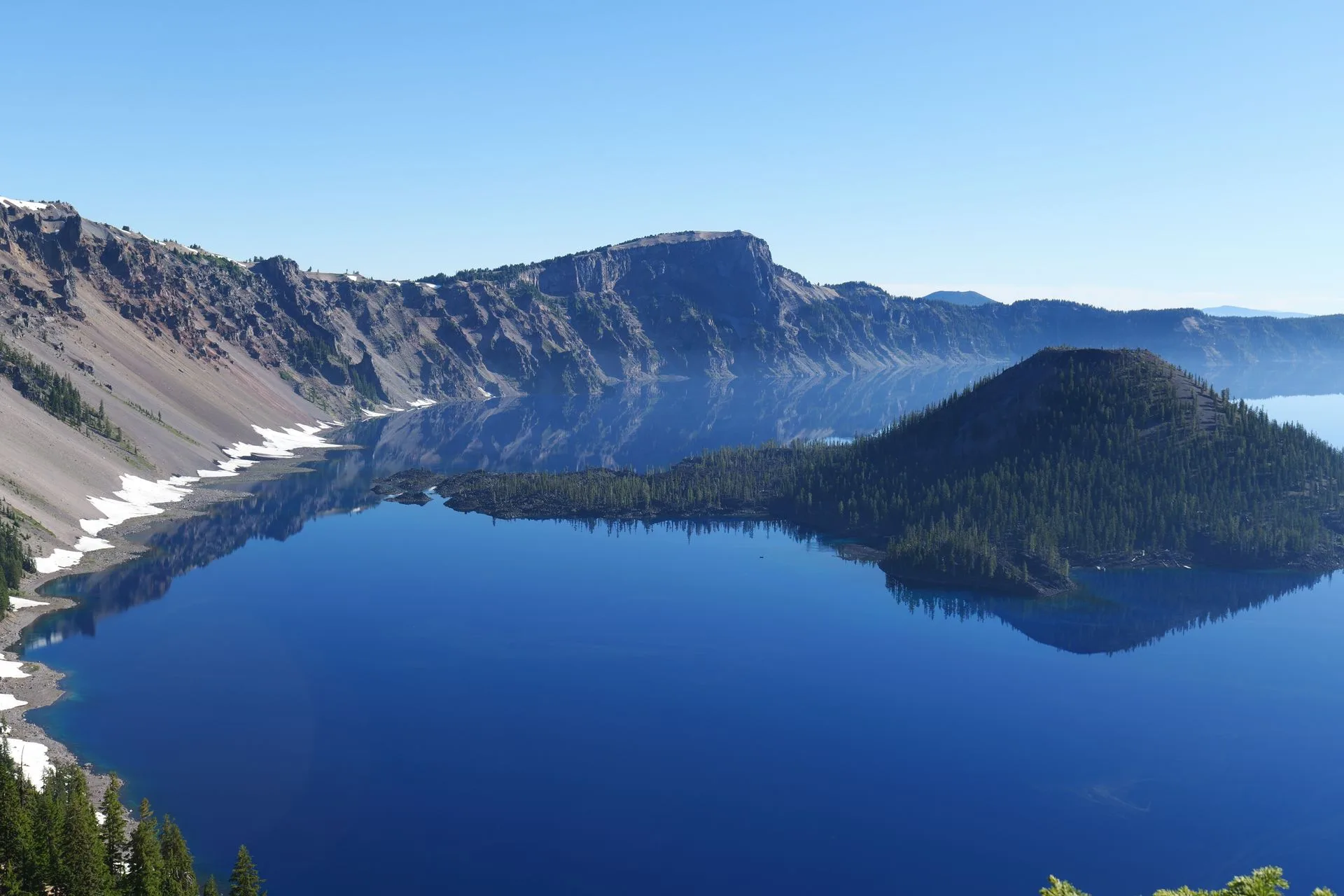
Diller's baling wire let him track the log moving roughly a quarter mile over five years, from 1896 to 1901, modest by any measure. A dedicated 1938 study, running from July through September, found something much stranger: the log covered at least sixty-two miles of open water that single summer, an average of about two-thirds of a mile a day, with one day in early August logging nearly four miles on its own. All of that movement is wind and wave driven, no current or motor involved, just a thirty-foot standing log pushed around a lake with nothing else quite like it floating on it.
Plan Your Crater Lake Visit
There's no guaranteed way to spot the Old Man from the rim, and no telling which corner of the lake he'll be drifting through. The trip planner can help you build in enough time to look.
Open the Trip PlannerAn Open Question, Even to the Park
One theory holds that more than a century of cold submersion has gradually increased the density of the log's underwater end, shifting its balance enough to keep it standing. The other holds that the log once carried rocks lodged in its base, ballast that has kept the heavy end down from the start. Neither has been confirmed, and the park's own account treats the question as open rather than resolved, an unusual thing for an agency that tends to prefer settled answers.
One detail has been confirmed. A moss called Fontinalis grows on the log, reportedly the only place near the lake's surface where it's found, likely because the log is one of the only stable anchor points in a lake with almost nothing else floating on it long enough for anything to take hold.
A Storm With Good Timing
During a 1988 submersible study of the lake, NPS researchers tied the log to the eastern shore of Wizard Island to keep it in place. Unusual storms followed, along with an August snowfall, unseasonable even by the standards of a place that gets five hundred inches of snow most winters. The researchers released the log at night, and the weather, by most tellings, returned to normal not long after. The park itself recounts the story with a wink rather than a warning, the origin of a small, half-serious local superstition about leaving the Old Man exactly where he wants to be.
- Length ~30 FT
- First documented 1896, BY JOSEPH DILLER
- Wood age 450+ YEARS (CARBON DATED)
- Recorded travel 62+ MI IN ONE SUMMER, 1938
Facts and figures checked against the National Park Service's page on the Old Man of the Lake, cross-referenced against other published accounts of the log's dimensions, where a minor discrepancy exists between sources on how many feet stand above the waterline, both figures given rather than one silently preferred, with NPS treated as the primary source.
Diller tied a piece of baling wire to the log so he could find it again. He didn't need to worry. More than a hundred and thirty years later, the log is still recognized on sight, no wire required, the same thirty feet of hemlock still standing upright in the same lake, doing the one thing about itself that nobody, not Diller, not the park service, not anyone since, has ever fully explained.