
In 1999, fifteen island foxes were left alive on San Miguel Island. None of the chain of events that got them there had anything to do with foxes.
The Fox Was the Last Link in a Chain It Didn't Start
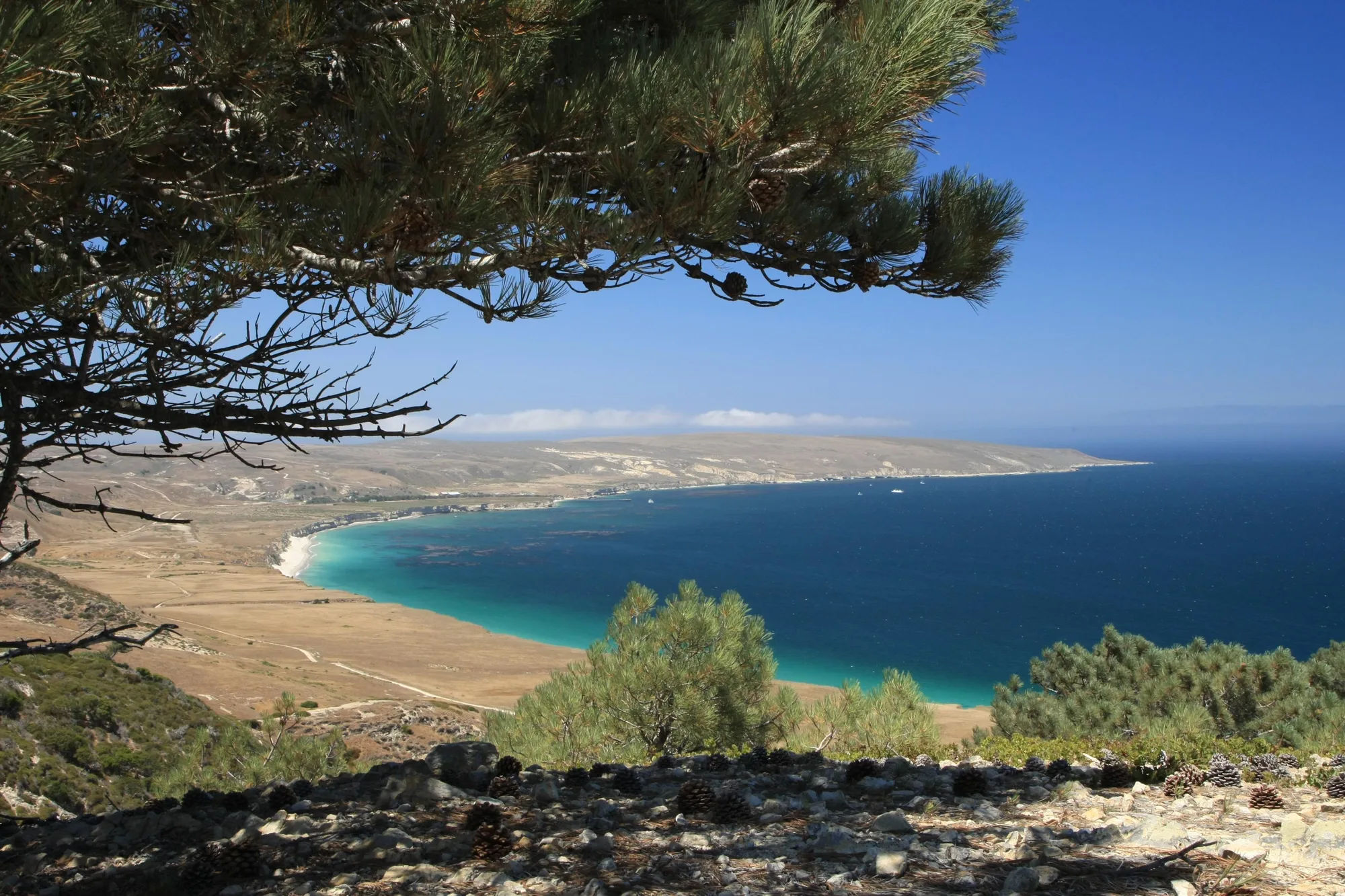
The island fox is small even for a fox: 4 to 5 pounds, about the size of a housecat, roughly a third smaller than the mainland gray fox it descended from after thousands of years of island isolation shrank it down. For most of that history, it had no real predator here. Bald eagles patrolled these islands and ate fish, not foxes, and bald eagles also did something else without anyone intending it: they kept golden eagles, which do eat foxes, from moving in and settling.
DDT broke that arrangement. The pesticide, along with hunting and egg collecting, drove the bald eagle population off the islands through the mid-20th century. With their natural competitor gone, golden eagles had an opening, and feral pigs, introduced to Santa Cruz Island in the mid-1800s for ranching and grown abundant by the 1990s, gave them a reason to actually stay and breed rather than just pass through: piglets were plentiful, easy prey, and enough to support eagles raising young on the island year-round. The National Park Service traces the first documented fox decline on San Miguel Island to 1995, the same year golden eagles were first confirmed on the island. A golden eagle outweighs an island fox by roughly four times. What followed was not a slow decline. By 1999 and 2000, four of the six island fox subspecies had dropped more than 90 percent. San Miguel was down to 15 foxes. Santa Rosa was down to about the same. Santa Cruz, the largest population, had fallen below 70.
- Bald eagles removed DDT, HUNTING, EGG COLLECTION
- Golden eagles arrive FIRST CONFIRMED, SAN MIGUEL, 1995
- Feral pigs enable breeding PIGLETS AS A YEAR-ROUND FOOD SOURCE
- Low point SAN MIGUEL & SANTA ROSA: ~15 FOXES EACH, 1999
Plan Your Channel Islands Visit
Foxes are commonly seen on Santa Cruz and San Miguel, often right along the trail near a campground.
Open the Trip PlannerFixing It Meant Undoing Every Link, in Order
The recovery program, run by the National Park Service with The Nature Conservancy and other partners, worked backward through the same chain that caused the collapse. Every San Miguel fox still alive was brought into captivity as an emergency measure, and between 1999 and 2008 that captive population produced 225 pups. Golden eagles were live-trapped and relocated to the mainland, 44 of them since 1999. Feral pigs, the food source that had let golden eagles settle in the first place, were removed from the islands. Between 2003 and 2008, 254 captive-bred and rehabilitated foxes were released back into the wild.
By 2009, the wild population had passed 1,700 foxes. San Miguel was back to 320, with 94 percent of adults surviving year to year. Santa Cruz, the largest island population, had climbed to roughly 1,000, at 96 percent annual survival. Santa Rosa, at 390 foxes, still showed the weakest numbers, 61 percent survival, some renewed eagle predation still working against it, a reminder that reversing a chain reaction doesn't reset every link to zero at the same speed. The San Miguel, Santa Rosa, and Santa Cruz Island fox subspecies were listed as endangered in 2004 and formally delisted on August 12, 2016, twelve years later. The U.S. Fish and Wildlife Service didn't call it one recovery among many. It called it the fastest successful recovery of any mammal ever listed under the Endangered Species Act, for a species that had been counted at fifteen individual animals on its worst island.
- Captive-born pups, 1999-2008 225 (SAN MIGUEL)
- Golden eagles relocated since 1999 44
- Foxes released back to the wild, 2003-2008 254
- Wild population by 2009 1,700+ ACROSS THE ISLANDS
The DDT-to-golden-eagle-to-feral-pig causal chain, fox body size and ancestry, and recovery-program actions and figures checked against the National Park Service's official island fox pages. Listing (2004), delisting (August 12, 2016), and the "fastest mammal recovery" claim checked against the U.S. Fish and Wildlife Service's official delisting announcement.
Fifteen foxes on an island is not a population, it's a coin flip. What actually saved the island fox wasn't one decision but the fact that people traced the chain all the way back to its first link, a pesticide banned decades earlier for reasons that had nothing to do with foxes at all, and then reversed every step of it in order. The fox never did anything to cause its own collapse. It just happened to be standing at the end of a line of dominoes someone else had knocked over.