
There's no ocean anywhere near Carlsbad Caverns now, just desert scrub and the low rise of the Guadalupe Mountains. But the rock underneath the whole region was built by one, reef by reef, roughly 260 to 270 million years ago.
The Capitan Reef, Permian Period
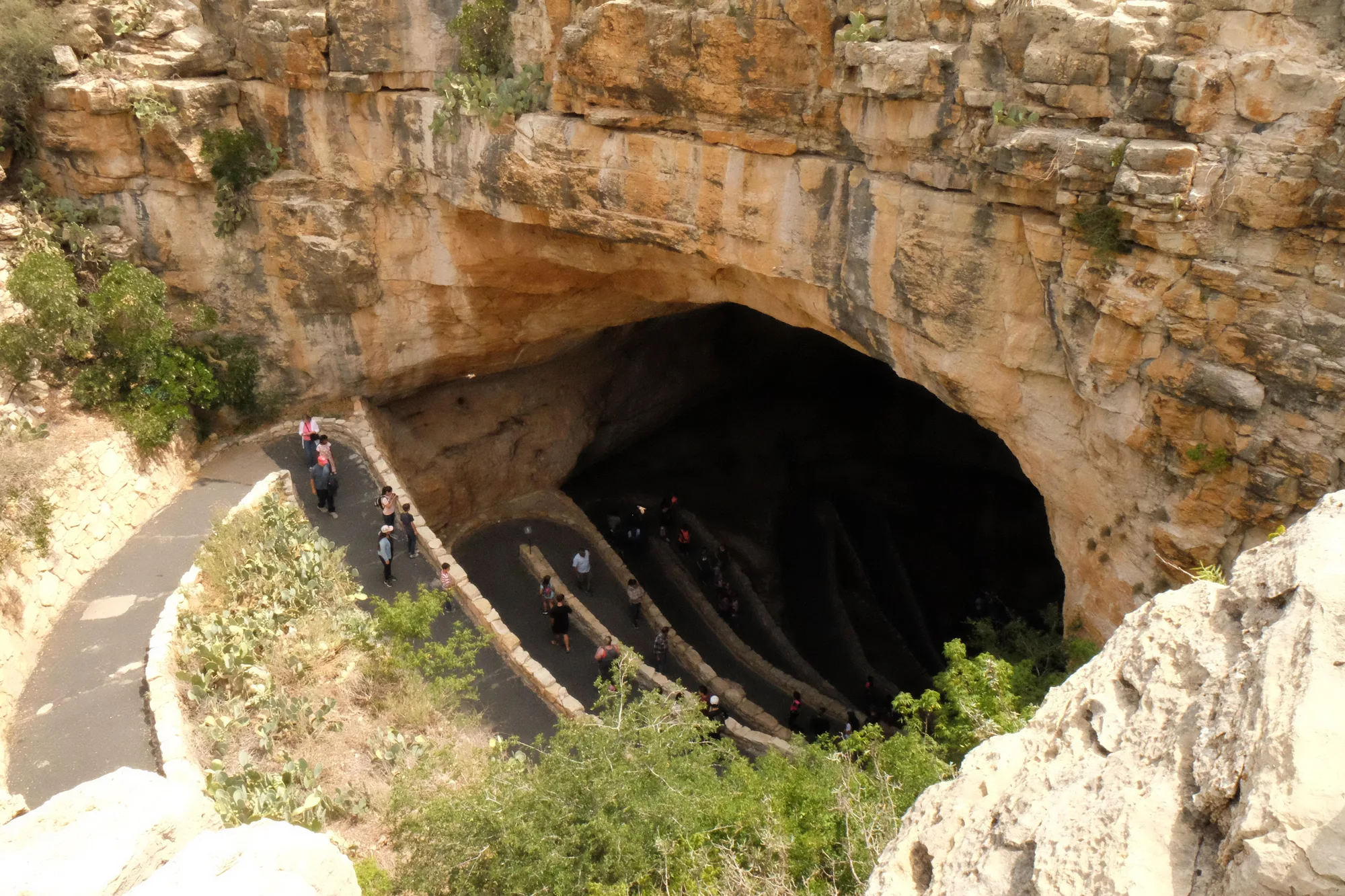
During the Permian period, roughly 260 to 270 million years ago, a vast inland sea called the Delaware Basin covered much of what's now West Texas and southeastern New Mexico, and along its edge, marine organisms, sponges, algae, and other reef-building life, constructed a massive limestone reef known today as the Capitan Reef. That reef ran for hundreds of miles around the basin's rim, and the rock it left behind now forms the Guadalupe Mountains, including the ridge that Carlsbad Caverns sits inside.
The sea eventually receded and the reef was buried under later sediment, then slowly exposed again over tens of millions of years of uplift and erosion. What visitors see today when they look at the limestone cliffs around the park entrance is fossil reef, not modern rock, a piece of an ancient ocean floor standing in open desert air.
Plan Your Carlsbad Caverns Visit
The same reef geology extends into nearby Guadalupe Mountains National Park. Worth pairing the two on one trip.
Open the Trip PlannerAcid, Not Water, Carved the Caverns
Most limestone caves form slowly as mildly acidic rainwater seeps down and dissolves rock along cracks and bedding planes. Carlsbad Caverns formed differently: geologists have found that hydrogen sulfide gas, rising from oil and gas deposits below the reef, mixed with groundwater and oxygen to create sulfuric acid, a far more aggressive solvent that ate through the Capitan Reef's limestone much faster than rainwater alone could have. That process is called sulfuric acid speleogenesis, and it's part of why the caves here are unusually large relative to caves formed by the more common rainwater process.
UNESCO recognized Carlsbad Caverns as a World Heritage Site in 1995, citing both the caves themselves and the exceptional preservation of the Permian-age Capitan Reef exposed throughout the park and the surrounding Guadalupe Mountains, one of the best-preserved fossil reef complexes on Earth. The reef and the caves are, geologically, the same story told twice: one chapter an ancient sea building limestone, the other an acid slowly hollowing it back out.
- Age ~260–270 MILLION YEARS
- Formed during PERMIAN PERIOD
- Cave-forming process SULFURIC ACID SPELEOGENESIS
- UNESCO World Heritage Site SINCE 1995
Capitan Reef age, Permian-period formation, and sulfuric acid speleogenesis checked against National Park Service and U.S. Geological Survey geology materials for Carlsbad Caverns National Park and the Guadalupe Mountains. UNESCO World Heritage designation date checked against UNESCO's official World Heritage List entry for the park.
Stand at the Natural Entrance and the desert around you looks like it's always been desert, dry rock under a dry sky. It hasn't. Every wall of that entrance is reef, laid down by living things in a sea that vanished tens of millions of years before anything resembling a human existed, later hollowed out by acid rising from below. The cave everyone comes to see is really just the second act.