One rider, sixty-three parks: twelve thousand miles that started as a rented motorcycle and a free weekend in San Francisco and never quite ended.
Jonathan Baker didn't plan any of this. Mile zero was a rented motorcycle, a weekend with nothing on the calendar, and the Pacific Coast Highway. Three years later, on and off, he'd ridden more than 12,000 miles chasing all 63 national parks, north of 155 hours in the open air with no windshield between him and the country. This is that story.
Nobody Plans to Ride 12,000 Miles
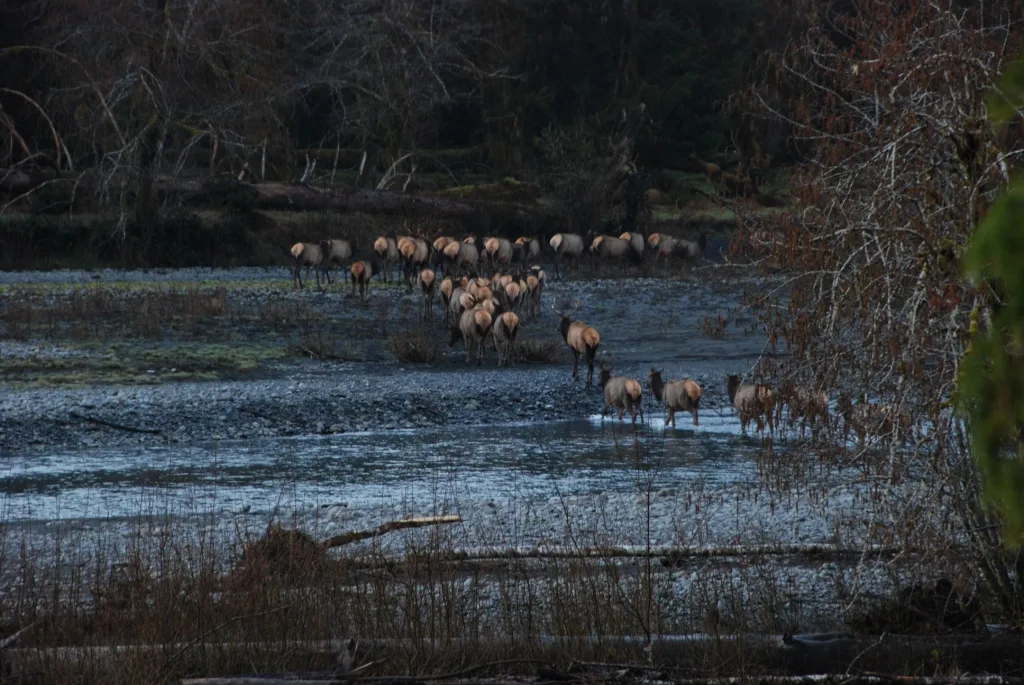
Jonathan Baker was in San Francisco for work, with a free weekend and a rental motorcycle he'd booked on a whim. He wanted to see the coast: the Pacific Coast Highway, redwoods, the things people describe to you secondhand for years before you finally go look yourself. Two days was the plan. Two days was never going to be enough.
Forty-eight hours later he'd put 900 miles on a rental engine that was never supposed to see that kind of use. Not because he'd gotten lost. Because he couldn't make himself stop.
A car windshield crops the world into a frame you watch. A motorcycle doesn't give you that option. "On a motorcycle, the scenery isn't framed in by a windshield so everything just appears bigger. You're literally outside in nature, noticing all of the temperature changes, different smells, and feeling the wind," Jonathan said. He'd driven through Yellowstone more than once. On the bike, the same park felt new, not because it had changed, but because he had stopped watching it and started standing in it.
Nobody decides to fall in love with 900 miles of coastline in a weekend. It just happens, and you notice years later. Jonathan's next trips followed the parks closer to home in Utah. Somewhere in that stretch, without a single deciding moment he can point to, "see some parks" turned into something closer to a promise: all 63, eventually, on two wheels.
The Nights That Refuse to Be Forgotten
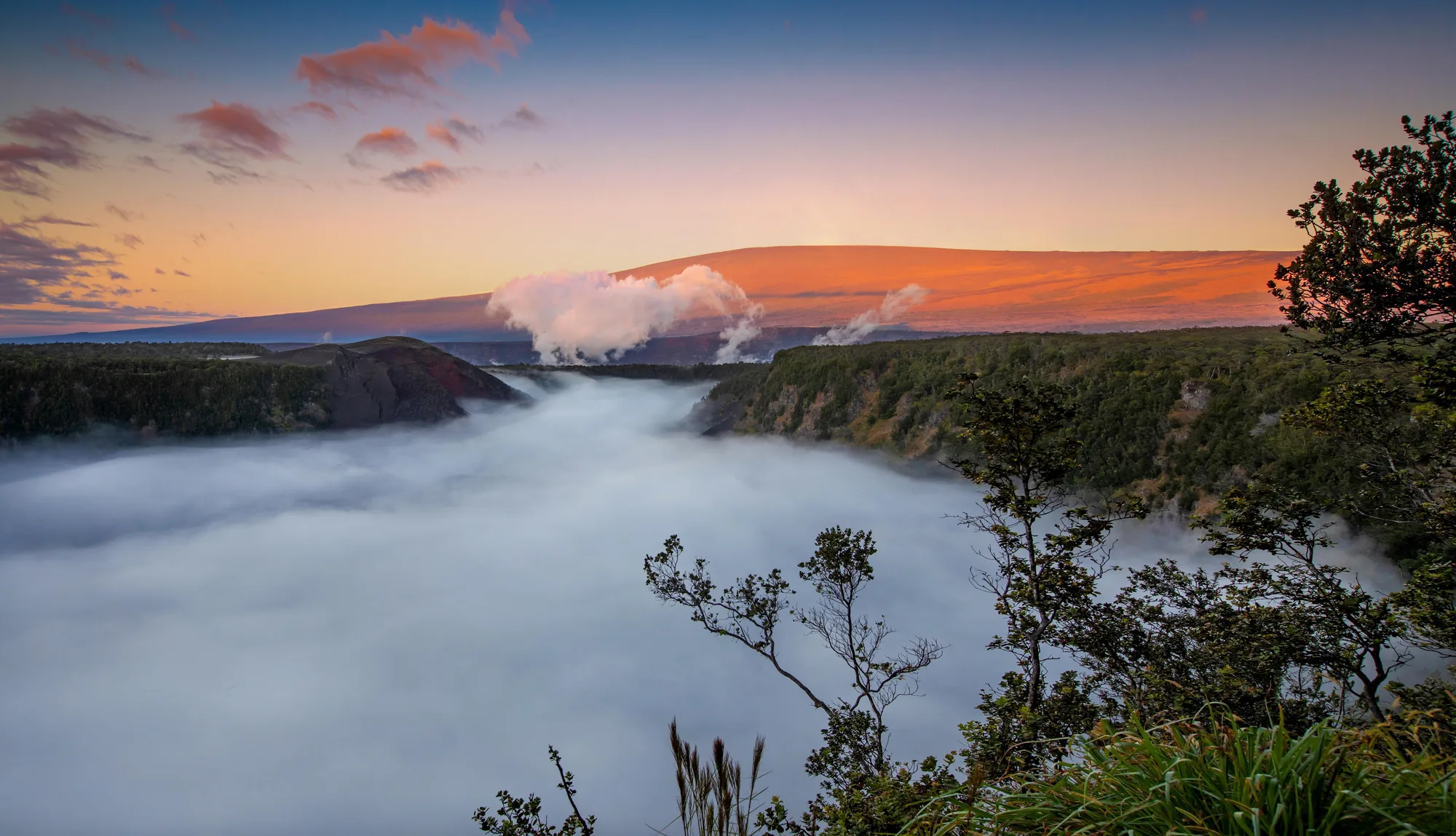
Mauna Loa was erupting the week he reached Kona. Most of the flow stayed hidden behind cloud cover, but on one clear night, he rode up to see it. "Being on Kona during the eruption of Mauna Loa was incredible. Talk about good timing. During one of the few nights the lava flow wasn't hidden by the clouds, I rode up. Ash was hitting me in the face with the visor being up, and I was awestruck by the power and beauty of nature," Jonathan said.
Visor up, ash landing on his face, because keeping it down would have meant watching through plastic instead of actually being there. It's a small, telling choice. The parks Jonathan kept coming back to in conversation weren't simply the beautiful ones. They were the ones that asked something of him first.
Kings Canyon wasn't on his radar before he started planning the trip. He'd simply never heard of it. "It had elements of Yosemite and Sequoia, all in one," he said. "I loved the smells of the pines, and a small hike where I was able to observe a black bear play with her two new cubs." No famous overlook, no marquee moment. Pine smell and a bear being a bear were enough to make it one of the first parks he'd choose to revisit.
Blown Tires, Broken Chains, and the Cost of Going Alone
Three years alone on a motorcycle collects its toll eventually, and Jonathan paid most of his in mechanical failure and weather that never seemed to time itself politely. "Flat tire, blown tire, broken chain, torrential rain, and near-freezing temperatures. Sometimes I had to improvise. Other times the only option was to call AAA," he said.
He never planned more than about ten days out: no set place to sleep, no set place to eat, just the bike and whatever the day handed him. That looseness is exactly why the mechanical failures never derailed the trip. When the plan is that open already, a broken chain is just a Tuesday you solve and keep moving through.
- The bike KTM 1290 SUPER ADVENTURE R
- Storage PANNIER BAGS, EVERYTHING HE OWNED ON THE ROAD
- Connectivity SATELLITE PHONE FOR THE STRETCHES WITH NO SIGNAL AT ALL
- Insurance policy AN ACTIVE AAA MEMBERSHIP
- Unglamorous essentials WET WIPES AND ZIP-LOCK BAGS
- Rule one KNOW HOW TO FIX WHAT BREAKS BEFORE YOU RIDE ALONE
"Make sure you have all the tools and skills you need to solve any mechanical issue you might face, especially if you're riding alone," he said. He carried a satellite phone, checked in with people who'd notice if he went dark, and kept a running mental ledger of the things that go wrong when you're the only mechanic, navigator, and cook for months at a stretch. The gear list that came out of three years of learning this the hard way is short, unglamorous, and exactly the kind of advice that only sounds obvious after someone else has already paid for it in flat tires.
Durango, and the Thing You Can't Plan For
The moment Jonathan still talks about most happened at a gas station near Durango, Colorado, not on a trail, not at an overlook, just filling up his tank. "Once while filling up with gas, an older gentleman asked where I was from and where I was headed, and explained that when he was younger he did a similar journey. He asked if he could pray for me, and when I said yes, he put one hand on my head and one hand on my bike and said a prayer for me to be safe and to 'ride with the angels.' I didn't really know what that meant, but I was touched by how much he cared about me, being a complete stranger," he said.
No mileage in that memory, no elevation, no park name attached to it at all, and it's still the first thing he brings up when someone asks what three years on the road actually felt like. The landscape got him out the door. The stranger at the gas pump was what stayed with him.
The Ranger Who Said Yes
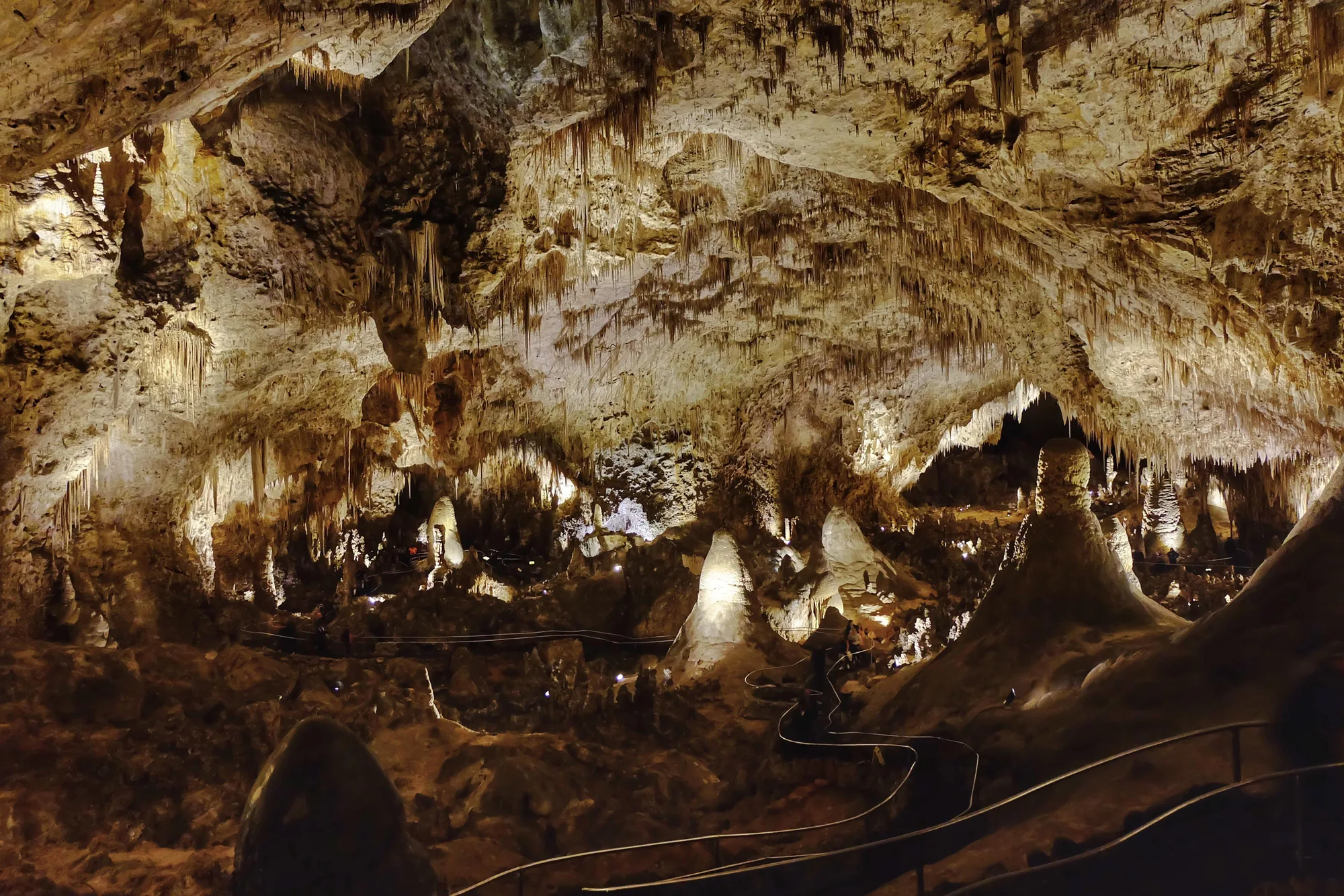
The closest thing to a rule broken on this trip came with a ranger's blessing, not against it. "During Covid, one of the park rangers at Carlsbad Caverns said he wanted me to set up my bed on a scenic overlook so I could watch the sunrise over the valley. It wasn't a designated camp spot, but he said he'd be the only one on patrol that night and I had his permission. That was awesome. Also, those bats are insane," Jonathan said.
Underneath the gates and fee stations, these parks are run by people, and people notice when someone in front of them means well. A quiet park in the middle of a pandemic, one ranger on patrol, a decision made on judgment instead of policy. Jonathan didn't go looking for a story. He got one because he asked a person instead of reading a sign.
Every Park In This Story, One Map
Kings Canyon to Carlsbad to Kona: every park Jonathan rode to has a full park guide waiting, with real hike ratings and a free trip planner.
See the National Park MapTwelve Thousand Miles Later, What Actually Changed
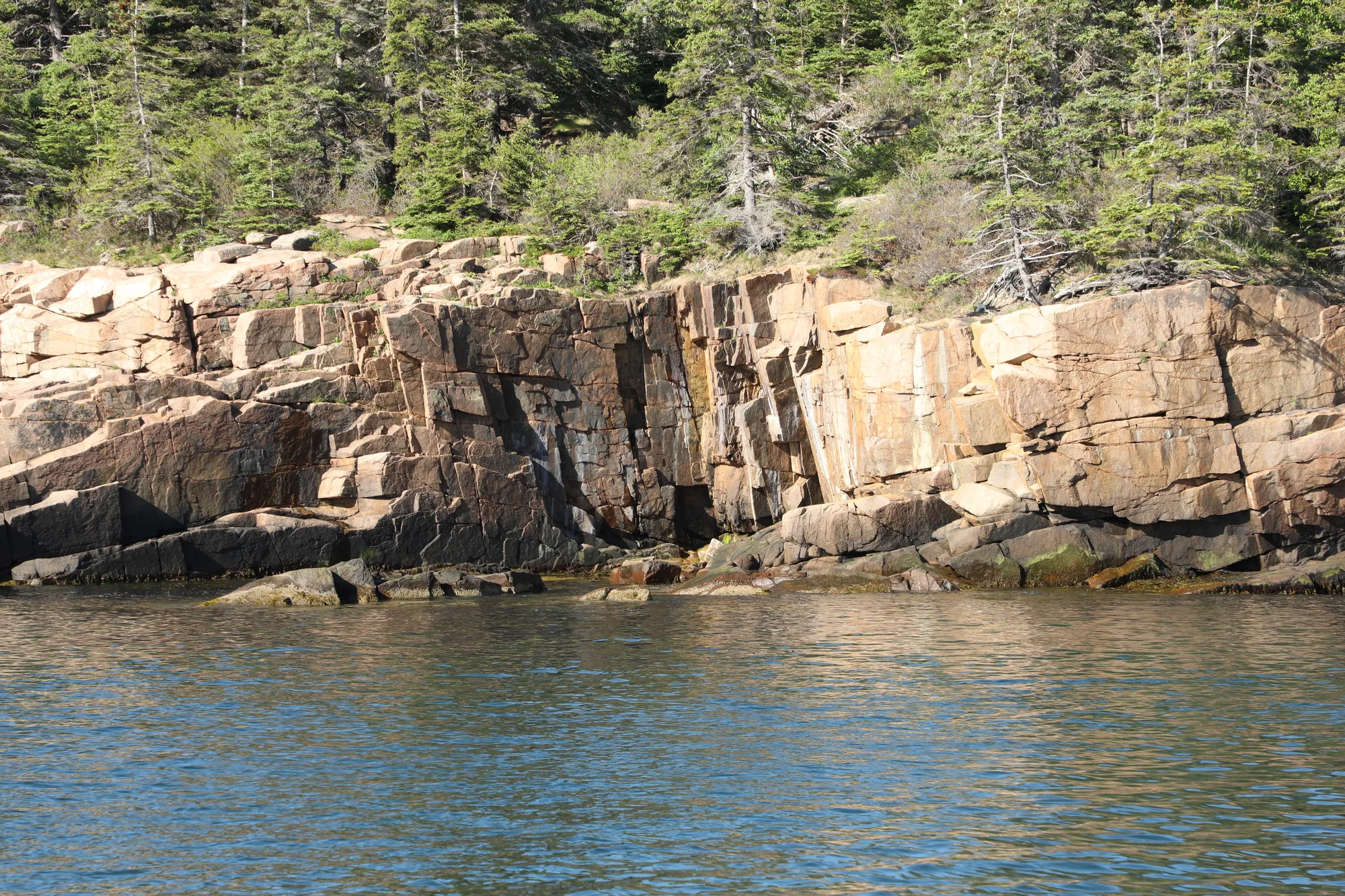
Three years on a motorcycle didn't make Jonathan a conservationist. He already was one. What it did was root that belief in something felt instead of something argued. "I've always been a big proponent of conservation. These trips just made me appreciate the natural spaces more than ever. Wish there could be more law enforcement to keep people on trails and away from wildlife," he said.
It's the difference between knowing a fact and knowing a smell. Jonathan had the pine at Kings Canyon, the ash at Kona, the bats at Carlsbad, each one doing more to convince him than a pamphlet ever could.
Asked which parks he'd go back to first, he didn't hesitate: Sequoia, Kings Canyon, Yosemite (for the smells, specifically), the Smokies, Glacier, Olympic, Acadia, Death Valley. A list that skips almost every park most people would name first, which tells you something about what three years on a bike actually teaches you to value.
- Sequoia & Kings Canyon FOR THE PINE, AND THE BEAR CUBS
- Yosemite FOR THE SMELLS, SPECIFICALLY
- Great Smoky Mountains, Glacier & Olympic THE THREE HE NAMED TOGETHER
- Acadia & Death Valley OPPOSITE ENDS OF THE SAME LIST
The goal has shifted one more time. Not more parks, or not only more parks. "Take family and friends to the national parks to enjoy them together, now," is how he put it when asked what's next. The solo miles were never really the point. They were the reconnaissance. What comes next is bringing people along.
The bike was never really the point either. It was just what got him close enough to the country to actually feel it: bats, lava, and a stranger's blessing included, none of it requested, all of it kept.
Have a Story Like This?
It started with a rental motorcycle booked on a whim, two days blocked off, and a stretch of the Pacific Coast Highway Jonathan only meant to sample. Three years and 12,000-plus miles later, he still can't point to the moment "see some parks" turned into a promise to see all 63.
Founding storytellers write from their free account Journal, and the strongest ones get featured right here. That's the kind of story this space is built for: real gear, real routes, and the detours nobody could have planned for, like a blessing from a stranger outside Durango. The next one might start exactly the way his did, with a weekend nobody expected to turn into three years.
Park count (63) and park names checked against NPS.gov. Mileage, timeline, gear, and every quoted detail come directly from Jonathan Baker's own account of his ride.